Lithologic Reservoirs ›› 2026, Vol. 38 ›› Issue (1): 172-179.doi: 10.12108/yxyqc.20260115

• PETROLEUM ENGINEERING AND OIL & GAS FIELD DEVELOPMENT • Previous Articles    

Numerical simulation on the coupling of flow and geomechanics during CO2 huff and puff in shale oil reservoirs

ZHANG Qingfu(), ZHANG Shiming, CAO Xiaopeng, LYU Qi, LI Zongyang, YU Jinbiao, WANG Yong   

  1. Exploration and Development Research Institute, Sinopec Shengli Oilfield Company, Dongying 257015, Shandong, China
  • Received:2025-03-25 Revised:2025-06-23 Online:2026-01-01 Published:2026-01-23

Abstract:

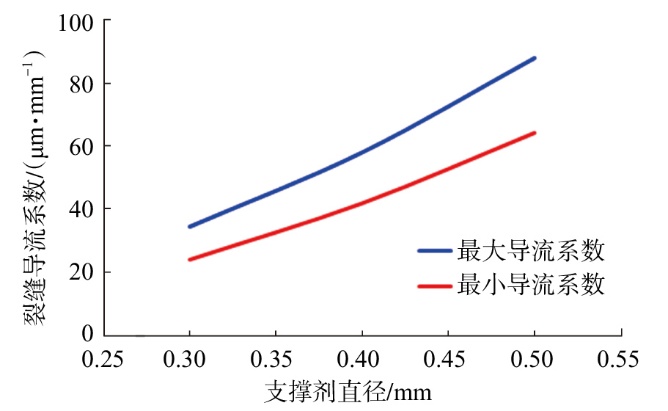
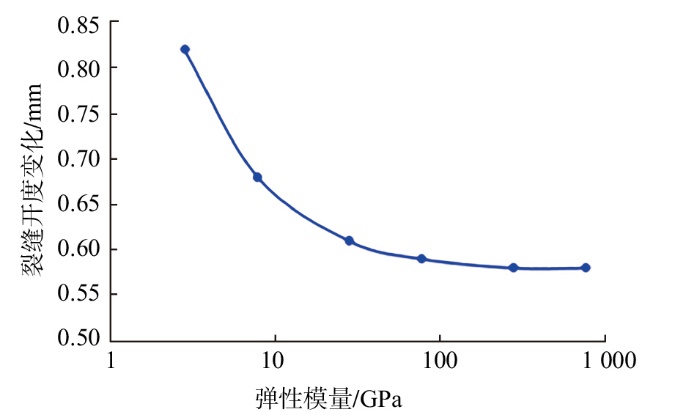
A component model was used to describe fluid flow and phase changes, and an embedded discrete fracture model was constructed to characterize hydraulic fractures. The constitutive relationship of matrix and fracturing fracture proppant was established, and the influence of stress field under different mechanical and development parameters on the diversion capacity and field development effect of hydraulic fractures was studied. The results show that: (1) The development of shale oil reservoir through CO2 huff and puff is a complex process of multi-component and multi-field coupling, accompanied by repeated changes in the formation pressure field and stress field during shale oil development. Under the influence of fluid-solid coupling effect, proppants will deform and embed into the fracture boundary layer, resulting in variation of the hydraulic fracture aperture, conductivity coefficient, porosity and permeability of shale oil reservoirs, which has a significant impact on the development effect of shale oil reservoir. (2) A higher elastic modulus of proppant reduces deformation during the development, leading to smaller fracture closure. Larger proppant diameter is more conducive to maintaining the fracture aperture. (3) A higher elastic modulus of the matrix reduces proppant embedment, leading to smaller fracture closure and better maintaince of fracture conductivity.

Key words: numerical simulation, embedded discrete fracture, fluid-solid coupling, CO2 huff and puff, proppant, elastic modulus, diversion coefficient, shale oil reservoir

CLC Number: 

  • TE349

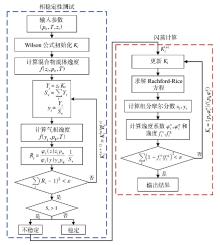
Fig. 1

Flow chart of phase state calculation"

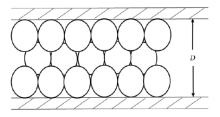
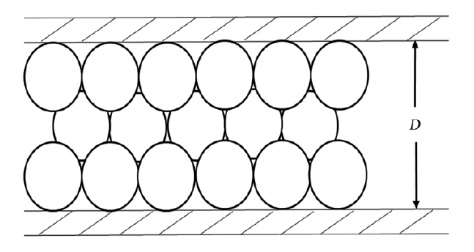
Fig. 2

Schematic diagram of hydraulic fracture proppant model"

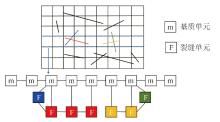
Fig. 3

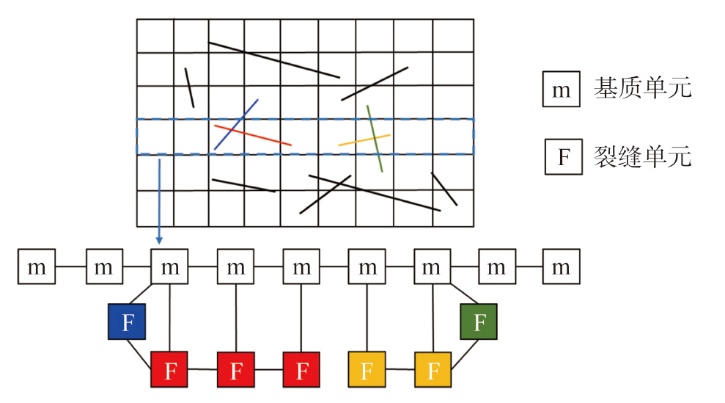
Schematic diagram of embedded discrete fractures"

Fig. 4

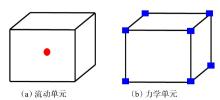
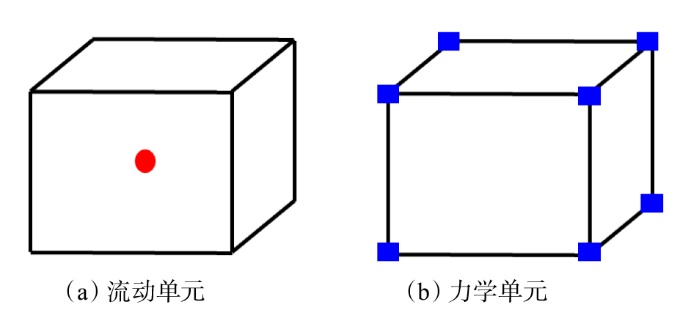
Schematic diagram of variable positions in fluid-solid coupling grid elements"

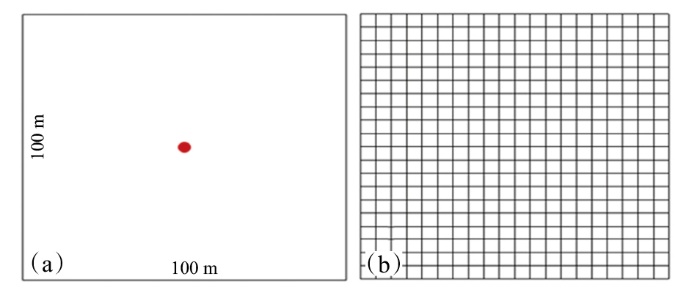
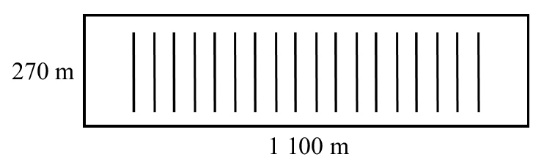
Fig. 5

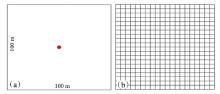
Geometry and computational grid of reservoir models validated by component model"

Table 1

Component state parameters"

组分 摩尔分数/% 相对分子
质量
临界
压力/MPa
临界
温度/K
偏心
因子
CO2 2.11 44.01 73.80 304.20 0.225
N2 8.24 28.01 33.94 126.20 0.039
C2 5.27 30.07 46.09 288.74 0.008
C13 10.55 169.52 24.05 715.36 0.365
C37+ 73.83 465.83 9.36 962.28 0.818

Table 2

Binary interaction coefficient of components"

组分 CO2 N2 C2 C13 C37+
CO2 0 0.000 03 0.004 11 0.043 09 0.100 60
N2 0.000 03 0 0.003 50 0.045 61 0.106 02
C2 0.004 11 0.003 50 0 0.024 62 0.074 49
C13 0.043 09 0.045 61 0.024 62 0 0.015 00
C37+ 0.100 60 0.106 02 0.074 49 0.015 00 0

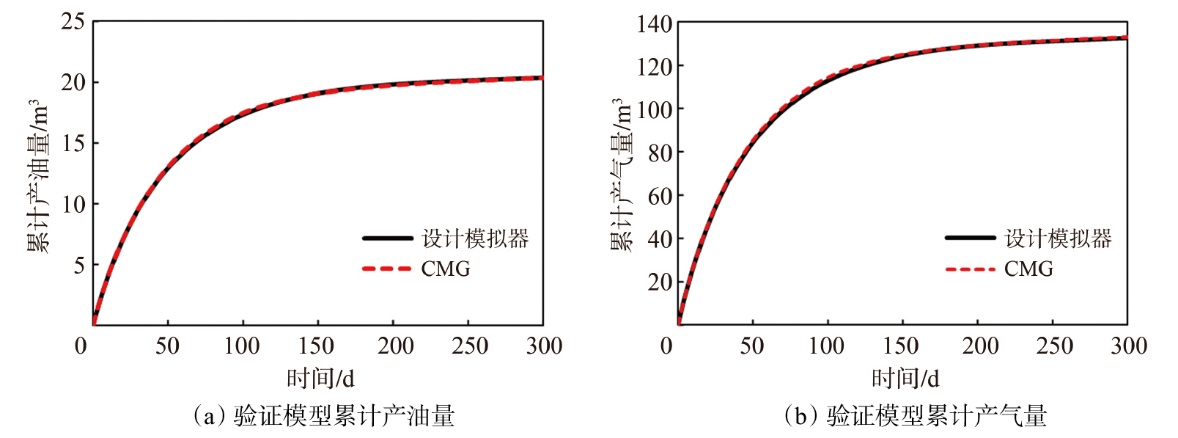
Fig. 6

Comparison of cumulative production between established model and commercial software"

Fig. 7

Numerical simulation model of CO2 huff and puff in shale oil reservoir"

Table 3

Basic parameters of shale oil reservoir model"

储层
厚度/
m
基质
孔隙度/
%
基质
渗透率/mD
压裂
段数/段
压裂缝半长/m 压裂缝渗透率/D 吞吐
开始
时间/d
吞吐
周期/a
注气
时间/a
33 5 0.01 18 100 1 920 1 0.5

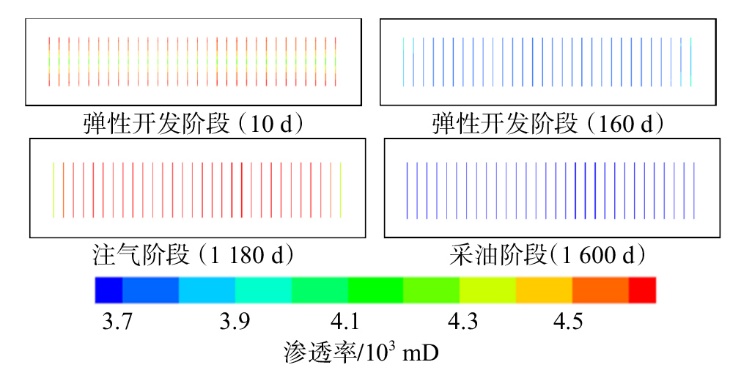
Fig. 8

Variation of hydraulic fracture permeability during different stages of CO2 huff and puff in shale oil reservoir"

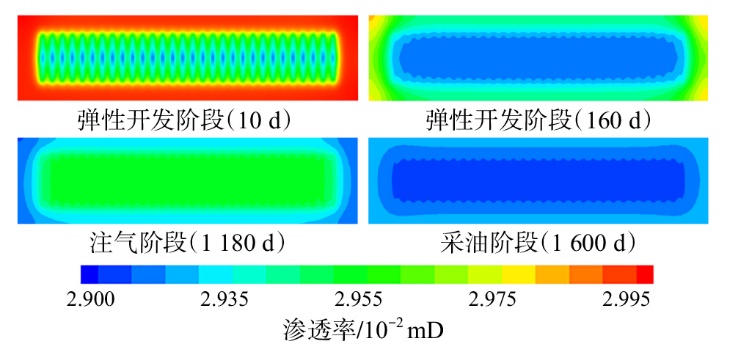
Fig. 9

Variation of matrix permeability during different development stages of CO2 huff and puff in shale oil reservoir"

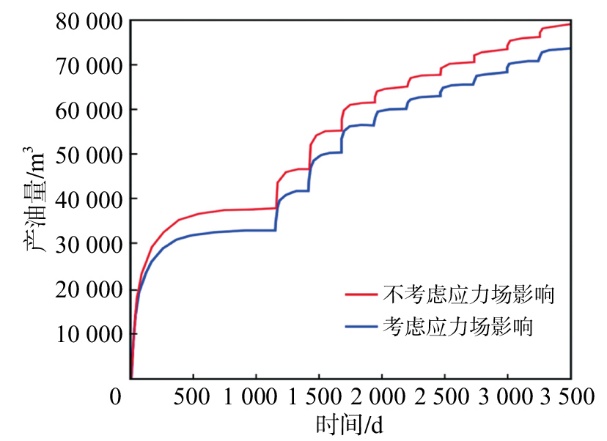
Fig. 10

Influence of stress-field on CO2 huff and puff oil production of shale oil reservoir"

Fig. 11

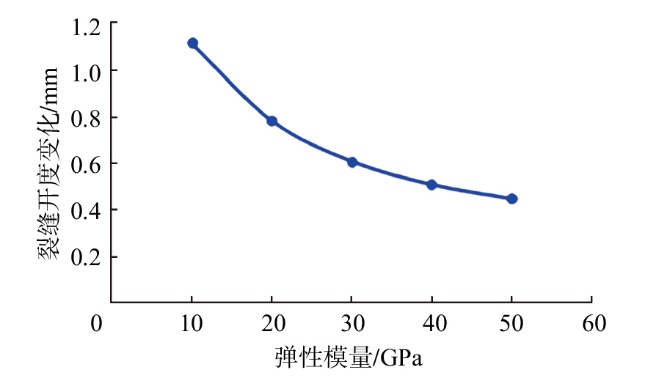
Variation of fracture aperture with different proppants elastic modulus"

Fig. 12

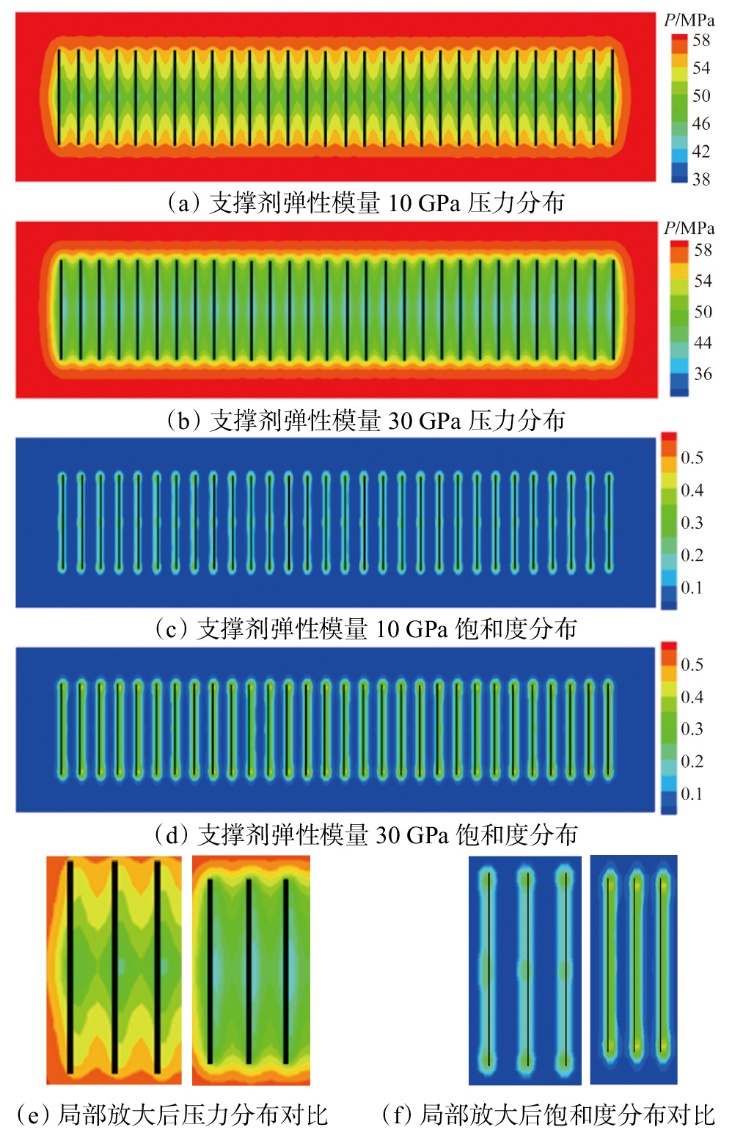
Distribution of pressure and CO2 saturation of CO2 huff and puff in shale oil reservoir with different proppants elastic modulus"

Fig. 13

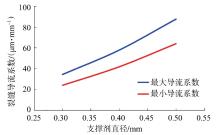
Variation of hydraulic fracture aperture of CO2 huff and puff in shale oil reservoir with different proppant diameters"

Fig. 14

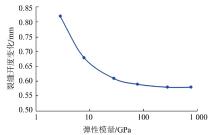
Variation of fracture aperture of CO2 huff and puff in shale oil reservoir with different matrix elastic modulus"

Fig. 15

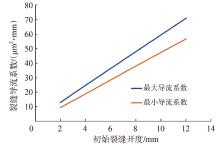
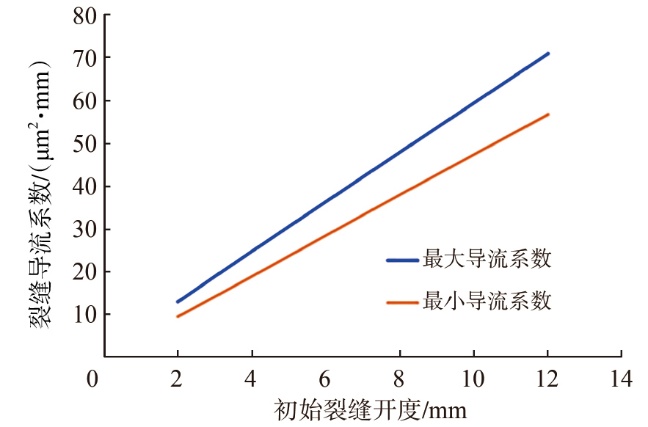
Variation of hydraulic fracture aperture of CO2 huff and puff in shale oil reservoir under different initial fracture conditions"

[1] 苏皓, 雷征东, 张荻萩, 等. 致密油藏体积压裂水平井参数优化研究[J]. 岩性油气藏, 2018, 30(4):140-148.
SU Hao, LEI Zhengdong, ZHANG Diqiu, et al. Volume fractu-ring parameters optimization of horizontal well in tight reservoir[J]. Lithologic Reservoirs, 2018, 30(4):140-148.
[2] 李继庆, 刘曰武, 黄灿, 等. 页岩气水平井试井模型及井间干扰特征[J]. 岩性油气藏, 2018, 30(6):138-144.
doi: 10.12108/yxyqc.20180617
LIU Jiqing, LIU Yuewu, HUANG Can, et al. Multi-stage fracturing horizontal well interference test model and its application[J]. Lithologic Reservoirs, 2018, 30(6):138-144.
doi: 10.12108/yxyqc.20180617
[3] 刘博, 徐刚, 纪拥军, 等. 页岩油水平井体积压裂及微地震监测技术实践[J]. 岩性油气藏, 2020, 32(6):172-180.
doi: 10.12108/yxyqc.20200617
LIU Bo, XU Gang, JI Yongjun, et al. Practice of volume fractu-ring and microseismic monitoring technology in horizontal wells of shale oil[J]. Lithologic Reservoirs, 2020, 32(6):172-180.
doi: 10.12108/yxyqc.20200617
[4] HUGHES J D. A reality check on the shale revolution[J]. Nature, 2013, 494(7437):307-308.
doi: 10.1038/494307a
[5] CLARK A J. Determination of recovery factor in the Bakken Formation,Mountrail county,ND[R]. New Orlean,SPE Annual Technical Conference and Exhibition, 2009.
[6] 刘佳慧, 苏玉亮, 李蕾, 等. 基于微流控实验的页岩油CO2吞吐提高采收率微观机理研究[R]. 西安,油气田勘探与开发国际会议, 2022.
LIU Jiahui, SU Yuliang, LI Lei, et al. Study on micro mechanism of enhanced oil recovery by CO2 huff-n-puff of shale oil based on microfluidic experiment[R]. Xi’an,The International Field Exploration & Development Conference, 2022.
[7] 杨明, 薛程伟, 李朝阳, 等. 页岩油CO2吞吐影响因素及微观孔隙动用特征[J]. 大庆石油地质与开发, 2023, 42(4):148-156.
YANG Ming, XUE Chengwei, LI Chaoyang, et al. Influencing factors of CO2 huff and puff and micro-pores producing characteristics of shale oil[J]. Petroleum Geology & Oilfield Development in Daqing, 2023, 42(4):148-156.
[8] 李凤霞, 王海波, 周彤, 等. 页岩油储层裂缝对CO2吞吐效果的影响及孔隙动用特征[J]. 石油钻探技术, 2022, 50(2):38-44
LI Fengxia, WANG Haibo, ZHOU Tong, et al. The influence of fractures in shale oil reservoirs on CO2 huff and puff and its pore production characteristics[J]. Petroleum Drilling Techni-ques, 2022, 50(2):38-44.
[9] 叶安平, 郭平, 王绍平, 等. 利用PR状态方程确定CO2驱最小混相压力[J]. 岩性油气藏, 2012, 24(6):125-128.
YE Anping, GUO Ping, WANG Shaoping, et al. Determination of minimum miscibility pressure for CO2 flooding by using PR equation of state[J]. Lithologic Reservoirs, 2012, 24(6):125-128.
[10] 张海龙. CO2混相驱提高石油采收率实践与认识[J]. 大庆石油地质与开发, 2020, 39(2):114-119.
ZHANG Hailong. Practice and understanding of enhancing the oil recovery by CO2 miscible flooding[J]. Petroleum Geology & Oilfield Development in Daqing, 2020, 39(2):114-119.
[11] 程杰成, 朱维耀, 姜洪福. 特低渗透油藏CO2驱油多相渗流理论模型研究及应用[J]. 石油学报, 2008, 29(2):246-251.
doi: 10.7623/syxb200802016
CHENG Jiecheng, ZHU Weiyao, JIANG Hongfu. Study on mathematical models for multi-phase porous flow in CO2 drive of extra-low permeability reservoir and field application[J]. Acta Petrolei Sinica, 2008, 29(2):246-251.
doi: 10.7623/syxb200802016
[12] 周瑞, 苏玉亮, 马兵, 等. 随机分形体积压裂水平井CO2吞吐模拟[J]. 岩性油气藏, 2020, 32(1):161-168.
doi: 10.12108/yxyqc.20200118
ZHOU Rui, SU Yuliang, MA Bing, et al. CO2 huff and puff simulation in horizontal well with random fractal volume fracturing[J]. Lithologic Reservoirs, 2020, 32(1):161-168.
doi: 10.12108/yxyqc.20200118
[13] GAMADI T D, ELLDAKLI F, SHENG J J. Compositional simulation evaluation of EOR potential in shale oil reservoirs by cyclic natural gas injection[R]. Denver,SPE/AAPG/SEG Unconventional Resources Technology Conference, 2014.
[14] YU Wei, LASHGARI H, SEPEHRNOORI K. Simulation study of CO2 huff-n-puff process in Bakken tight oil reservoirs[R]. Denver,SPE Western North American and Rocky Mountain Joint Meeting, 2014.
[15] LI Sheng, DONG Mingzhe, LUO Peng. Simulation study on dissolved oil release from kerogen and its effect on shale oil production under primary depletion and CO2 huff-n-puff[J]. Journal of Petroleum Science and Engineering, 2021, 200:108239.
doi: 10.1016/j.petrol.2020.108239
[16] DENOYELLE L C, LEMONNIER P. Simulation of CO2 huff and puff using relative permeability hysteresis[R]. Dallas,SPE Annual Technical Conference and Exhibition, 1987.
[17] WAN T, SHENG J J. Evaluation of the EOR potential in hydraulically fractured shale oil reservoirs by cyclic gas injection[J]. Petroleum Science and Technology, 2015, 33(7):812-818.
doi: 10.1080/10916466.2015.1010041
[18] MOLERO P Z, YU Wei, XU Yifei, et al. Simulation study of CO2-EOR in tight oil reservoirs with complex fracture geo-metries[J]. Scientific Reports, 2016, 6:33445.
doi: 10.1038/srep33445
[19] 张英林. 页岩油藏储集性能及应力敏感性评价[D]. 青岛: 中国石油大学(华东), 2020.
ZHANG Yinglin. Evaluation of reservoir property and stress sensitivity in shale reservoir[D]. Qingdao: China University of Petroleum (East China), 2020.
[20] LI Kewen, GAO Yuanping, LYU Youchang, et al. New mathe-matical models for calculating proppant embedment and fracture conductivity[J]. SPE Journal, 2015, 20(3):496-507.
doi: 10.2118/155954-PA
[21] LACY L L, RICKARDS A R, BLLDEN D M. Fracture width and embedment testing in soft reservoir sandstone[J]. SPE drilling & completion, 1998, 13(1):25-29.
[22] 张庆福. 页岩油藏注CO2增能开发数值模拟研究[J]. 计算力学学报, 2024, 41(4):755-761.
ZHANG Qingfu. Numerical simulation of CO2-EOR in shale oil reservoirs[J]. Chinese Journal of Computational Mechanics, 2024, 41(4):755-761.
[23] 刘礼军. 缝洞型碳酸盐岩油气藏流固耦合数值模拟研究[D]. 青岛: 中国石油大学(华东), 2021.
LIU Lijun. Numerical simulation of coupled flow and geomechanical process in fractured karst carbonate reservoirs[D]. Qingdao: China University of Petroleum (East China), 2021.
[1] ZHAN Shengyun, TONG Jianxiang, WANG Zhendong, BAI Yuting, WANG Taichao. Development characteristics and reasonable injection-production pressuredifference of SAGD under different injection-production well patternsin bottom water reservoirs [J]. Lithologic Reservoirs, 2025, 37(6): 180-190.
[2] JIANG Shan, TANG Yongjian, JIAO Xiarong, LI Wenliang, HUANG Cheng, WANG Ze. Distribution law of remaining gas in condensate gas reservoirs in fault-controlled body of No. 4 fault zone in Shunbei Oilfield, Tarim Basin [J]. Lithologic Reservoirs, 2025, 37(4): 84-94.
[3] YANG Xu, BAI Mingsheng, GONG Hanbo, LI Gao, TAO Zuwen. Characteristics and quantitative prediction of structural fractures in the second member of Triassic Xujiahe Formation in Xinchang area, western Sichuan Basin [J]. Lithologic Reservoirs, 2025, 37(3): 73-83.
[4] ZHAO Ailin, LAI Qiang, FAN Ruiqi, WU Yuyu, CHEN Jie, YAN Shuanglan, ZHANG Jiawei, LIAO Guangzhi. Study on NMR response mechanism and pore structure evaluation method of basic volcanic rock:A case study of Permian Emeishan Basalt Formation in southwestern Sichuan Basin [J]. Lithologic Reservoirs, 2025, 37(3): 153-164.
[5] ZHANG Qinglong, MAO Yuanyuan, FENG Jiansong, YUAN Xuansheng, ZHOU Wei, ZHU Fujin, XUAN Lingling. Quantitative selection and application of well locations for encrypted wells in fractured-porosity carbonate rocks:A case study of Cambrian oil reservoirs in Tanghai Oilfield,Huanghua Depression,Bohai Bay Basin [J]. Lithologic Reservoirs, 2025, 37(3): 165-175.
[6] XU Youjie, REN Zongxiao, XIANG Zuping, FAN Xiaohui, YU Mengnan. Numerical well testing model of fractured well with complex fractures multi-well interference in heterogeneous tight gas reservoirs [J]. Lithologic Reservoirs, 2025, 37(3): 194-200.
[7] LIANG Feng, CAO Zhe. Characteristics,formation environment and enrichment model of Triassic Chang 7 shale oil reservoir in Huachi area,Ordos Basin [J]. Lithologic Reservoirs, 2025, 37(1): 24-40.
[8] HE Yan, XU Weina, DANG Sisi, MOU Lei, LIN Shaoling, LEI Zhangshu. Genesis and exploration significance of calcareous intercalation of Jurassic Xishanyao Formation in Luliang area,Junggar Basin [J]. Lithologic Reservoirs, 2025, 37(1): 90-101.
[9] QIAN Yongxin, ZHAO Yi, LIU Xinlong, LIU Hong, LIU Guoliang, ZHU Tao, ZOU Yang, CHEN Fangwen. Reservoir characteristics and high yield control factors of Permian Fengcheng Formation shale oil reservoir in Mahu Sag [J]. Lithologic Reservoirs, 2025, 37(1): 115-125.
[10] CHEN Xiao, MIAO Yun, LI Wei, XIE Mingying, SHI Hao, WANG Weifeng. Calculation method for reasonable oil-water well ratio in the edge water drive offshore sandstone oilfield [J]. Lithologic Reservoirs, 2025, 37(1): 194-200.
[11] CUI Chuanzhi, LI Jing, WU Zhongwei. Simulation of microscopic seepage characteristics of CO2 immiscible flooding under the effect of diffusion and adsorption [J]. Lithologic Reservoirs, 2024, 36(6): 181-188.
[12] HE Wenyuan, ZHAO Ying, ZHONG Jianhua, SUN Ningliang. Characteristics and significance of micron pores and micron fractures in shale oil reservoirs of Cretaceous Qingshankou Formation in Gulong sag,Songliao Basin [J]. Lithologic Reservoirs, 2024, 36(3): 1-18.
[13] CAO Jiangjun, WANG Xi, WANG Liuwei, LI Cheng, SHI Jian, CHEN Zhaobing. Characteristics and main controlling factors of interbedded shale oil reservoirs of Triassic Chang 7 member in Heshui area,Ordos Basin [J]. Lithologic Reservoirs, 2024, 36(3): 158-171.
[14] LIU Renjing, LU Wenming. Mechanism and field practice of enhanced oil recovery by injection-production coupling in fault block reservoirs [J]. Lithologic Reservoirs, 2024, 36(3): 180-188.
[15] BAO Hanyong, LIU Chao, GAN Yuqing, XUE Meng, LIU Shiqiang, ZENG Lianbo, MA Shijie, LUO Liang. Paleotectonic stress field and fracture characteristics of shales of Ordovician Wufeng Formation to Silurian Longmaxi Formation in southern Fuling area,Sichuan Basin [J]. Lithologic Reservoirs, 2024, 36(1): 14-22.
Viewed
Full text


Abstract

Cited

  Shared   
  Discussed   
No Suggested Reading articles found!
TRENDMD: