岩性油气藏 ›› 2026, Vol. 38 ›› Issue (1): 38–54.doi: 10.12108/yxyqc.20260104
湖相碎屑岩高频层序地层新认识:来自古代沉积层序的启示
ZAVALA Carlos1, 刘化清2,3, 李相博2,3( ), 杨占龙2,3, 李阳1,4,5, 王菁2,3, TROBBIANI Valentin6,7, ARCURI Mariano6,7
- 1
山东科技大学 地球科学与工程学院 山东 青岛 266590
2中国石油勘探开发研究院 西北分院 兰州 730020
3中国石油集团油藏描述重点实验室 兰州 730020
4北京大学 能源研究院 北京 100871
5内蒙古自治区深层煤层气成藏机制与高效开发重点实验室 内蒙古 鄂尔多斯 017010
6阿根廷国立南方大学 地质学系 布兰卡港 8000
7阿根廷GCS公司 布兰卡港 8000
Progress in high-frequency sequence stratigraphy of clastic lakes: Implications from ancient sedimentary sequences
ZAVALA Carlos1, LIU Huaqing2,3, LI Xiangbo2,3(), YANG Zhanlong2,3, LI Yang1,4,5, WANG Jing2,3, TROBBIANI Valentin6,7, ARCURI Mariano6,7
- 1
College of Earth Science and Engineering ,Shandong University of Science and Technology Qingdao 266590, Shandong, China
2PetroChina Research Institute of Petroleum Exploration and Development-Northwest Lanzhou 730020, China
3Key Laboratory of Petroleum Reservoir Description ,CNPC Lanzhou 730020, China
4Institute of Energy ,Peking University Beijing 100871, China
5Inner Mongolia Key Laboratory of Deep Coalbed Methane Accumulation Mechanism and Efficient Development ,Ordos 017010 Inner Mongolia, China
6Departamento de Geología ,Universidad Nacional del Sur (UNS) Bahia Blanca 8000, Argentina
7GCS Consulting Services Bahia Blanca 8000, Argentina
摘要:
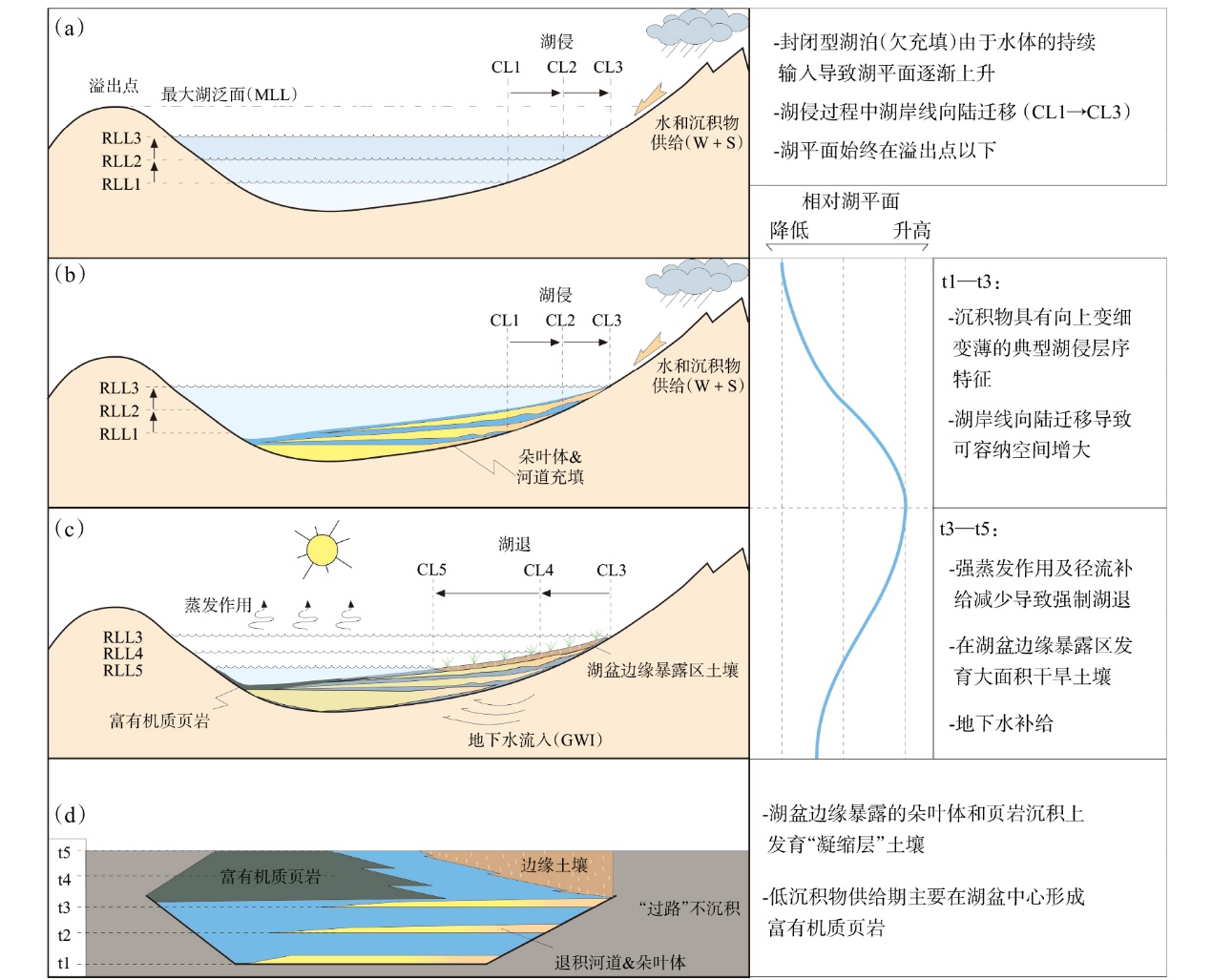
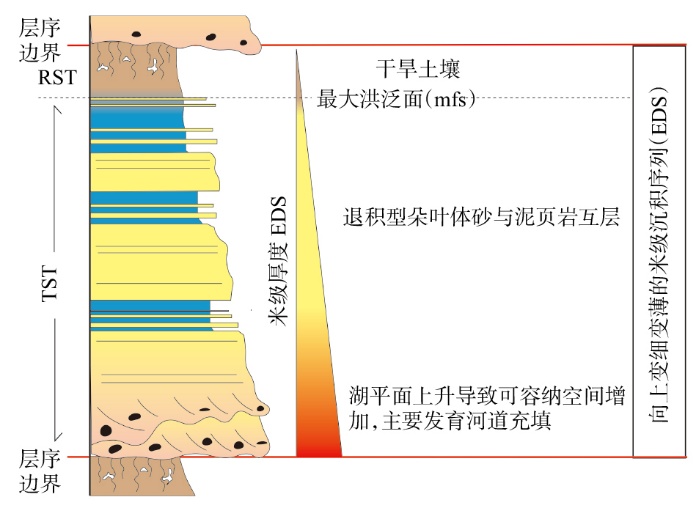
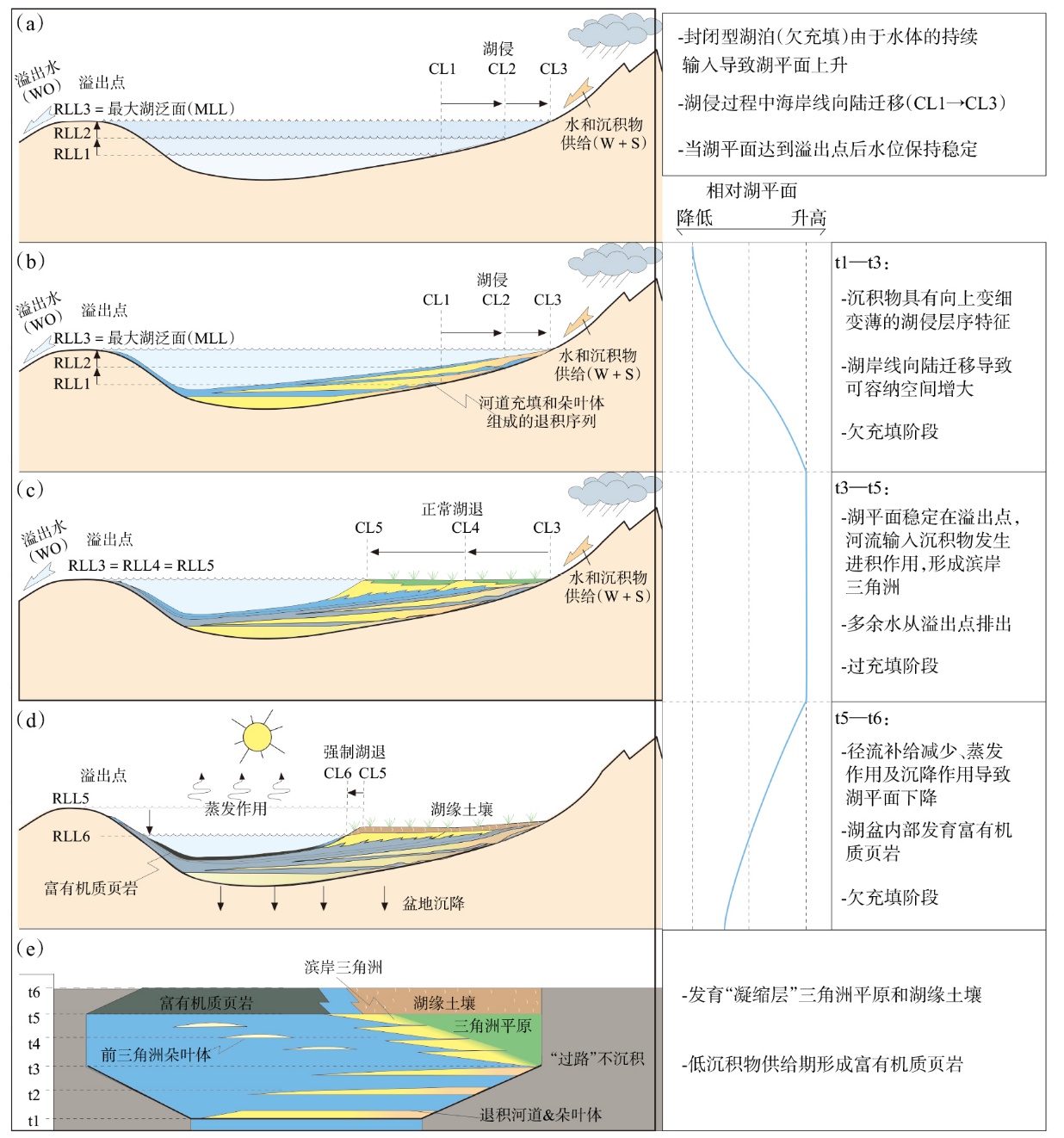
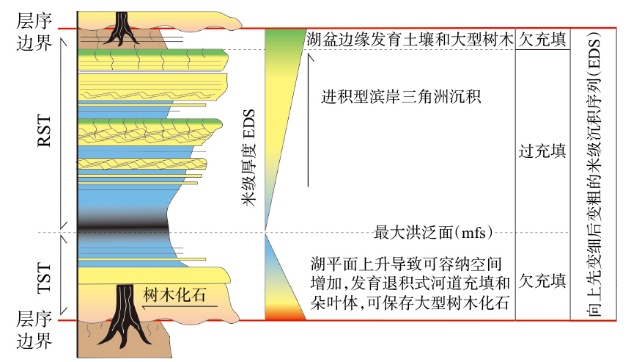
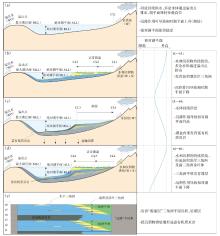
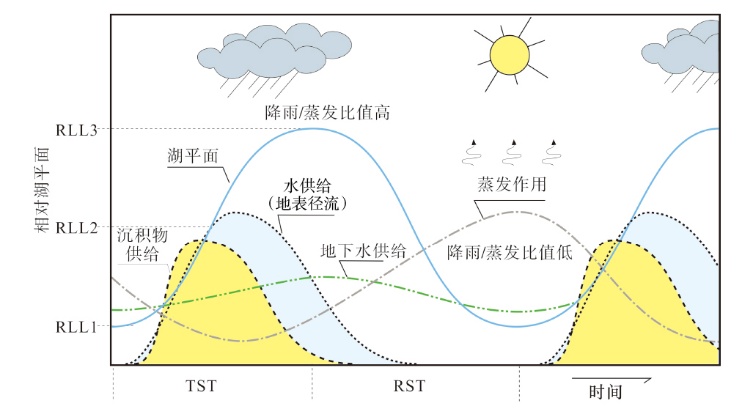
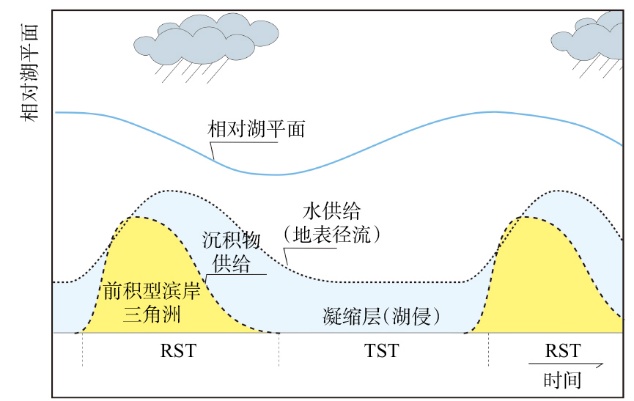
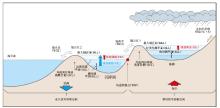
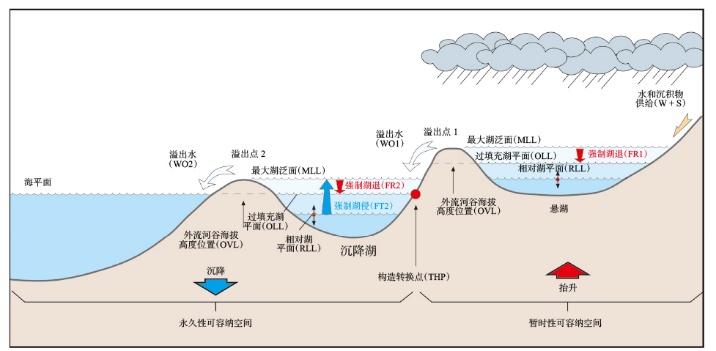
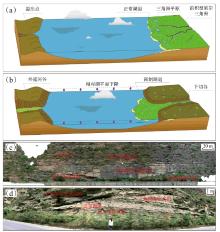
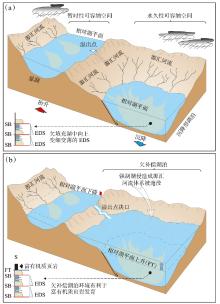
层序地层学理论和方法为地层分析提供了新工具,有助于深化对沉积模式和盆地演化的理解。传统的层序地层学理论中,沉积单元与部分名词术语(如层序界面、体系域、准层序等)是主要针对海相沉积系统提出的,而湖相沉积系统因受构造运动与高频气候旋回的复合控制,非海平面变化驱动,其层序地层特征的复杂程度远高于海相沉积系统。通过对不同湖盆类型的沉积体系的系统解剖,厘清了湖相沉积层序地层学的相关概念,并探讨了他旋回对湖相沉积和层序地层的控制作用以及湖盆可容纳空间类型及其对层序地层和油气成因的意义。研究结果表明:①湖泊沉积状态可划分为3种类型,即欠填充、平衡填充和过填充湖泊,不同状态下湖泊的水体盐度、沉积层序、体系域等具有显著差别。在欠填充时期,湖泊水体是完全封闭的,受高频干湿气候循环影响,湖平面波动变化较大,在潮湿期,河流可提供大量水和沉积物,湖平面上升形成湖侵域(TST),发育向上变细变薄的沉积层序单元(EDS);在干旱期,湖平面下降,湖盆边缘区域暴露,形成湖退域(RST),湖水盐度为微咸水—超咸水。在平衡填充时期,湖泊呈半封闭状态,兼具欠填充和过填充双重特征,在TST发育期,湖泊呈欠填充状态,随着河流水和沉积物的持续供给,形成向上变细的沉积层序,直到湖平面达到最大洪泛期的溢出点;在RST发育期,湖泊呈过填充状态,发育向上变粗的前积型滨岸三角洲和水下三角洲沉积,此时湖水盐度为咸水—淡水。在过填充时期,湖泊的水体环境是开放的,即湖平面始终维持在湖泊溢出点附近,注入的多余河水会通过溢出点流出,其沉积物主要形成于RST期,表现为向上变粗的前积型滨岸沉积及水下三角洲沉积,且大多数过填充湖泊为淡水湖。②构造沉降作用对于湖泊沉积物的长期保存至关重要,水和沉积物可在无沉降区暂时保存,但这些沉积物难以保存在现今地层中。沉降型湖泊发育永久性可容纳空间,悬湖发育暂时性可容纳空间,虽然悬湖无法永久保存沉积物,但其临时储存的大量水体可以瞬时决口,淹没下游沉降型湖泊,这为富含有机物页岩的发育创造了有利条件。悬湖决口形成的洪水会导致下游沉降型湖泊发生大规模快速强制性湖侵(FT),从而形成了一种与正常水及沉积物供给无关的异整合面。
中图分类号:
- TE122.23








| [1] |
GORE P J W. Towards a model of open-and closed-basin deposition in ancient lacustrine sequences:The Newark Supergroup (Triassic-Jurassic),eastern North America[J]. Palaeogeography,Palaeoclimatology,Palaeoecology, 1989, 70:29-52.
doi: 10.1016/0031-0182(89)90078-3 |
| [2] | BOHACS K M. Sequence stratigraphy of lake basins:Unraveling the influence of climate and tectonics[J]. AAPG Bulletin, 1999, 83(11):1-11. |
| [3] |
CARROLL A R, BOHACS K M. Stratigraphic classification of ancient lakes:Balancing tectonic and climatic control[J]. Geology, 1999, 27(2):99-102.
doi: 10.1130/0091-7613(1999)027<0099:SCOALB>2.3.CO;2 |
| [4] |
BENAVIDE C A, BOHACS K M. Advances in limnogeology:The lake‐basin‐type model revisited 25 years after… anomalies,conundrums and upgrades[J]. The Depositional Record, 2024, 10(5):748-792.
doi: 10.1002/dep2.v10.5 |
| [5] | BOHACS K M, NEAL J E, CARROLL A R, et al. Lakes are not small oceans!Sequence stratigraphy in lacustrine basins[R]. Tulsa,SEPM Annual Meeting, 2000. |
| [6] | VAIL P R, MITCHUM R M J, THOMPSON S I. Seismic stratigraphy and global changes of sea level,part 4:Global cycles of relative changes of sea level[M]//PAYTON C E. Seismic Stratigraphy:Applications to Hydrocarbon Exploration. Dallas: American Association of Petroleum Geologists, 1977. |
| [7] | PAYTON C E. Seismic stratigraphy-applications to hydrocarbon exploration[M]. Dallas: American Association of Petroleum Geologists, 1977. |
| [8] | VAN WAGONER J C, POSAMENTIER H W, MITCHUM R M, et al. An overview of the fundamentals of sequence stratigraphy and key definitions[M]// WILGUSC K, HASTINGSB S, POSAMENTIERH W. Sea-level changes:An integrated approach. Tulsa: Society of Economic Paleontologists and Mineralogists, 1988. |
| [9] |
KEIGHLEY D, FLINT S, HOWELL J, et al. Sequence strati-graphy in lacustrine basins:A model for part of the Green River Formation (Eocene),southwest Uinta Basin,Utah,USA[J]. Journal of Sedimentary Research, 2003, 73(6):987-1006.
doi: 10.1306/050103730987 |
| [10] | OLSEN P E. Periodicity of lake-level cycles in the late Triassic Lockatong Formation of the Newark Basin[M]// BERGERA. Milankovitch and climate. Dordrecht: Reidel, 1984:127-146. |
| [11] | OLSEN H. Orbital forcing on continental depositional systems-lacustrine and fluvial cyclicity in the Devonian of East Greenland[M]// DE BOERP L, SMITHD G. Orbital forcing and cyclic sequences. Algiers: IAS Special Publications, 1994, 19:429-438. |
| [12] | FISCHER A G, ROBERTS L T. Cyclicity in the Green River Formation (lacustrine Eocene) of Wyoming[J]. Journal of Sedimentary Petrology, 1991, 61(7):1146-1154. |
| [13] |
VAN VUGT N, STEENBRINK J, LANGEREIS C G, et al. Magnetostratigraphy-based astronomical tuning of the early Pliocene lacustrine sediments of Ptolemais (NW Greece) and bed to bed correlation with the marine record[J]. Earth and Planetary Science Letters, 1998, 164:535-551.
doi: 10.1016/S0012-821X(98)00236-2 |
| [14] | POSAMENTIER H W, VAIL P R. Eustatic controls on clastic deposition Ⅱ:sequence and systems tract models[M]// WILGUSC K, HASTINGSB S, POSAMENTIERH, et al. Sea level changes: An integrated approach. Tulsa Society of Economic Paleontologists and Mineralogists. |
| [15] | PLINT A G, NUMMEDAL D. The falling stage systems tract:Recognition and importance in sequence stratigraphic analysis[J]. The Geological Society of London, 2000, 172(1):1-17. |
| [16] | EMBRY A F, JOHANNESSEN E P. T-R sequence stratigraphy,facies analysis and reservoir distribution in the uppermost Triassic-Lower Jurassic succession,western Sverdrup Basin,Arctic Canada[J]. Norwegian Petroleum Society Special Publications, 1993, 2:121-146. |
| [17] | EMBRY A F, JOHANNESSEN E P. Two approaches to sequence stratigraphy[M]// MONTENARIM. Stratigraphy & timescales.:Advances in sequence stratigraphy. Shanghai: Elsevier, 2017, 2:85-118. |
| [18] | MUTTI E. Alcuni problemi relativi all’applicazione dei concetti della stratigrafia sequenziale all’Eocene e al Cretacico superiore sud-pirenaico[J]. Supplemento al Giornale di Geologia, 1989, 51:37-53. |
| [19] | MUTTI E, DAVOLI G, MORA S, et al. The eastern sector of the south-central folded Pyrenean foreland:Criteria for stratigraphic analysis and excursion notes[R]. Parma,2nd International Conference on High-Resolution Sequence Stratigraphy, 1994. |
| [20] | MUTTI E. Turbidite systems:An outcrop-based analysis[M]. Rio De Janeiro: Petrobras, 2023:466. |
| [21] | MUTTI E, TINTERRI R, DI BIASE D, et al. Delta-front facies associations of ancient flood-dominated fluvio-deltaic systems[J]. Revista de la Sociedad Geológica de España, 2000, 13(2):165-190. |
| [22] | VAN WAGONER J C, MITCHUM R M, CAMPION K M, et al. AAPG methods in exploration series NO. 7:Siliciclastic sequence stratigraphy in well logs,cores,and outcrops:Concepts for high-resolution correlation of time and facies[M]. Dallas, AAPG, 1990. |
| [23] | WANG Xunlian. Criteria for defining and recognizing the various orders of sequences in outcrop sequence stratigraphy[J]. Science in China Series D:Earth Sciences, 2004, 7:618-629. |
| [24] | CATUNEANU O. Principles of sequence stratigraphy[M]. 2nd ed. Amsterdam: Elsevier, 2022:486. |
| [25] |
CAMPBELL C V. Lamina,laminaset,bed and bedset[J]. Sedimentology, 1967, 8(1):7-26.
doi: 10.1111/sed.1967.8.issue-1 |
| [26] | MITCHUM R M, VAIL P R, THOMPSON S. AAPG Memoir:Seismic stratigraphy and global changes of sea level. Part 2:The depositional sequence as a basic unit for stratigraphic analysis[M]. Tulsa, AAPG, 1977. |
| [27] | BEERBOWER J R. Cyclothems and cyclic depositional mechanisms in alluvial plain sedimentation[J]. Kansas State Geological Survey Bulletin, 1964, 169(1):32-42. |
| [28] | MERRIMAN R J, HIGHLEY D E, CAMERON D G. Definition and characteristics of very-fine grained sedimentary rocks:Clay,mudstone,shale and slate[R]. Keyworth: British Geological Survey, 2003:20. |
| [29] | RAMOS V A, KAY S M. Triassic rifting and associated basalts in the Cuyo Basin,central Argentina[M]. Boulder, Geological Society of America, 1991:79-92. |
| [30] |
SPALLETTI L A, FANNING M, WASHINGTON R C. Dating the Triassic continental rift in the southern Andes:The Potreri-llos Formation,Cuyo Basin,Argentina[J]. Geologica Acta, 2008, 6(3):267-283.
doi: 10.1344/105.000000256 |
| [31] |
HOGG S L. Geology and hydrocarbon potential of the Neuquén Basin[J]. Journal of Petroleum Geology, 1993, 16(4):383-396.
doi: 10.1111/jpg.1993.16.issue-4 |
| [32] |
HOWELL J, SCHWARZ E, SPALLETTI L, et al. The Neuquén Basin:An overview[J]. Geological Society,London,Special Publications, 2005, 252(1):1-14.
doi: 10.1144/GSL.SP.2005.252.01.01 |
| [33] | ZAVALA C, ARCURI M, DI MEGLIO M, et al. Jurassic uplift along the Huincul arch and its consequences in the stratigraphy of the Cuyo and Lotena groups,Neuquén Basin,Argentina [M]// DIEGOKIETZMANN D, FOLGUERAA. Opening and closure of the Neuquén Basin in the southern Andes. Cham: Springer, 2020:53-74. |
| [34] | ZAVALA C, MARETTO H, DI MEGLIO M. Hierarchy of bounding surfaces in aeolian sandstones of the Jurassic Tordillo Formation (Neuquén Basin,Argentina)[J]. Geologica Acta, 2005, 3(2):133-145. |
| [35] | ZAVALA C, MARTÍNEZ LAMPE J M, FERNÁNDEZ M, et al. El diacronismo entre las formaciones Tordillo y Quebrada del Sapo (Kimeridgiano) en el sector sur de la cuenca neuquina[J]. Revista de la Asociación Geológica Argentina, 2008, 63(4):754-765. |
| [36] |
ZAVALA C, PONCE J J, ARCURI M, et al. Ancient lacustrine hyperpycnites:A depositional model from a case study in the Rayoso Formation (Cretaceous) of west-central Argentina[J]. Journal of Sedimentary Research, 2006, 76(1):41-59.
doi: 10.2110/jsr.2006.12 |
| [37] |
YANG Yongtai, LI Wei, MA Long. Tectonic and stratigraphic controls of hydrocarbon systems in the Ordos basin:A multicycle cratonic basin in central China[J]. AAPG Bulletin, 2005, 89(2):255-269.
doi: 10.1306/10070404027 |
| [38] | ZAVALA C, LIU Huaqing, LI Xiangbo, et al. Lacustrine sequence stratigraphy:New insights from the study of the Yanchang Formation (Middle-Late Triassic),Ordos Basin,China[M]// The Ordos Basin: Sedimentological research for hydrocarbons exploration. Amsterdam: Elsevier, 2022:309-335. |
| [39] |
PAN Shuxin, LIU Huaqing, ZAVALA C, et al. Sublacustrine hyperpycnal channel-fan system in a large depression basin:A case study of Nen 1 Member,Cretaceous Nenjiang Formation in the Songliao Basin,NE China[J]. Petroleum Exploration and Development, 2017, 44(6):911-922.
doi: 10.1016/S1876-3804(17)30103-9 |
| [40] | 武法东, 陈永进, 李寅, 等. 河北滦平盆地构造演化及对扇三角洲发育的控制作用[J]. 现代地质, 2000, 14(2):179-184. |
|
WU Fadong, CHEN Yongjin, LI Yin, et al. Tectonic evolutions and their control on development of fan-deltaic depositional system in the Luanping Basin[J]. Geoscience, 2000, 14(2):179-184.
doi: 10.3390/geosciences14070179 |
|
| [41] | BALLY A W. Basins and subsidence:A summary[M]. Washington D.C.: American Geophysical Union, 1980:5-20. |
| [42] |
ZAVALA C, ARCURI M, ZORZANO A, et al. Deltas:New paradigms[J]. The Depositional Record, 2024, 10(5):600-636.
doi: 10.1002/dep2.v10.5 |
| [43] |
KATZ B J. Lacustrine basin hydrocarbon exploration:Current thoughts[J]. Journal of Paleolimnology, 2001, 26(2):161-179.
doi: 10.1023/A:1011173805661 |
| [44] |
GHINASSI M, D'ORIANO F, BENVENUTI M, et al. Lacustrine facies in response to millennial-century-scale climate changes (Lake Hayk,Northern Ethiopia)[J]. Journal of Sedimentary Research, 2015, 85(4):381-398.
doi: 10.2110/jsr.2015.28 |
| [45] | SCHUMM S A. The fluvial system[M]. New York: John Wiley & Sons, 1977:338. |
| [46] | PERLMUTTER M A, MATTHEWS M D. Global cyclostratigraphy:A model[M]. Englewood Cliffs: Prentice Hall, 1989:233-260. |
| [47] |
DIGERFELDT G, OLSSON S, SANDGREN P. Reconstruction of lake-level changes in lake Xinias,central Greece,during the last 40,000 years[J]. Palaeogeography,Palaeoclimatology,Palaeoecology, 2000, 158(1/2):65-82.
doi: 10.1016/S0031-0182(00)00029-8 |
| [48] |
OVEREEM I, KROONENBERG S B, VELDKAMP A, et al. Small-scale stratigraphy in a large ramp delta:Recent and Holocene sedimentation in the Volga delta,Caspian Sea[J]. Sedimentary Geology, 2003, 159(3/4):133-157.
doi: 10.1016/S0037-0738(02)00256-7 |
| [49] |
SONG C, HUANG B, KE L, et al. Seasonal and abrupt changes in the water level of closed lakes on the Tibetan Plateau and implications for climate impacts[J]. Journal of Hydrology, 2014, 514:131-144.
doi: 10.1016/j.jhydrol.2014.04.018 |
| [50] |
KAKROODI A A, LEROY S A G, KROONENBERG S B, et al. Late Pleistocene and Holocene sea-level change and coastal paleoenvironment evolution along the Iranian Caspian shore[J]. Marine Geology, 2015, 361:111-125.
doi: 10.1016/j.margeo.2014.12.007 |
| [51] | GLENN C R, KELTS K. Sedimentary rhythms in lake deposits[M]// EINSELEG, RICKENW, SEILACHERA. Cycles and events in stratigraphy. Berlin: Springer Verlag, 1991:188-221. |
| [52] | BOHACS K M, CARROLL A R, NEAL J E. Lessons from large lake systems:Thresholds,nonlinearity,and strange atractors[M]// CHANM A, ARCHERA W. Extreme depositional environments:Mega end members in geologic time. Boulder, Geological Society of America, 2003. |
| [53] | CARROLL A R, BOHACS K M. Lake-type controls on petroleum source rock potential in nonmarine basins[J]. AAPG Bulletin, 2001, 85(6):1033-1053. |
| [54] |
LAHIJANI H A K, BENI A N, TUDRYN A, et al. Unraveling extreme events from deep water cores of the south Caspian Sea[J]. Quaternary International, 2019, 540:111-119.
doi: 10.1016/j.quaint.2019.07.027 |
| [55] | KOSTIANOY A G, KOSAREV A N. The Caspian Sea environment[M]. Berlin: Springer Verlag, 2005:271. |
| [56] | BAGNOLD R A. Auto-suspension of transported sediment; turbidity currents[J]. Proceedings of the Royal Society of London. Series A. Mathematical and Physical Sciences, 1962, 265(1322):315-319. |
| [57] |
MACHLUS M L, OLSEN P E, CHRISTIE-BLICK N, et al. Spectral analysis of the lower Eocene Wilkins Peak Member,Green River Formation,Wyoming:Support for Milankovitch cyclicity[J]. Earth and Planetary Science Letters, 2008, 268(1/2):64-75.
doi: 10.1016/j.epsl.2007.12.024 |
| [58] |
XIA Shiqiang, LIN Changsong, DU Xiaofeng, et al. Correspondences among lacustrine fluctuations,climate changes and the Milankovitch cycles in the Paleogene through tracking onlap points and correlating palaeontology in Liaozhong Depression,Bohai Bay Basin,NE China[J]. Geological Journal, 2020, 55(9):6527-6543.
doi: 10.1002/gj.3825 |
| [59] |
HENRICH R, CHERUBINI Y, MEGGERS H. Climate and sea level induced turbidite activity in a canyon system offshore the hyperarid Western Sahara (Mauritania):The Timiris Canyon[J]. Marine Geology, 2010, 275(1/4):178-198.
doi: 10.1016/j.margeo.2010.05.011 |
| [60] | 李相博, 刘化清, 杨伟伟, 等. 一个由干湿交替极端气候事件主导的内陆湖盆:来自鄂尔多斯盆地上三叠统延长组露头剖面的沉积学证据[J]. 地球科学, 2023, 48(1):293-316. |
| LI Xiangbo, LIU Huaqing, YANG Weiwei, et al. Lacustrine basin driven by extreme events of alternate dry-wet climatic cycles:Evidence from outcrops of Yanchang Formation in Upper Tria-ssic,Ordos Basin[J]. Earth Science, 2023, 48(1):293-316. | |
| [61] | SCHUMM S A. Geomorphic thresholds and complex response of drainage systems[M]// MORISAWAM. Fluvial geomorpho-logy. Binghamton: State University of New York, 1973:299-310. |
| [62] |
FITZSIMMONS K E. Reconstructing palaeoenvironments on desert margins:New perspectives from Eurasian loess and Australian dry lake shorelines[J]. Quaternary Science Reviews, 2017, 171:1-19.
doi: 10.1016/j.quascirev.2017.05.018 |
| [63] |
SCHLESINGER W H. The formation of caliche in soils of the Mojave Desert,California[J]. Geochimica et Cosmochimica Acta, 1985, 49(1):57-66.
doi: 10.1016/0016-7037(85)90191-7 |
| [64] |
DONOVAN J J, ROSE A W. Geochemical evolution of lacustrine brines from variable-scale groundwater circulation[J]. Journal of Hydrology, 1994, 154(1/4):35-62.
doi: 10.1016/0022-1694(94)90211-9 |
| [65] |
MEINIKMANN K, LEWANDOWSKI J, NÜTZMANN G. Lacustrine groundwater discharge:Combined determination of volumes and spatial patterns[J]. Journal of Hydrology, 2013, 502:202-211.
doi: 10.1016/j.jhydrol.2013.08.021 |
| [66] |
XING Lida, LOCKLEY M G, QIN Zuohuan, et al. Dinosaur tracks from the Lower Cretaceous Xiguayuan Formation in the Luanping Basin,Hebei Province,China[J]. Cretaceous Research, 2019, 103:104163.
doi: 10.1016/j.cretres.2019.06.009 |
| [67] | LI Xiangbo, LIU Huaqing, ZAVALA C, et al. A flooding-dominated lacustrine basin:Upper Triassic fluvial-crevasse to fluvial-delta successions in the Yanhe and Shiwanghe Sections,Ordos Basin,China[M]// HUXiumian. Field trip guidebook on Chinese sedimentary geology. Singapore: Springer Nature, 2024:727-758. |
| [68] |
MULDER T, SYVITSKI J P, MIGEON S, et al. Marine hyperpycnal flows:Initiation,behavior and related deposits. A review[J]. Marine and Petroleum Geology, 2003, 20(6/8):861-882.
doi: 10.1016/j.marpetgeo.2003.01.003 |
| [69] |
ZAVALA C, ARCURI M, DI MEGLIO M, et al. Deltas:A new classification expanding Bates’s concepts[J]. Journal of Palaeogeography, 2021, 10(1):1-15.
doi: 10.1186/s42501-020-00080-y |
| [70] |
WANG Shuai, SHAO Longyi, WANG Dongdong, et al. Controls on accumulation of anomalously thick coals:Implications for sequence stratigraphic analysis[J]. Sedimentology, 2020, 67(2):991-1013.
doi: 10.1111/sed.12670 |
| [71] | EINSELE G, SEILACHER A. Cyclic and event stratification[M]. Berlin: Springer Verlag, 1982:536. |
| [72] | CECIL C B. The concept of autocyclic and allocyclic controls on sedimentation and stratigraphy, emphasizing the climatic variable[M]. Tulsa: SEPM Society for Sedimentary Geology, 2003:13-20. |
| [73] | CECIL C B, DIMICHELE W, FEDORKO N, et al. Autocyclic and allocyclic controls on the origin of the Dunkard Group[R]// HARPER J A. Geology of the Pennsylvanian-Permian in the Dunkard Basin. Washington,Guidebook of 76th Annual Field Conference of Pennsylvania Geologists, 2011. |
| [74] | MUTTI E, SONNINO M. Compensation cycles:A diagnostic feature of turbidite sandstone lobes[R]. Bologna,Abstract IAS 2nd European Meeting, 1981. |
| [75] | FRAZIER D E. Recent deltaic deposits of the Mississippi River:Their development and chronology[J]. Transactions of the Gulf Coast Association of Geological Societies, 1967, 27:287-315. |
| [76] | CORREGGIARI A, CATTANEO A, TRINCARDI F. The mo-dern Po Delta system:Lobe switching and asymmetric prodelta growth[J]. Marine Geology, 2005, 222:49-74. |
| [77] | MIALL A D. Cyclicity and the facies model concept in fluvial deposits[J]. Bulletin of Canadian Petroleum Geology, 1980, 28(1):59-79. |
| [78] |
ANDERSON E J, GOODWIN P W. The significance of metre-scale allocycles in the quest for a fundamental stratigraphic unit[J]. Journal of the Geological Society, 1990, 147(3):507-518.
doi: 10.1144/gsjgs.147.3.0507 |
| [79] |
GUO Jingxiang, JIANG Zaixing, XIE Xiangyang, et al. Deep-lacustrine sediment gravity flow channel-lobe complexes on a stepped slope:An example from the Chengbei Low Uplift,Bohai Bay Basin,East China[J]. Marine and Petroleum Geology, 2020, 124:104839.
doi: 10.1016/j.marpetgeo.2020.104839 |
| [80] |
SHANG Wenliang, XU Shaohua, MAO Zhenqiang, et al. High-resolution sequence stratigraphy in continental lacustrine basin:A case of Eocene Shahejie Formation in the Dongying Depression,Bohai Bay Basin[J]. Marine and Petroleum Geology, 2022, 136:105438.
doi: 10.1016/j.marpetgeo.2021.105438 |
| [81] |
FENG Youliang, LI Sitian, LU Yongchao. Sequence stratigraphy and architectural variability in Late Eocene lacustrine strata of the Dongying Depression,Bohai Bay Basin,Eastern China[J]. Sedimentary Geology, 2013, 295:1-26.
doi: 10.1016/j.sedgeo.2013.07.004 |
| [82] |
FU Sheng, LIU Zhen, ZHANG Yiming, et al. Depositional systems and sequence stratigraphy of Mesozoic lacustrine rift basins in NE China:A case study of the Wulan-Hua sag in the southern Erlian Basin[J]. Journal of Asian Earth Sciences, 2019, 174:68-98.
doi: 10.1016/j.jseaes.2018.11.020 |
| [83] |
LIU Hao, VAN LOON A T, XU Jie, et al. Relationships between tectonic activity and sedimentary source-to-sink system para-meters in a lacustrine rift basin:A quantitative case study of the Huanghekou Depression (Bohai Bay Basin,E China)[J]. Basin Research, 2020, 32(4):587-612.
doi: 10.1111/bre.12374 |
| [84] |
PILLANS B, CHAPPELL J, NAISH T R. A review of the Milan-kovitch climatic beat:Template for Plio-Pleistocene sea-level changes and sequence stratigraphy[J]. Sedimentary Geology, 1998, 122(1/2/3/4):5-21.
doi: 10.1016/S0037-0738(98)00095-5 |
| [85] | LOBO F J, RIDENTE D. Milankovitch cyclicity in modern continental margins:Stratigraphic cycles in terrigenous shelf settings[J]. Boletín Geológico Y Minero, 2013, 124(2):169-185. |
| [86] |
KAKROODI A A, KROONENBERG S B, HOOGENDOORN R M, et al. Rapid Holocene sea-level changes along the Iranian Caspian coast[J]. Quaternary International, 2012, 263:93-103.
doi: 10.1016/j.quaint.2011.12.021 |
| [87] | MOHLER R R, WILKINSON M J, GIARDINO J R. The extreme reduction of Lake Chad surface area:Input to paleoclimatic reconstructions[R]. New Orleans,Geological Society of America Abstracts with Program 1995 Annual Meeting, 1995. |
| [88] |
LEEDER M R, HARRIS T, KIRKBY M J. Sediment supply and climate change:Implications for basin stratigraphy[J]. Basin Research, 1998, 10(1):7-18.
doi: 10.1046/j.1365-2117.1998.00054.x |
| [89] |
CARVAJAL C, STEEL R, PETTER A. Sediment supply:The main driver of shelf-margin growth[J]. Earth-Science Reviews, 2009, 96(4):221-248.
doi: 10.1016/j.earscirev.2009.06.008 |
| [90] |
BENDER V B, HANEBUTH T J, MENA A, et al. Control of sediment supply,palaeoceanography and morphology on Late Quaternary sediment dynamics at the Galician continental slope[J]. Geo-Marine Letters, 2012, 32:313-335.
doi: 10.1007/s00367-012-0282-2 |
| [91] | JERVEY M T. Quantitative geological modeling of siliciclastic rock sequences and their seismic expression[M]// WILGUSC K, HASTINGSB S, POSAMENTIERH, et al. Sea-level changes: An integrated approach. Tulsa,Society of Economic Paleontologists and Mineralogists, 1988. |
| [92] |
CLARKE G K C, MATHEWS W H, PACK R T. Outburst floods from glacial Lake Missoula[J]. Quaternary Research, 1984, 22:289-299.
doi: 10.1016/0033-5894(84)90023-1 |
| [93] |
O'CONNOR J E, BAKER V R. Magnitudes and implications of peak discharges from glacial Lake Missoula[J]. Geological Society of America Bulletin, 1992, 104(3):267-279.
doi: 10.1130/0016-7606(1992)104<0267:MAIOPD>2.3.CO;2 |
| [94] |
O'CONNOR J E, BAKER V R, WAITT R B, et al. The Missoula and Bonneville floods:A review of ice-age mega floods in the Columbia River basin[J]. Earth-Science Reviews, 2020, 208:103181.
doi: 10.1016/j.earscirev.2020.103181 |
| [95] | DENLINGER R P, GEORGE D L, CANNON C M, et al. Diverse cataclysmic floods from Pleistocene glacial Lake Missoula[M]. Boulder,Geological Society of America, 2021:1-18. |
| [96] | HALVERSON G P. Introducing the xenoconformity[J]. Geo-logy, 2017, 45(7):671-672. |
| [97] | MUTTI E, GULISANO C A, LEGARRETA L. Anomalous systems tracts stacking patterns within third order depositional sequences(Jurassic-Cretaceous Back Arc Neuquén Basin,Argentine Andes)[R]. Tremp,Second High-Resolution Sequence Stratigraphy Conference, 1994. |
| [98] | BARREDO S P. Geodynamic and tectonostratigraphic study of a continental rift:The Triassic Cuyana Basin,Argentina[M]// SHARKOVE. Tectonics:Recent Advances. Berlin: Springer, 2012:99-130. |
| [99] | BOGGETTI D, SCOLARI J C, REGAZZONI C. Cuenca Cu-yana:Marco geológico y reseña histórica de la actividad petrolera[M]. Buenos Aires: Asociación Geológica Argentina, 2002:585-604. |
| [100] |
ZAVATTIERI A M, PRÁMPARO M B. Freshwater algae from the Upper Triassic Cuyana Basin of Argentina:Palaeoenvironmental implications[J]. Palaeontology, 2006, 49(6):1185-1209.
doi: 10.1111/pala.2006.49.issue-6 |
| [101] |
VILLAR H J, PÜTTMANN W. Geochemical characteristics of crude oils from the Cuyo Basin,Argentina[J]. Organic Geochemistry, 1990, 16(1/2/3):511-519.
doi: 10.1016/0146-6380(90)90066-9 |
| [102] |
SIMMS M J, RUFFELL A H. Synchroneity of climatic change and extinctions in the Late Triassic[J]. Geology, 1989, 17:265-268.
doi: 10.1130/0091-7613(1989)017<0265:SOCCAE>2.3.CO;2 |
| [103] |
SIMMS M J, RUFFELL A H. Climatic and biotic change in the Late Triassic[J]. Journal of the Geological Society, 1990, 147(2):321-327.
doi: 10.1144/gsjgs.147.2.0321 |
| [1] | 杨占龙, 李相博, 沙雪梅, 郝彬. 陆相湖盆转换面与规模圈闭发育特征[J]. 岩性油气藏, 2025, 37(2): 26-37. |
| [2] | 曲星宇. 东营凹陷梁东地区古近系沙三中亚段层序地层划分及石油地质意义[J]. 岩性油气藏, 2025, 37(2): 166-177. |
| [3] | 尚文亮, 徐少华, 蔡默仑, 高红灿, 李小刚, 陈岑, 蔡长娥, 秦磊. 沉积过路现象的地震识别特征及控制因素探讨[J]. 岩性油气藏, 2020, 32(6): 85-96. |
| [4] | 王航, 杨海风, 黄振, 白冰, 高雁飞. 基于可容纳空间变化的河流相演化新模式及其控藏作用——以莱州湾凹陷垦利A构造为例[J]. 岩性油气藏, 2020, 32(5): 73-83. |
|
||
 甘公网安备 62010202002827号