Lithologic Reservoirs ›› 2026, Vol. 38 ›› Issue (4): 170-179.doi: 10.12108/yxyqc.20260415

• PETROLEUM ENGINEERING AND OIL & GAS FIELD DEVELOPMENT • Previous Articles     Next Articles

Occurrence state and evolution of remaining oil after water flooding characterized by high-precision CT scanning: A case study from Cretaceous Sa-Pu reservoir, eastern Daqing placanticline, Songliao Basin

LI Zhaoyong1(), LUO Diao1(), CHI Bo1, LIU Shuang2, ZHAO Jiuyu1   

  1. 1 Exploration and Development Research Institute, PetroChina Daqing Oilfield Co., Ltd., Daqing 163712, Heilongjiang, China
    2 No. 6 Oil Production Plant, PetroChina Daqing Oilfield Co., Ltd., Daqing 163712, Heilongjiang, China
  • Received:2025-11-03 Revised:2025-12-14 Online:2026-07-01 Published:2026-07-06
  • Contact: LUO Diao E-mail:lizhaoyong@petrochina.com.cn;luodiao@petrochina.com.cn

Abstract:

Focusing on Cretaceous Sa-Pu reservoir in eastern Daqing placanticline, the occurrence state and evolution of microscopic remaining oil under different permeability conditions were systematically investigated by integrating high-resolution computed tomography (CT) scanning with water flooding experiments. Numerical simulations of relative permeability and wettability were conducted to formulate strategies for enhanced oil recovery. The results show that: (1) Cretaceous Sa-Pu reservoir in eastern Daqing placanticline is characterized by an average pore-throat radius of 6.1-8.0 μm, pore-throat ratioof 2.1-2.4, and connected porosity exceeding 95%. The pore throat structure of high permeability reservoirs (> 150.0 mD) is relatively homogeneity and well connected, while low-permeability reservoirs (< 50.0 mD) with strong heterogeneity, a disparity that fundamentally go-verns oil-water two-phase flow behavior and remaining oil spatial distribution. (2) The water flooding experiment and CT scanning results of core samples in the study area show that: microscopic remaining oil was identified as four types of occurrence state, such as network-like, pore-clustered, oil-film, and isolated-droplet forms. During water flooding, the remaining oil morphology evolves primarily from network-like to pore-clustered. In the early stage of displacement, well-connected network-like oil is dominated, and the recovery factor increases rapidly. As displacement progresses, in the middle and later stages, remaining oil becomes predominantly trapped in pore throats as pore clusters, resulting in a significant decline in oil displacement efficiency and a rapid rise in water-cut. Reservoir permeability is a key factor in controlling the evolution of the remaining oil morphology. High permeability reservoirs have longer low water-cut periods and higher ultimate recovery factor due to the more developed initial network-like oil. (3) Numerical simulations reveal Sa-Pu reservoir’s strong oil-wet nature, demonstrating that wettability reversal technology significantly enhances oil-phase mobility, with an average reduction in trapped oil saturation of 8.9%. (4) Differentiated development strategies based on permeability grading are proposed in the study area. Well pattern optimization is recommended at the high water-cut stage for high-permeability reservoirs, followed by wettability reversal and chemical flooding at the extra-high water-cut stage. Wettability reversal is implemented during the medium water-cut stage for medium-permeability reservoirs, and wettability reversal combined with chemical flooding are implemented during medium-to-low water-cut stages for low-permeability reservoirs.

Key words: CT scanning, remaining oil occurrence state, water flooding experiment, enhanced oil recovery, wettability, development strategy, Sa-Pu reservoir, Cretaceous, Daqing placanticline

CLC Number: 

  • TE311

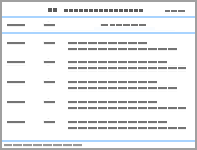
Table 1

Porosity and permeability characteristics of core samples from Cretaceous Sa-Pu reservoir in eastern Daqing placanticline, Songliao Basin"

样品
编号
孔隙度/
%
渗透率/
mD
样品
编号
孔隙度/
%
渗透率/
mD
1# 24.4 246.5 4# 22.1 87.0
2# 21.6 183.0 5# 20.4 73.3
3# 23.4 108.0 6# 21.8 43.7

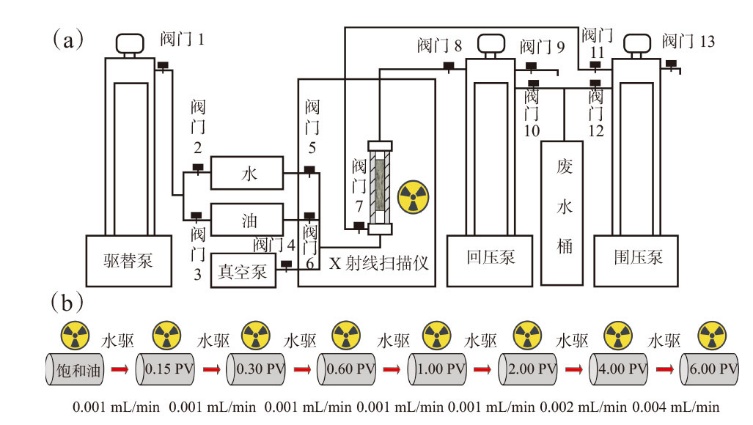
Fig. 1

Schematic diagram of experiment setup (a) and workflow (b) of displacement coupled with CT scanning"

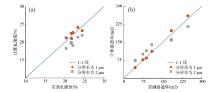
Fig. 2

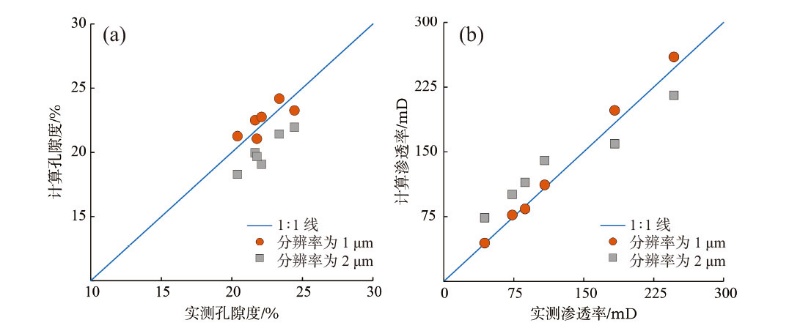
Comparison between calculated and measured porosity (a), permeability (b) under different scanning resolutions for core samples from Cretaceous Sa-Pu reservoir in eastern Daqing placanticline, Songliao Basin"

Fig. 3

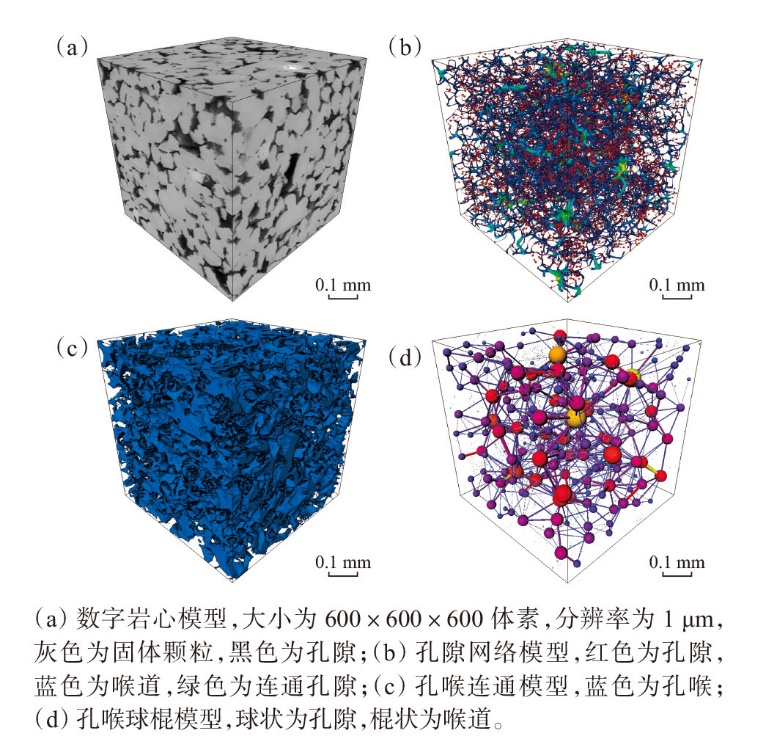
Digital rock and pore network models of sample 2# from Cretaceous Sa-Pu reservoir in eastern Daqing placanticline, Songliao Basin"

Fig. 4

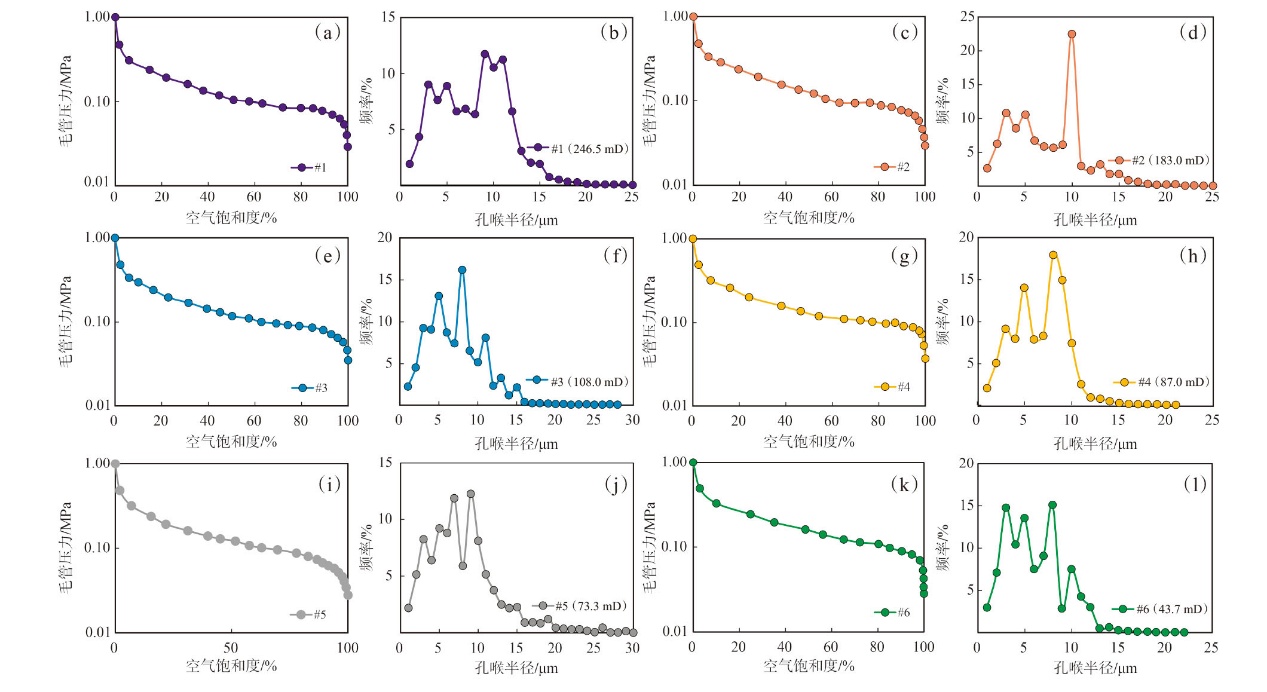
Simulated capillary pressure curves and pore-throat radius distributions for core experiments of Cretaceous Sa-Pu reservoir in eastern Daqing placanticline, Songliao Basin"

Table 2

Microscopic pore structure characteristics of cores from Cretaceous Sa-Pu reservoir in eastern Daqing placanticline, Songliao Basin"

样品
编号
平均孔喉
半径/μm
最大连通孔
喉半径/μm
中值孔喉
半径/μm


分选
系数


孤立孔
占比/%
1# 7.9 10.8 7.2 2.24 2 1.44 2.63 1.89
2# 7.4 9.7 6.1 2.28 2 1.42 2.71 1.88
3# 7.1 10.0 6.4 2.36 2 1.44 2.42 1.67
4# 6.6 8.5 5.8 2.37 2 1.40 2.68 1.06
5# 8.0 11.2 6.1 2.28 2 1.41 2.84 2.59
6# 6.1 8.4 4.7 2.14 2 1.46 3.30 3.16

Fig. 5

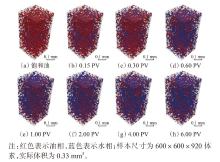
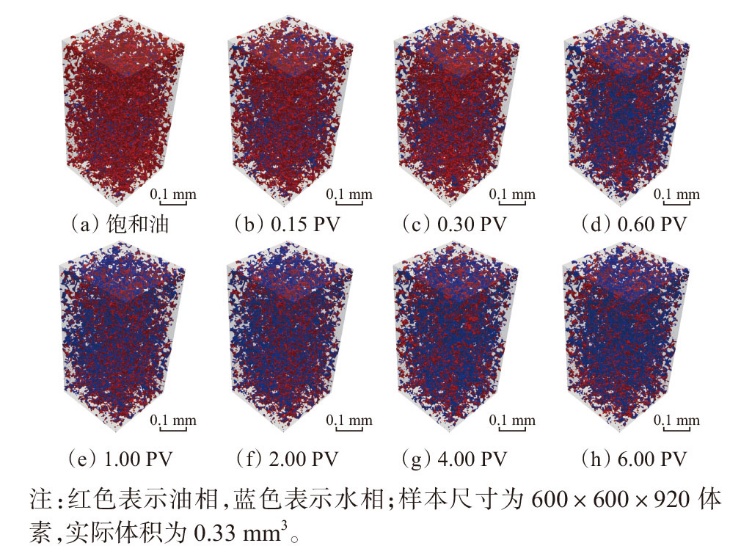
Three-dimension distribution of oil-water phases during water flooding experiments for sample 2# from Cretaceous Sa-Pu reservoir in eastern Daqing placanticline, Songliao Basin"

Fig. 6

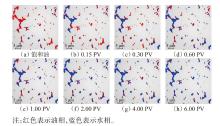
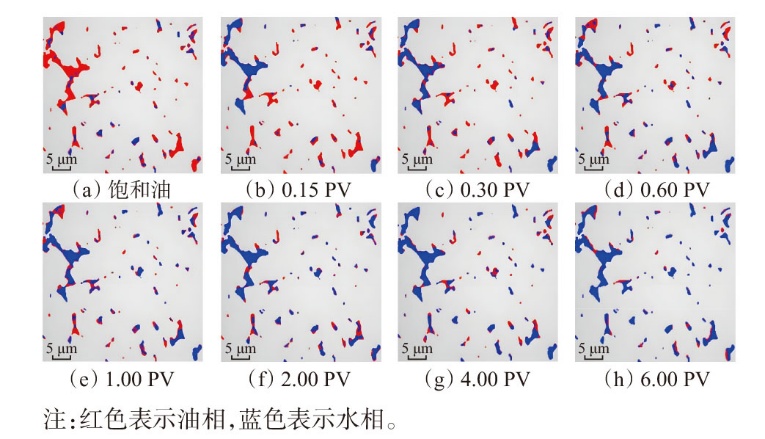
Two-dimension distribution of oil-water phases during water flooding experiments for sample 2# from Cretaceous Sa-Pu reservoir in eastern Daqing placanticline, Songliao Basin"

Fig. 7

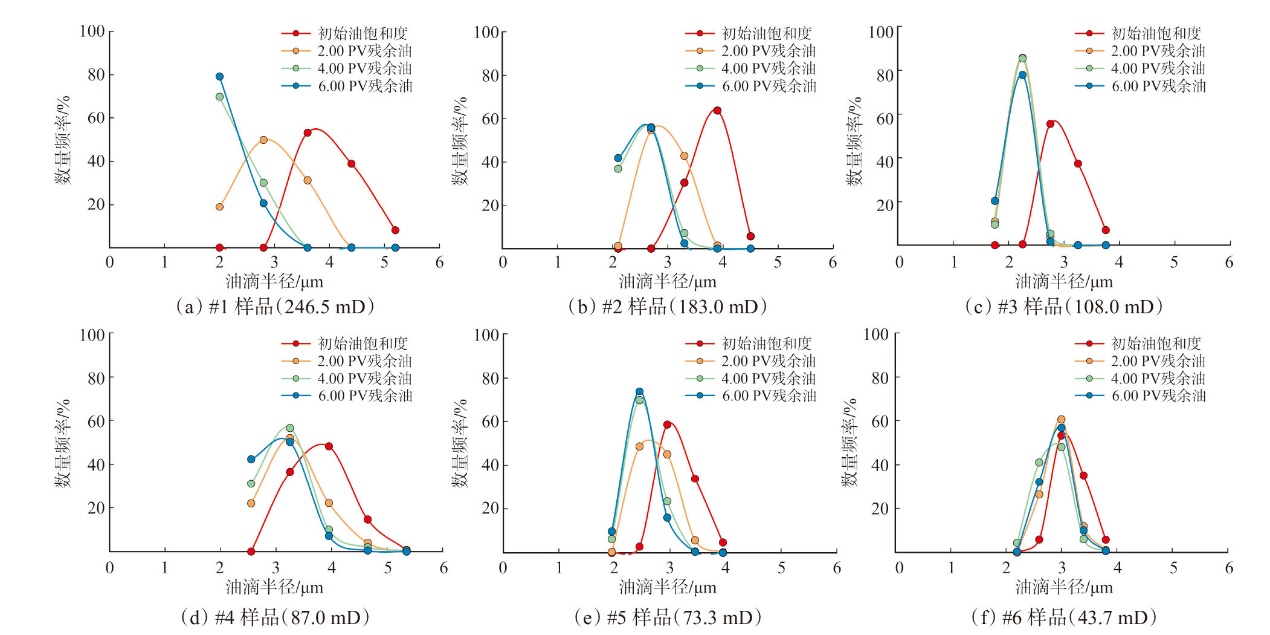
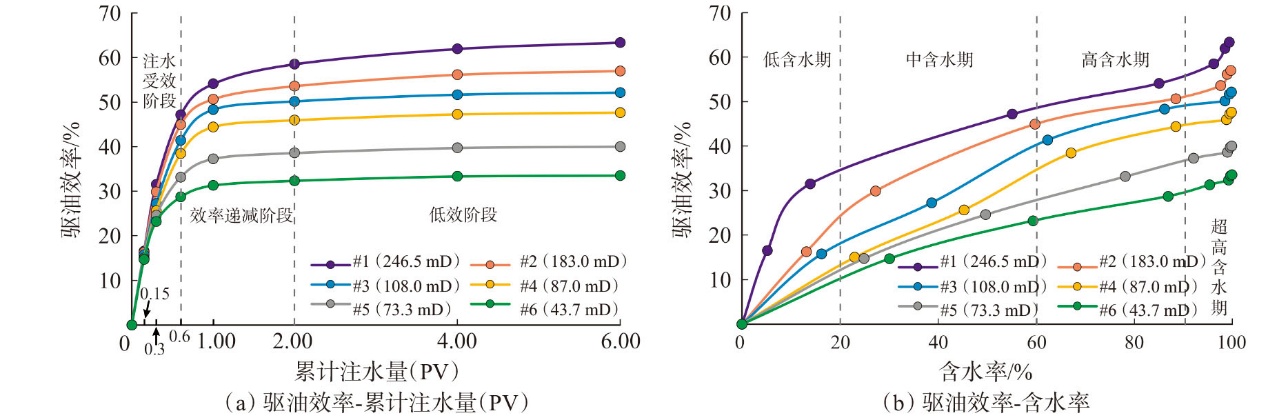
Oil droplet radius distributions at different displacement stages during water flooding experiments for core samples from Cretaceous Sa-Pu reservoir in eastern Daqing placanticline, Songliao Basin"

Table 3

Microscopic remaining oil occurrence states during water flooding experiments of Cretaceous Sa-Pu reservoir, eastern Daqing placanticline, Songliao Basin"

微观剩余油类型 微观模型 形状因子G 接触面积比Ror
网络状 G < 0.01 0 < Ror < 1.00
多孔状 0.01 < G < 0.10 0 < Ror < 1.00
油膜状 0.10 < G < 0.30 0.45 < Ror < 0.60
孤滴状 G > 0.30
0.10 < G < 0.30
0 < Ror < 1.00
Ror < 0.45或Ror > 0.60

Fig. 8

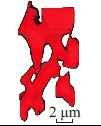
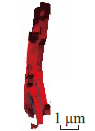
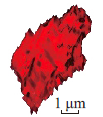
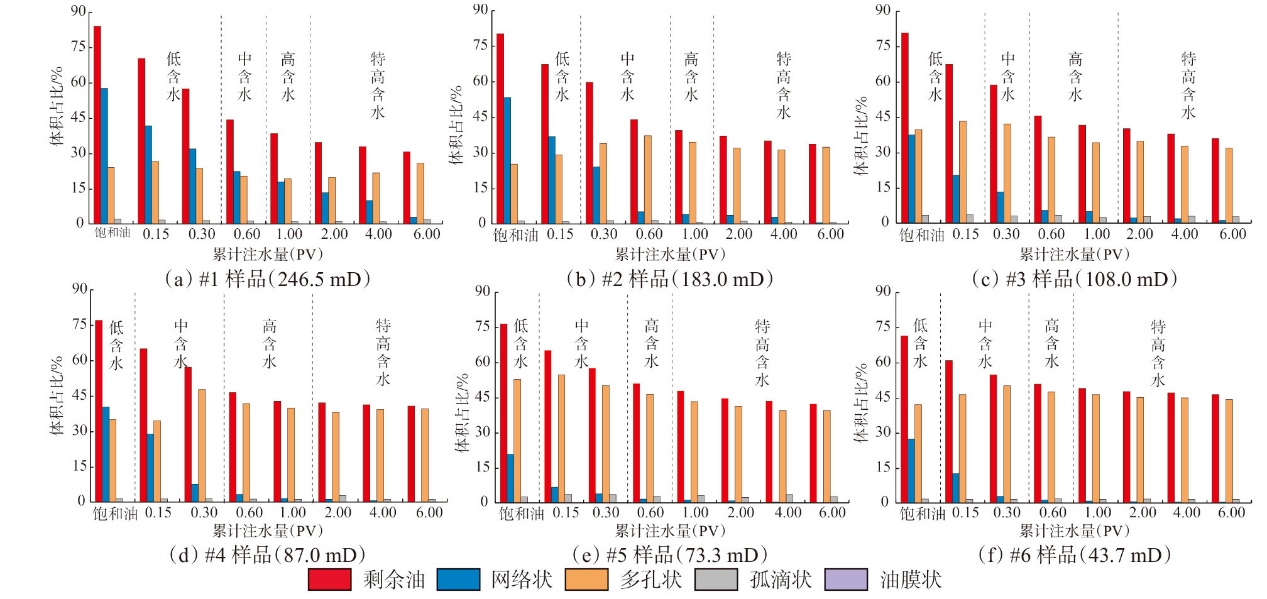
Microscopic remaining oil distribution at different water flooding stages during water flooding experiments for core samples from Cretaceous Sa-Pu reservoir, eastern Daqing placanticline, Songliao Basin"

Fig. 9

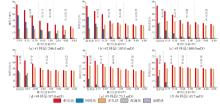
Numerical simulation of water flooding performance of Cretaceous Sa-Pu reservoir, eastern Daqing placanticline, Songliao Basin"

Fig. 10

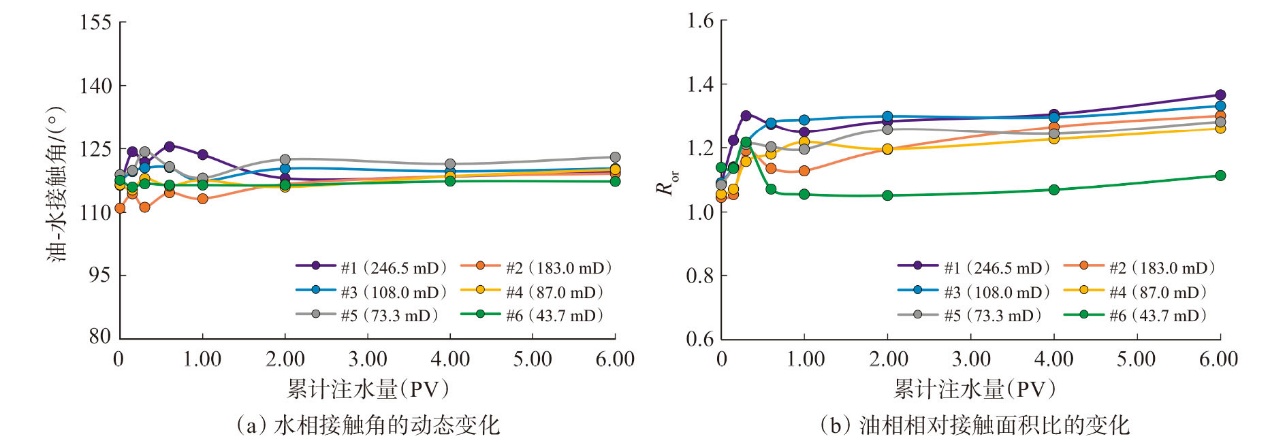
Numerical simulation of interfacial wettability evolution during water flooding of Cretaceous Sa-Pu reservoir, eastern Daqing placanticline, Songliao Basin"

Fig. 11

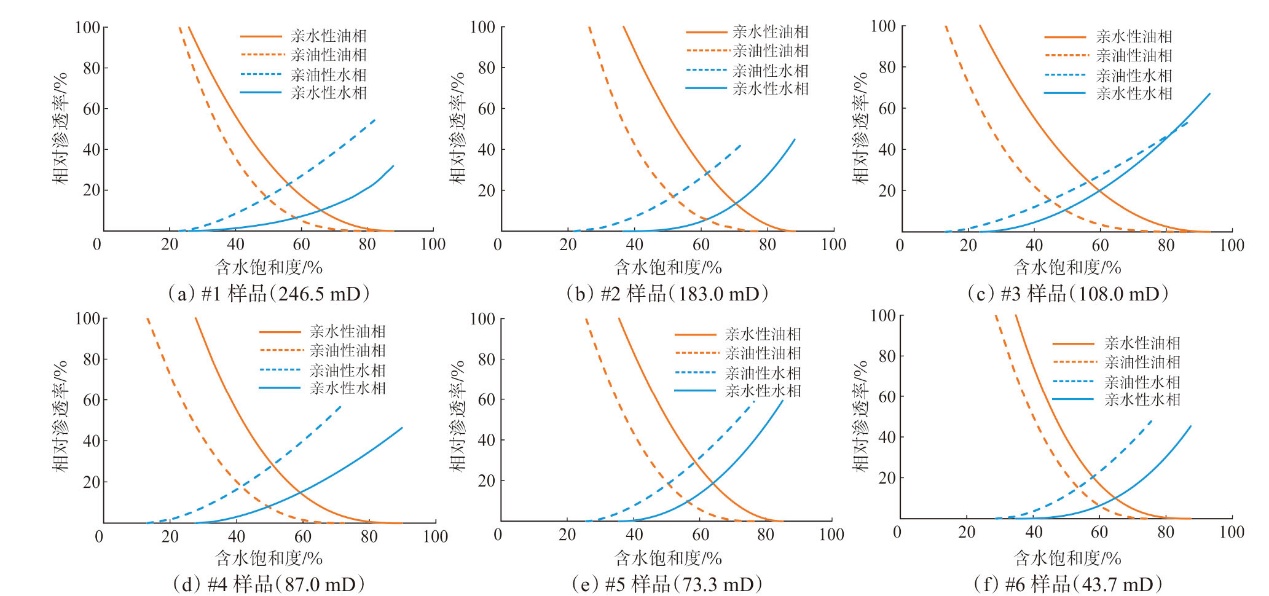
Comparison of oil-water relative permeability under different wettability conditions simulated by Shan-Chen model of Cretaceous Sa-Pu reservoir, eastern Daqing placanticline, Songliao Basin"

[1] 李长政, 孙卫, 任大忠, 等. 华庆地区长81储层微观孔隙结构特征研究[J]. 岩性油气藏, 2012, 24(4):19-23.
LI Changzheng, SUN Wei, REN Dazhong, et al. Microscopic pore structure characteristics of Chang 81 reservoir in Huaqing area[J]. Lithologic Reservoirs, 2012, 24(4):19-23.
[2] 党胜国, 黄保纲, 王惠芝, 等. 三角洲前缘储层非均质性及剩余油挖潜研究[J]. 海洋石油, 2015, 35(2):66-71.
DANG Shengguo, HUANG Baogang, WANG Huizhi, et al. Study on reservoir heterogeneity and potential of remaining oil in delta front[J]. Offshore Oil, 2015, 35(2):66-71.
[3] 肖文华, 杨军, 严宝年, 等. 鄂尔多斯盆地环庆地区三叠系长8致密砂岩储层特征及成藏主控因素[J]. 岩性油气藏, 2025, 37(3):23-32.
XIAO Wenhua, YANG Jun, YAN Baonian, et al. Characteristics and main controlling factors of Triassic Chang 8 tight sandstone reservoir in Huanqing area,Ordos Basin[J]. Lithologic Reservoirs, 2025, 37(3):23-32.
[4] 孙国忠. 饱含油岩心样品薄片的制作技术[J]. 石油实验地质, 2002, 24(6):566-567.
SUN Guozhong. The technique of making thin sections of oil-saturated core samples[J]. Petroleum Geology & Experiment, 2002, 24(6):566-567.
[5] 王朴, 蔡进功, 谢忠怀, 等. 用含油薄片研究剩余油微观分布特征[J]. 油气地质与采收率, 2002, 9(1):60-61.
WANG Pu, CAI Jingong, XIE Zhonghuai, et al. Using oil-bearing thin section to study microscopic distribution feature of remai-ning oil[J]. Petroleum Geology and Recovery Efficiency, 2002, 9(1):60-61.
[6] 应凤祥, 杨式升, 张敏, 等. 激光扫描共聚焦显微镜研究储层孔隙结构[J]. 沉积学报, 2002, 20(1):75-79.
YING Fengxiang, YANG Shisheng, ZHANG Min, et al. Application of laser scanning confocal microscope to the measurement of pore texture in reservoirs[J]. Acta Sedimentologica Sinica, 2002, 20(1):75-79.
[7] 孙先达, 索丽敏, 张民志, 等. 激光共聚焦扫描显微检测技术在大庆探区储层分析研究中的新进展[J]. 岩石学报, 2005, 21(5):1479-1488.
SUN Xianda, SUO Limin, ZHANG Minzhi, et al. New progress of reservoir research by the technology of laser confocal scanning microscope analysis in the Daqing exploration area[J]. Acta Petrologica Sinica, 2005, 21(5):1479-1488.
[8] 曹江骏, 陈朝兵, 罗静兰, 等. 自生黏土矿物对深水致密砂岩储层微观非均质性的影响:以鄂尔多斯盆地西南部合水地区长6油层组为例[J]. 岩性油气藏, 2020, 32(6):36-49.
CAO Jiangjun, CHEN Chaobing, LUO Jinglan, et al. Impact of authigenic clay minerals on micro-heterogeneity of deep water tight sandstone reservoirs:A case study of Triassic Chang 6 oil reservoir in Heshui area,southwestern Ordos Basin[J]. Lithologic Reservoirs, 2020, 32(6):36-49.
[9] 李俊键, 苏航, 姜汉桥, 等. 微流控模型在油气田开发中的应用[J]. 石油科学通报, 2018, 3(3):284-301.
LI Junjian, SU Hang, JIANG Hanqiao, et al. Application of microfluidic models in oil and gas field development[J]. Petroleum Science Bulletin, 2018, 3(3):284-301.
[10] 高克鑫, 范一强, 金志明, 等. 微流控芯片在提高石油采收率技术中的应用[J]. 断块油气田, 2018, 25(2):269-272.
GAO Kexin, FAN Yiqiang, JIN Zhiming, et al. Application of microfluidic chips in enhanced oil recovery technology[J]. Fault-Block Oil & Gas Field, 2018, 25(2):269-272.
[11] 石立华, 魏登峰, 常毓文, 等. 基于微流控模型的致密油藏微观渗吸机制试验[J]. 中国石油大学学报(自然科学版), 2024, 48(2):99-108.
SHI Lihua, WEI Dengfeng, CHANG Yuwen, et al. Experiment on micro imbibition mechanisms of tight reservoirs based on microfluidic models[J]. Journal of China University of Petroleum (Edition of Natural Science), 2024, 48(2):99-108.
[12] 刘红现, 许长福, 胡志明. 用核磁共振技术研究剩余油微观分布[J]. 特种油气藏, 2011, 18(1):96-97.
LIU Hongxian, XU Changfu, HU Zhiming. Research on microcosmic remaining oil distribution by NMR[J]. Special Oil & Gas Reservoirs, 2011, 18(1):96-97.
[13] 王学武, 杨正明, 李海波, 等. 利用核磁共振研究特低渗透油藏微观剩余油分布[J]. 应用基础与工程科学学报, 2013, 21(4):702-709.
WANG Xuewu, YANG Zhengming, LI Haibo, et al. Microscopic distribution of remaining oil of ultra-low permeability reservoir by using NMR technique[J]. Journal of Basic Science and Engineering, 2013, 21(4):702-709.
[14] 程辉, 王付勇, 宰芸, 等. 基于高压压汞和核磁共振的致密砂岩渗透率预测[J]. 岩性油气藏, 2020, 32(3):122-132.
CHENG Hui, WANG Fuyong, ZAI Yun, et al. Prediction of tight sandstone permeability based on high-pressure mercury intrusion (HPMI) and nuclear magnetic resonance (NMR)[J]. Lithologic Reservoirs, 2020, 32(3):122-132.
[15] 徐祖新. 基于CT扫描图像的页岩储层非均质性研究[J]. 岩性油气藏, 2014, 26(6):46-49.
XU Zuxin. Heterogeneity of shale reservoirs based on CT images[J]. Lithologic Reservoirs, 2014, 26(6):46-49.
[16] 黄向胜, 罗程飞, 张群, 等. 油气勘探领域微米CT实验关键技术探讨及应用[J]. 石油实验地质, 2025, 47(3):659-670.
HUANG Xiangsheng, LUO Chengfei, ZHANG Qun, et al. Discussion on key technologies in micro-CT experiments in oil and gas exploration[J]. Petroleum Geology & Experiment, 2025, 47(3):659-670.
[17] 曹永娜. CT扫描技术在微观驱替实验及剩余油分析中的应用[J]. CT 理论与应用研究, 2015, 24(1):47-56.
CAO Yongna. Application CT scanning technology analysis micro-flooding experiments and the residual oil[J]. Compute-rized Tomography Theory and Applications, 2015, 24(1):47-56.
[18] 刘薇薇, 陈少勇, 曹伟, 等. 不同驱替阶段微观剩余油赋存特征及影响因素[J]. 特种油气藏, 2023, 30(3):115-122.
LIU Weiwei, CHEN Shaoyong, CAO Wei, et al. Occurrence characteristics and influencing factors of micro remaining oil in different displacement stages[J]. Special Oil & Gas Reservoirs, 2023, 30(3):115-122.
[19] 侯健, 李振泉, 张顺康, 等. 岩石三维网络模型构建的实验和模拟研究[J]. 中国科学 G 辑:物理学,力学,天文学, 2008, 38(11):1563-1575.
HOU Jian, LI Zhenquan, ZHANG Shunkang, et al. Experiment and simulation the construction of three-dimensional network model of rocks[J]. Science in China Series G:Physics,Mechanics & Astronomy, 2008, 38(11):1563-1575.
[20] GUO Chaohua, WANG Xin, WANG Hua, et al. Effect of pore structure on displacement efficiency and oil-cluster morpho-logy by using micro computed tomography (μCT) technique[J]. Fuel, 2018, 230:430-439.
[21] 周永炳, 刘国志, 俞静. 大庆低渗透油藏探明储量面积圈定的几点认识[J]. 岩性油气藏, 2007, 19(4):111-115.
ZHOU Yongbing, LIU Guozhi, YU Jing. Determination of the proved reserves area of low permeability reservoirs in Daqing Oilfield[J]. Lithologic Reservoirs, 2007, 19(4):111-115.
[22] 迟博, 高庚庚, 薛文卓. 大庆长垣外围葡萄花油层层序地层划分及地层模式[J]. 辽宁化工, 2020, 49(1):89-92.
CHI Bo, GAO Genggeng, XUE Wenzhuo. Sequence stratigraphic division and stratigraphic model of Putaohua oil reservoir around Daqing placanticline[J]. Liaoning Chemical Industry, 2020, 49(1):89-92.
[23] QIN Ming, MA Shizhong, GAO Zan, et al. Study of sedimentary microfacies of Putaohua reservoir at Xu 30 block in Yushulin oil field[J]. Advanced Materials Research, 2014,962-965:300-304.
[24] 曹洪. 大庆长垣外围葡萄花油层河道砂储层单砂体精细刻画新方法[J]. 中外能源, 2023, 28(7):33-41.
CAO Hong. A new method for fine characterization of single sand body of channel sand reservoirs of Putaohua reservoir on periphery of Daqing placanticline[J]. Sino-Global Energy, 2023, 28(7):33-41.
[25] ZHOU Yazhou, YIN Daiyin. The experimental investigation of the development potential of low-permeability reservoirs in the Daqing oilfield[J]. Geofluids, 2020, 2020(1):1-8.
[26] FU Hongtao, BAI Zhenqiang, GUO Hu, et al. Remaining oil distribution law and development potential analysis after polymer flooding based on reservoir architecture in Daqing oilfield,China[J]. Polymers, 2023, 15(9):2137.
[27] 王立辉, 夏惠芬, 韩培慧, 等. 剩余油分布的微观特征及其可动用程度的定量表征[J]. 岩性油气藏, 2021, 33(2):147-154.
WANG Lihui, XIA Huifen, HAN Peihui, et al. Microscopic characteristics of remaining oil distribution and quantitative characterization of its producibility[J]. Lithologic Reservoirs, 2021, 33(2):147-154.
[28] 侯健, 邱茂鑫, 陆努, 等. 采用CT技术研究岩心剩余油微观赋存状态[J]. 石油学报, 2014, 35(2):319-325.
HOU Jian, QIU Maoxin, LU Nu, et al. Characterization of residual oil microdistribution at pore scale using computerized tomography[J]. Acta Petrolei Sinica, 2014, 35(2):319-325.
[29] YANG Jiangshan, SHAN Gaojun, WANG Zhiqiang, et al. Experimental study of distribution and quantitative characterization of discontinuous oil phase based on micro-CT[J]. Frontiers in Earth Science, 2023, 11:1117971.
[30] JING Wenlong, ZHANG Lei, LI Aifen, et al. Investigation of pore-scale remaining oil dynamic evolution in heterogeneous marine carbonate using real-time computed tomography scanning[J]. Energy & Fuels, 2022, 36(15):8180-8188.
[31] 钱真, 李辉, 乔林, 等. 碳酸盐岩油藏低矿化度水驱作用机理实验[J]. 岩性油气藏, 2020, 32(3):159-165.
QIAN Zhen, LI Hui, QIAO Lin, et al. Experiment on the mechanism of low salinity waterflooding in carbonate reservoir[J]. Lithologic Reservoirs, 2020, 32(3):159-165.
[1] DING Yajie, LI Xiang, HAN Zijian, XIE Lei, WEI Pu, WEI Ting, LUO Yang, MA Xinzhao. Fine geological modeling method for Jurassic Sangonghe Formation condensate gas reservoir in Mobei uplift of Junggar Basin [J]. Lithologic Reservoirs, 2026, 38(4): 191-200.
[2] PANG Zhichao, ZHANG Ben, DANG Wandi, GAO Ming, MAO Chenfei, CHEN Guojun. Optimized logging interpretation for tight glutenite reservoir based on beluga whale algorithm [J]. Lithologic Reservoirs, 2026, 38(2): 153-161.
[3] HU Changhao, PEI Jiaxue, YANG Xue, CAI Guogang, FAN Jiaming, LI Li. Geological characteristics and genesis of trona deposit in Cretaceous Yixian Formation of Naiman Sag, Kailu Basin [J]. Lithologic Reservoirs, 2026, 38(1): 1-12.
[4] XIAO Meng, ZHOU Yong, WANG Ke, YAN Jingchi, ZHANG Yuejie. Paleogeomorphologic characteristics and sand control mechanisms of Cretaceous Shahezi Formation in Lishu fault depression, southern Songliao Basin [J]. Lithologic Reservoirs, 2026, 38(1): 146-161.
[5] CAO Ruibo, PI Yanfu, LIU Guochao. Characteristics of oil reservoir seepage and formation mechanism ofdominant seepage channel after polymer flooding [J]. Lithologic Reservoirs, 2025, 37(6): 191-200.
[6] ZHANG Yunfeng, SHI Xiaodong, LIU Zongbao, YANG Xuewei, WANG Hongjun, HAO Bin. Structural-lithologic trap types and main controlling factors of hydrocarbon accumulation of Cretaceous in Longhupao Oilfield,Songliao Basin [J]. Lithologic Reservoirs, 2025, 37(5): 111-121.
[7] LIU Lijuan, LI Junhui, FU Xiuli, BAI Yue, ZHENG Qiang. Characteristics and geological significance of volcanic ash of Cretaceous Qingshankou Formation in the central depression of northern Songliao Basin [J]. Lithologic Reservoirs, 2025, 37(5): 145-154.
[8] XU Sihui, ZHAO Jun, ZHAO Xinjian, WANG Junyu, LI Zhaoping, LIN Zongpeng. Fracture effectiveness evaluation of tight reservoir of Cretaceous Yageliemu Formation in Kelasu structural belt,Kuqa piedmont [J]. Lithologic Reservoirs, 2025, 37(5): 155-165.
[9] HU Changhao, PEI Jiaxue, CAI Guogang. Hydrocarbon continuous accumulation conditions of Cretaceous Jiufotang Formation in Ludong Sag,Kailu Basin [J]. Lithologic Reservoirs, 2025, 37(3): 1-12.
[10] RAN Yixuan, DU Changpeng, ZHANG Jingjing. Accumulation condition of “below the source rock” tight oil in the 4th member of Cretaceous Quantou Formation in Putaohua Oilfield, northern Songliao Basin [J]. Lithologic Reservoirs, 2025, 37(3): 47-58.
[11] HE Xing, JIN Wei, ZHANG Fan, HUO Qiuli, LI Yue, BAO Junchi, LIU Lu, ZENG Qingbing. Geochemical characteristics and source of crude oil of Cretaceous Tongbomiao Formation in Urxun Depression,Hailar Basin [J]. Lithologic Reservoirs, 2025, 37(1): 41-52.
[12] CHEN Hongguo, ZHANG Fengqi, JIANG Qingchun, LIU Hongyan, SUN Lidong, LIU Gang. Overpressure-generating mechanism and its evolution characteristics of Cretaceous Shahezi Formation in Xujiaweizi Fault Depression,Songliao Basin [J]. Lithologic Reservoirs, 2025, 37(1): 102-114.
[13] WEI Huan, SHAN Changan, ZHU Songbai, HUANG Zhongxin, LIU Hanguang, ZHU Bing, WU Changtao. Fracture development characteristics and geological significance of tight sandstone of Cretaceous Bashijiqike Formation in Keshen area,Kuqa Depression [J]. Lithologic Reservoirs, 2025, 37(1): 149-160.
[14] QU Weihua, TIAN Ye, DONG Changchun, GUO Xiaobo, LI Lili, LIN Siya, XUE Song, YANG Shihe. Characteristics of Cretaceous source rocks and their controlling effect on hydrocarbon accumulation in Dehui Fault Depression,Songliao Basin [J]. Lithologic Reservoirs, 2024, 36(6): 122-134.
[15] XIAO Boya. Characteristics and favorable zone distribution of tuff reservoirt of Cretaceous in A’nan sag,Erlian Basin [J]. Lithologic Reservoirs, 2024, 36(6): 135-148.
Viewed
Full text


Abstract

Cited

  Shared   
  Discussed   
No Suggested Reading articles found!
TRENDMD: