岩性油气藏 ›› 2026, Vol. 38 ›› Issue (2): 12–31.doi: 10.12108/yxyqc.20260202
中国陆上中小盆地群发育特征与油气勘探方向
杨占龙1,2( ), 郝彬1,2, 谭开俊1,2, 张晶1,2, 张丽萍1,2, 廖建波1,2, 李在光1,2, 史江龙1,2
- 1
中国石油勘探开发研究院 西北分院 兰州 730020
2中国石油集团油藏描述重点实验室 兰州 730020
Geological features and hydrocarbon exploration directions of medium to small-scale basin group, onshore China
YANG Zhanlong1,2(), HAO Bin1,2, TAN Kaijun1,2, ZHANG Jing1,2, ZHANG Liping1,2, LIAO Jianbo1,2, LI Zaiguang1,2, SHI Jianglong1,2
- 1
Research Institute of Petroleum Exploration & Development-Northwest (NWGI) ,PetroChina Lanzhou 730020, China
2Key Laboratory of Reservoir Description ,CNPC Lanzhou 730020, China
摘要:
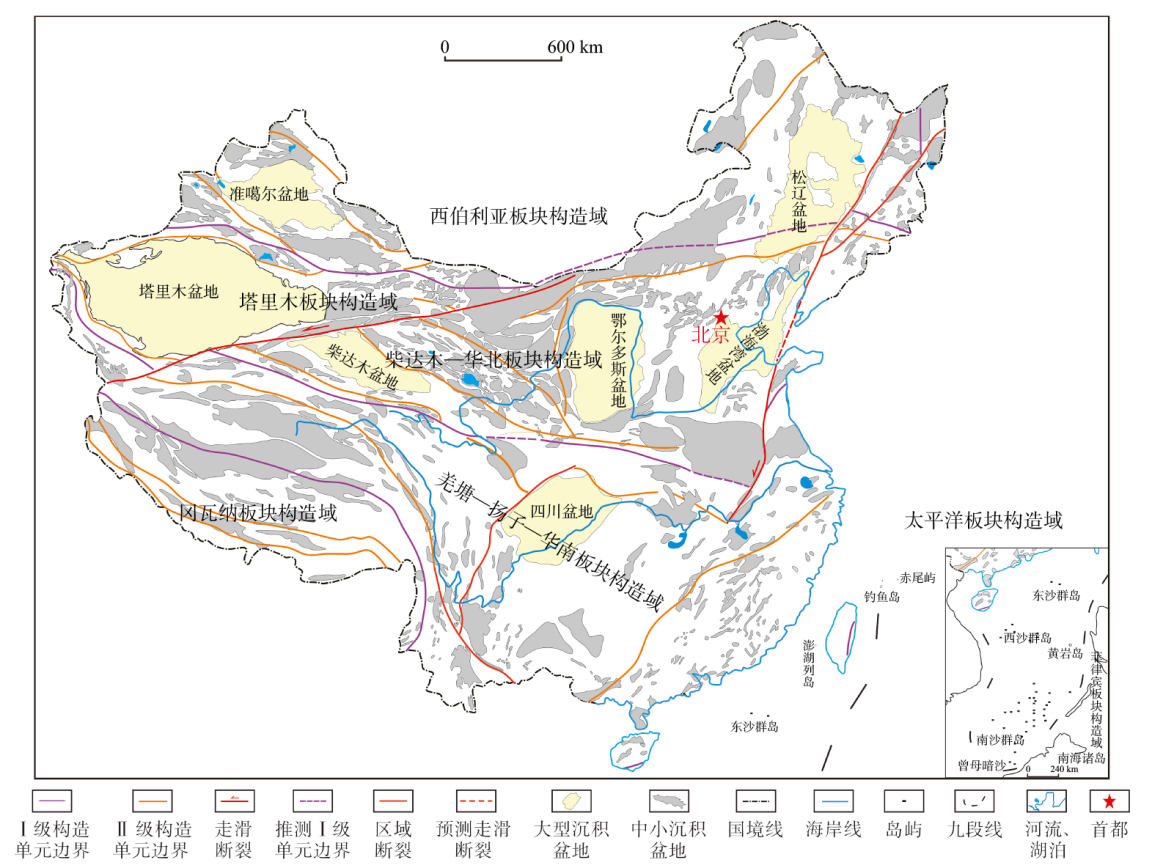
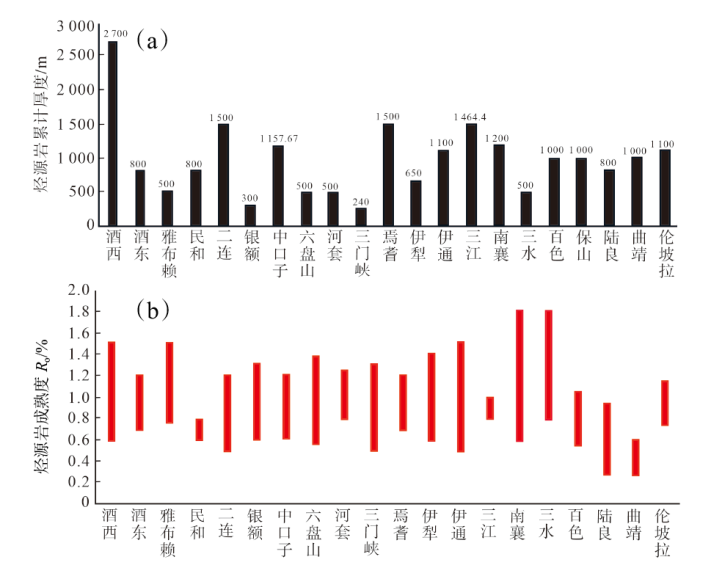
中国陆上中小盆地总体认识程度低、勘探程度不高,油气资源潜力与勘探方向不明确,但部分盆地已取得大规模油气发现。通过将全国中小盆地纳入同一盆地类型进行整体对比研究,探讨了中小盆地油气富集的关键控制因素,进而进行中小盆地勘探战略选区与有利盆地优选,以明确中小盆地勘探方向。研究结果表明:①构造域背景及构造活动过程是影响中小盆地以盆地群特征发育的关键控制因素,在较大稳定构造域周缘以发育快速沉降形成的原生型沉积盆地群为主,在活动带内部及其周缘主要发育改造残留型沉积盆地群,在多期次构造活动区域多发育叠置型沉积盆地群。②原生型盆地主要发育中—新生界湖-沼相煤系地层和湖相泥质烃源岩系,以Ⅱ—Ⅲ型有机质为主,部分盆地有机质丰度达0.5%以上,但不同盆地、不同层系及相同层系不同部位成熟度变化大;部分改造残留型盆地发育古生界海相或海陆过渡相碳酸盐岩、泥质烃源岩系,以Ⅰ—Ⅱ型有机质为主,部分盆地有机质丰度达到0.3%以上,成熟度较高,处于成熟—过成熟阶段;中下组合是叠置型盆地烃源岩发育的主要层系。③决定部分中小盆地富集油气的主要因素包括:原生型盆地经历了完整的湖盆填充演化过程,改造残留型盆地遭受的抬升和剥蚀作用没有破坏成盆期优质烃源岩的主体部分,叠置型盆地往往具备优质烃源岩成熟与保存的后期改造过程,均经历了后期的深埋作用;盆地区具有以高地温梯度为特征的深部热背景,有利于烃源岩成熟、油气规模运移和生成烃类的有效保存。④中国陆上环鄂尔多斯盆地周缘部分原生型盆地、泛河西地区部分改造残留型盆地、沿郯庐断裂带发育的部分走滑-拉分盆地、南方部分后期改造程度低的古生界残留盆地和新生代发育的原生型盆地、西部较稳定区域发育的部分叠置型盆地中下组合均具备良好的油气勘探潜力。近源勘探或顺流体运移优势路径开展探索是中小盆地油气勘探必须把握的关键,中小盆地已构成中国陆上油气勘探战略选区的重要接替领域。
中图分类号:
- TE121.13








| [1] | 徐旭辉, 高长林, 黄泽光, 等. 中国盆地形成的三大活动构造历史阶段[J]. 石油与天然气地质, 2005, 26(2):155-162. |
| XU Xuhui, GAO Changlin, HUANG Zeguang, et al. Three stages of tectonic movements in formation of petroliferous basins in China[J]. Oil & Gas Geology, 2005, 26(2):155-162. | |
| [2] | 刘训, 游国庆. 中国的板块构造区划[J]. 中国地质, 2015, 42(1):1-17. |
| LIU Xun, YOU Guoqing. Tectonic regional subdivision of China in the light of plate theory[J]. Geology in China, 2015, 42(1):1-17. | |
| [3] | 杨占龙, 陈启林. 盆地群的概念及其应用:以中国陆上盆地为例[J]. 西北油气勘探, 1999, 11(3):6-13. |
| YANG Zhanlong, CHEN Qilin. The concept of basin groups and their applications:A case study of China’s onshore basins[J]. Northwestern Hydrocarbon Exploration, 1999, 11(3):6-13. | |
| [4] | 张国伟, 董云鹏, 裴先治, 等. 关于中新生代环西伯利亚陆内构造体系域问题[J]. 地质通报, 2002, 21(4):198-201. |
| ZHANG Guowei, DONG Yunpeng, PEI Xianzhi, et al. On the Meso-Cenozoic circum-Siberian intracontinental tectonic system[J]. Geological Bulletin of China, 2002, 21(4):198-201. | |
| [5] | 杨占龙, 卫平生, 李天顺, 等. 内蒙裂谷盆地群构造地质特征与油气[J]. 西北油气勘探, 1997, 9(2):23-29. |
| YANG Zhanlong, WEI Pingsheng, LI Tianshun, et al. Structural geological characteristics and hydrocarbon of Inner Mongolia rift basin group[J]. Northwestern Hydrocarbon Exploration, 1997, 9(2):23-29. | |
| [6] | 杨占龙, 黄华芳, 王金荣. 中国西部“造山型”盆地构造特征与油气赋存[J]. 西北油气勘探, 1998, 10(4):1-7. |
| YANG Zhanlong, HUANG Huafang, WANG Jinrong. Tectonic characteristics and hydrocarbon occurrence of “orogenic type” basins in western China[J]. Northwestern Hydrocarbon Exploration, 1998, 10(4):1-7. | |
| [7] | 姚亚明, 刘池阳, 赵增录, 等. 焉耆盆地构造演化与油气聚集[J]. 新疆石油地质, 2003, 24(2):115-117. |
| YAO Yaming, LIU Chiyang, ZHAO Zenglu, et al. Structural evolution and hydrocarbon accumulation in Yanqi Basin[J]. Xinjiang Petroleum Geology, 2003, 24(2):115-117. | |
| [8] | 冯怀伟, 许淑梅, 崔红庄, 等. 甘肃敦煌盆地侏罗纪原型盆地性质与沉积环境演化[J]. 地质论评, 2021, 67(3):640-654. |
| FENG Huaiwei, XU Shumei, CUI Hongzhuang, et al. Jurassic depositional environmental evolution and prototype basin in Dunhuang Basin,Gansu province[J]. Geological Review, 2021, 67(3):640-654. | |
| [9] | 陈正乐, 白彦飞, 陈柏林, 等. 阿尔金山索尔库里北盆地沉积与构造演化[J]. 地质通报, 2003, 22(6):405-411. |
| CHEN Zhengle, BAI Yanfei, CHEN Bailin, et al. Sedimentation and tectonic evolution of the north Xorkol basin in the Altyn Tagh Range[J]. Geological Bulletin of China, 2003, 22(6):405-411. | |
| [10] |
王清华, 杨海军, 李勇, 等. 塔西南山前地区恰探1井石炭系—二叠系重大突破与勘探前景[J]. 中国石油勘探, 2023, 28(4):34-45.
doi: 10.3969/j.issn.1672-7703.2023.04.004 |
|
WANG Qinghua, YANG Haijun, LI Yong, et al. Major breakthrough in the Carboniferous-Permian in Well Qiatan 1 and exploration prospect in the piedmont southwestern Tarim Basin[J]. China Petroleum Exploration, 2023, 28(4):34-45.
doi: 10.3969/j.issn.1672-7703.2023.04.004 |
|
| [11] |
陈启林, 杨占龙. 泛河西走廊盆地群油气地质特征与勘探前景[J]. 天然气地球科学, 2010, 21(2):186-192.
doi: 10.11764/j.issn.1672-1926.2010.02.186 |
|
CHEN Qilin, YANG Zhanlong. Petroleum geology of Pan-Hexi corridor basins and exploration prospecting[J]. Natural Gas Geoscience, 2010, 21(2):186-192.
doi: 10.11764/j.issn.1672-1926.2010.02.186 |
|
| [12] |
张锐锋, 何海清, 朱庆忠, 等. 河套盆地临河坳陷石油地质特征与油气富集规律[J]. 石油勘探与开发, 2023, 50(4):695-705.
doi: 10.11698/PED.20220755 |
| ZHANG Ruifeng, HE Haiqing, ZHU Qingzhong, et al. Petroleum geological features and hydrocarbon enrichment of Linhe Depression in Hetao Basin,NW China[J]. Petroleum Exploration and Development, 2023, 50(4):695-705. | |
| [13] | 张克信, 王国灿, 陈奋宁, 等. 青藏高原古近纪—新近纪隆升与沉积盆地分布耦合[J]. 地球科学(中国地质大学学报), 2007, 32(5):583-597. |
| ZHANG Kexin, WANG Guocan, CHEN Fenning, et al. Coupling between the uplift of Qinghai Tibet plateau and distribution of basins of Paleogene-Neogene[J]. Earth Science—Journal of China University of Geosciences, 2007, 32(5):583-597. | |
| [14] | 舒良树, 周新民, 邓平, 等. 中国东南部中、新生代盆地特征与构造演化[J]. 地质通报, 2004, 23(增刊2):876-884. |
| SHU Liangshu, ZHOU Xinmin, DENG Ping, et al. Geological features and tectonic evolution of Meso-Cenozoic basins in southeastern China[J]. Geological Bulletin of China, 2004, 23(Suppl 2):876-884. | |
| [15] | 徐政语, 姚根顺, 张喜满, 等. 中国南方五省区陆相中小盆地石油地质特征分析[J]. 石油实验地质, 2012, 34(2):158-166. |
| XU Zhengyu, YAO Genshun, ZHANG Ximan, et al. Petroleum geologic characteristics of medium-small continental basins in five provinces in South China[J]. Petroleum Geology & Experiment, 2012, 34(2):158-166. | |
| [16] | 胡文海, 陈冬睛. 美国油气田分布规律和勘探经验[M]. 北京: 石油工业出版社, 1995. |
| HU Wenhai, CHEN Dongqing. Distribution of oil and gas fields in the United States and exploration experience[M]. Beijing: Petroleum Industry Press, 1995. | |
| [17] |
陈建平, 魏军, 倪云燕, 等. 酒泉盆地酒西坳陷主力烃源岩分布及对油气勘探的启示[J]. 石油学报, 2018, 39(11):1223-1240.
doi: 10.7623/syxb201811003 |
|
CHEN Jianping, WEI Jun, NI Yunyan, et al. Determination of main source rocks in the Jiuxi depression of Jiuquan Basin and its implications for oil and gas exploration[J]. Acta Petrolei Sinica, 2018, 39(11):1223-1240.
doi: 10.7623/syxb201811003 |
|
| [18] |
LIU Chiyang, HUANG Lei, ZHAO Hongge, et al. Small-scale petroliferous basins in China:Characteristics and hydrocarbon occurrence[J]. AAPG Bulletin, 2019, 103(9):2139-2175.
doi: 10.1306/0130191608217014 |
| [19] |
淡伟宁, 尹柯惟, 李玲, 等. 雅布赖盆地侏罗系岩性油气藏勘探突破与意义[J]. 石油学报, 2024, 45(11):1607-1620.
doi: 10.7623/syxb202411004 |
|
DAN Weining, YIN Kewei, LI Ling, et al. Exploration breakthrough of Jurassic lithological oil and gas reservoirs in Yabulai Basin and its significance[J]. Acta Petrolei Sinica, 2024, 45(11):1607-1620.
doi: 10.7623/syxb202411004 |
|
| [20] | 门相勇, 赵文智, 王智诒. 潮水盆地金昌坳陷油气成藏条件分析与含油气远景评价[J]. 石油勘探与开发, 2001, 28(1):23-26. |
| MEN Xiangyong, ZHAO Wenzhi, WANG Zhiyi. Oil-gas accumulation condition analysis and oil-gas prospect evaluation of Jinchang depression in Chaoshui basin[J]. Petroleum Exploration and Development, 2001, 28(1):23-26. | |
| [21] | 丁修建, 柳广弟, 赵龙梅, 等. 小型断陷湖盆有机质富集和烃源岩形成机制:以二连盆地下白垩统腾格尔组一段为例[J]. 新疆石油地质, 2017, 38(6):650-657. |
| DING Xiujian, LIU Guangdi, ZHAO Longmei, et al. Organic matter enrichment and hydrocarbon source rock forming mechanism in small-scale faulted lacustrine basins:A case from the first member of Lower Cretaceous Tenger Formation in Erlian Basin[J]. Xinjiang Petroleum Geology, 2017, 38(6):650-657. | |
| [22] | 王建, 王权, 钟雪梅, 等. 二连盆地优质烃源岩发育特征及成藏贡献[J]. 石油实验地质, 2015, 37(5):641-647. |
| WANG Jian, WANG Quan, ZHONG Xuemei, et al. Characteristics of high-quality hydrocarbon source rocks and their contributions to reservoirs in the Erlian Basin[J]. Petroleum Geology & Experiment, 2015, 37(5):641-647. | |
| [23] | 李天军, 黄志龙, 王瑞, 等. 银根-额济纳旗盆地天草凹陷下白垩统巴音戈壁组有效烃源岩地球化学特征及其形成环境[J]. 吉林大学学报(地球科学版), 2021, 51(4):957-972. |
| LI Tianjun, HUANG Zhilong, WANG Rui, et al. Geochemical characteristics and formation environment of effective hydrocarbon source rock of the Lower Cretaceous Bayingebi Formation in Tiancao Sag,Yingen-Ejinaqi Basin[J]. Journal of Jilin University (Earth Science Edition), 2021, 51(4):957-972. | |
| [24] | 牛海青, 韩小锋, 肖波, 等. 中口子盆地侏罗系煤系烃源岩地球化学特征及生烃潜力评价[J]. 吉林大学学报(地球科学版), 2019, 49(4):970-981. |
| NIU Haiqing, HAN Xiaofeng, XIAO Bo, et al. Evaluation of hydrocarbon generation and geochemical characteristics of coal measure source rocks,Zhongkouzi Basin in Beishan area[J]. Journal of Jilin University (Earth Science Edition), 2019, 49 (4):970-981. | |
| [25] | 韩小锋, 牛海青, 卜建军, 等. 甘蒙地区北山盆地群中口子盆地侏罗系烃源岩特征及评价[J]. 地质科技情报, 2019, 38(5):46-53. |
| HAN Xiaofeng, NIU Haiqing, PU Jianjun, et al. Characteristics and evaluation of Jurassic source rocks in Zhongkouzi Basin,Beishan basins,Gansu-Inner Mongolia area[J]. Geological Science and Technology Information, 2019, 38(5):46-53. | |
| [26] | 仁和爱, 李刚. 北山地区总口子盆地油气勘探方向[J]. 海洋地质动态, 2005, 21(4):24-27. |
| REN Heai, LI Gang. Direction of hydrocarbon exploration in Zongkouzi Basin of Beishan area[J]. Marine Geology Letters, 2005, 21(4):24-27. | |
| [27] | 张天兵, 彭恒, 陈江萌, 等. 六盘山盆地固原凹陷构造-热演化史及油气地质意义[J]. 断块油气田, 2022, 29(3):337-343. |
| ZHANG Tianbing, PENG Heng, CHEN Jiangmeng, et al. Tectono-thermal evolution history and geological significance of Guyuan Depression in Liupanshan Basin[J]. Fault-Block Oil & Gas Field, 2022, 29(3):337-343. | |
| [28] | 刘运黎, 汤玉平. 青藏高原东北缘六盘山盆地烃源岩的地球化学特征[J]. 地质通报, 2007, 26(4):483-491. |
| LIU Yunli, TANG Yuping. Geochemistry of hydrocarbon source rocks in the Liupanshan basin at the northeastern margin of the Qinghai-Tibet plateau[J]. Geological Bulletin of China, 2007, 26(4):483-491. | |
| [29] | 王权, 刘震, 李晨曦, 等. 河套盆地临河坳陷中-新生代烃源岩分布地震预测[J]. 现代地质, 2021, 35(3):850-860. |
| WANG Quan, LIU Zhen, LI Chenxi, et al. Seismic prediction for Mesozoic-Cenozoic source rock distribution in the Linhe Depression,Hetao Basin[J]. Geoscience, 2021, 35(3):850-860. | |
| [30] | 王丹丹, 张交东, 刘旭锋, 等. 河南三门峡盆地构造格架及其油气资源远景分析[J]. 中国地质, 2024, 51(3):719-727. |
| WANG Dandan, ZHANG Jiaodong, LIU Xufeng, et al. Structural framework of Sanmenxia Basin,Henan Province and its oil and gas resources potential analysis[J]. Geology in China, 2024, 51(3): 719-727. | |
| [31] |
谢其锋, 周立发, 刘羽. 伊犁盆地二叠系烃源岩地球化学特征及其地质意义[J]. 石油学报, 2014, 35(1):50-57.
doi: 10.7623/syxb201401005 |
|
XIE Qifeng, ZHOU Lifa, LIU Yu. Geochemistry and geological signification of Permian source rocks in Yili Basin[J]. Acta Petrolei Sinica, 2014, 35(1):50-57.
doi: 10.7623/syxb201401005 |
|
| [32] | 李志明, 张长江, 秦建中, 等. 新疆库木库里盆地石油地质初步评价[J]. 中国西部油气地质, 2005, 1(2):158-163. |
| LI Zhiming, ZHANG Changjiang, QIN Jianzhong, et al. Preliminary evaluation of oil geology for Kumukuli Basin in Xinjiang[J]. West China Petroleum Geosciences, 2005, 1(2):158-163. | |
| [33] | 张君峰, 许浩, 赵俊龙, 等. 中国东北地区油气地质特征与勘探潜力展望[J]. 中国地质, 2018, 45(2):260-273. |
| ZHANG Junfeng, XU Hao, ZHAO Junlong, et al. Geological characteristics and exploration potential of oil and gas in the northeast area of China[J]. Geology in China, 2018, 45(2):260-273. | |
| [34] | 张抗. 东北地区油气领域接替形势展望(代序)[J]. 地质通报, 2013, 32(8):1141-1146. |
| ZHANG Kang. The prospect of the development of oil and gas exploration in Northeast China (in lieu of preface)[J]. Geological Bulletin of China, 2013, 32(8):1141-1146. | |
| [35] | 王杰, 李伟, 陈树旺, 等. 内蒙古扎鲁特盆地上二叠统林西组烃源岩有机地球化学特征[J]. 地质与资源, 2013, 22(5):367-370. |
| WANG Jie, LI Wei, CHEN Shuwang, et al. Organic geochemistry of the source rocks in Upper Permian Linxi Formation in Jarud Basin,Inner Mongolia[J]. Geology and Resources, 2013, 22(5):367-370. | |
| [36] | 张文浩, 王丹丹, 姚忠岭, 等. 松辽外围东部盆地群下白垩统烃源岩沉积特征与生烃潜力分析[J]. 地质与资源, 2021, 30(3):284-295. |
| ZHANG Wenhao, WANG Dandan, YAO Zhongling, et al. The Lower Cretaceous source rocks from eastern basin group in the periphery of Songliao Basin[J]. Geology and Resources, 2021, 30(3):284-295. | |
| [37] | 李中元, 马立, 陶冶, 等. 三江盆地西大林子凹陷古近系烃源岩生烃条件评价[J]. 石油实验地质, 2012, 34(6):629-634. |
| LI Zhongyuan, MA Li, TAO Ye, et al. Evaluation of hydrocarbon generating conditions of Palaeogene source rocks from Xidalinzi Sag in Sanjiang Basin[J]. Petroleum Geology & Experiment, 2012, 34(6):629-634. | |
| [38] | 杨占龙, 李天顺, 卫平生, 等. 与阿尔金走滑断裂系有关的走滑盆地群及其油气地质特征[J]. 西北油气勘探, 1998, 10(2):9-14. |
| YANG Zhanlong, LI Tianshun, WEI pingsheng, et al. Strike-slip basin group and its hydrocarbon geological characteristics related to the Altyn strike-slip fault system[J]. Northwestern Hydrocarbon Exploration, 1998, 10(2):9-14. | |
| [39] | 余琪祥, 陈君, 余风华. 西北中小型盆地油气资源潜力与勘探领域分析[J]. 西北地质, 2016, 49(1):224-233. |
| YU Qixiang, CHEN Jun, YU Fenghua. Hydrocarbon resource potential within middle and small-sized basins and their exploration fields in northwest China[J]. Northwestern Geology, 2016, 49(1):224-233. | |
| [40] |
张光亚, 温志新, 刘小兵, 等. 全球原型盆地演化与油气分布[J]. 石油学报, 2020, 41(12):1538-1554.
doi: 10.7623/syxb202012008 |
|
ZHANG Guangya, WEN Zhixin, LIU Xiaobing, et al. Evolution of global proto-type basin and the petroleum distribution[J]. Acta Petrolei Sinica, 2020, 41(12):1538-1554.
doi: 10.7623/syxb202012008 |
|
| [41] | 张交东, 周新桂, 杨超, 等. 三门峡盆地地质矿产勘查历程和油气发现启示[J]. 中国地质调查, 2025, 12(1):1-16. |
| ZHANG Jiaodong, ZHOU Xingui, YANG Chao, et al. Exploration history of geological mineral resources in Sanmenxia Basin and implication from oil and gas discovery[J]. Geological Survey of China, 2025, 12(1):1-16. | |
| [42] | BOHACS K M, CARROLL A R, NEAL J E, et al. Lake-basin type,source potential,and hydrocarbon character:An integrated-sequence-stratigraphic-geochemical framework[M]. Tulsa: AAPG Studies in Geology,2000:3-34. |
| [43] | CARROLL A R, BOHACS K M. Stratigraphic classification of ancient lakes:Balancing tectonic and climatic controls[J]. Geo-logy, 1999, 27(2):99-102. |
| [44] | KATZ B J. Lacustrine source rock systems-is the Green River Formation an appropriate analog?[J]. Russian Geology and Geophysics, 1995, 36(6):26-41. |
| [45] | GILBERT G K. Lake Bonneville[R]. Washington D.C.: U.S.Geological Survey, 1890. |
| [46] |
杨占龙, 肖冬生, 武超, 等. 吐哈盆地侏罗纪湖盆填充演化与油气成藏[J]. 天然气地球科学, 2025, 36(3):455-468.
doi: 10.11764/j.issn.1672-1926.2024.11.003 |
|
YANG Zhanlong, XIAO Dongsheng, WU Chao, et al. Infilling evolution and hydrocarbon accumulation of Jurassic in Turpan-Kumul Basin[J]. Natural Gas Geoscience, 2025, 36(3):455-468.
doi: 10.11764/j.issn.1672-1926.2024.11.003 |
|
| [47] |
何海清, 梁世君, 郭绪杰, 等. 吐哈盆地洼陷区中下侏罗统岩性油气藏风险勘探新发现及勘探前景[J]. 天然气地球科学, 2022, 33(7):1025-1035.
doi: 10.11764/j.issn.1672-1926.2022.02.004 |
|
HE Haiqing, LIANG Shijun, GUO Xujie, et al. New discove-ries and exploration prospects of Middle and Lower Jurassic lithologic reservoirs in depression area of Turpan-Hami Basin[J]. Natural Gas Geoscience, 2022, 33(7):1025-1035.
doi: 10.11764/j.issn.1672-1926.2022.02.004 |
|
| [48] |
吴青鹏, 杨占龙, 姚军, 等. 吐哈盆地北部山前带中下侏罗统水西沟群成藏条件及勘探方向[J]. 岩性油气藏, 2021, 33(6):1-11.
doi: 10.12108/yxyqc.20210601 |
|
WU Qingpeng, YANG Zhanlong, YAO Jun, et al. Reservoir forming conditions and exploration prospect of Middle-Lower Jurassic Shuixigou group in northern piedmont belt of Turpan-Hami Basin[J]. Lithologic Reservoirs, 2021, 33(6):1-11.
doi: 10.12108/yxyqc.20210601 |
|
| [49] |
苟红光, 林潼, 房强, 等. 吐哈盆地胜北洼陷中下侏罗统水西沟群天文旋回地层划分[J]. 岩性油气藏, 2024, 36(6):89-97.
doi: 10.12108/yxyqc.20240609 |
|
GOU Hongguang, LIN Tong, FANG Qiang, et al. Stratigraphic division of astronomical cycle in Early-Middle Jurassic Shuixigou Group in the Shengbei subsag of Tuha Basin[J]. Lithologic Reservoirs, 2024, 36(6):89-97.
doi: 10.12108/yxyqc.20240609 |
|
| [50] | 严维德, 王焰新, 高学忠, 等. 共和盆地地热能分布特征与聚集机制分析[J]. 西北地质, 2013, 46(4):223-230. |
| YAN Weide, WANG Yanxin, GAO Xuezhong, et al. Distribution and aggregation mechanism of geothermal energy in Gonghe Basin[J]. Northwestern Geology, 2013, 46(4):223-230. | |
| [51] | 王一波, 刘绍文, 陈超强, 等. 中国陆域大地热流数据汇编 (第五版)[J]. 地球物理学报, 2024, 67(11):4233-4265. |
| WANG Yibo, LIU Shaowen, CHEN Chaoqiang, et al. Compilation of terrestrial heat flow data in continental China (5th edition)[J]. Chinese Journal of Geophysics, 2024, 67(11):4233-4265. | |
| [52] |
付锁堂, 付金华, 喻建, 等. 河套盆地临河坳陷石油地质特征及勘探前景[J]. 石油勘探与开发, 2018, 45(5):749-762.
doi: 10.11698/PED.2018.05.01 |
| FU Suotang, FU Jinhua, YU Jian, et al. Petroleum geological features and exploration prospect of Linhe Depression in Hetao Basin,China[J]. Petroleum Exploration and Development, 2018, 45(5):749-762. | |
| [53] | 郝银全, 林卫东, 董伟宏, 等. 银额盆地与二连盆地成藏条件对比及有利勘探区带[J]. 新疆石油地质, 2006, 27(6):664-666. |
| HAO Yinquan, LIN Weidong, DONG Weihong, et al. Correlation of hydrocarbon accumulation conditions in Yin’e Basin and Erlian Basin and selection of favorable prospecting zones[J]. Xinjiang Petroleum Geology, 2006, 27(6):664-666. | |
| [54] | 李清林, 栗文山, 张晓普, 等. 鄂尔多斯及其周缘地热分布的某些特征[J]. 西北地震学报, 1996, 18(2):51-59. |
| LI Qinglin, LI Wenshan, ZHANG Xiaopu, et al. Characteristics of geothermal distribution in Ordos and its vicinity[J]. Northwestern Seismological Journal, 1996, 18(2):51-59. | |
| [55] |
赵振洋, 李双建, 王根厚. 中下扬子北缘中二叠统孤峰组层状硅质岩沉积环境、成因及硅质来源探讨[J]. 地球科学进展, 2020, 35(2):137-153.
doi: 10.11867/j.issn.1001-8166.2020.003 |
|
ZHAO Zhenyang, LI Shuangjian, WANG Genhou. Discussion on sedimentary environments,origin and source of Middle Permian Gufeng Formation bedded cherts in the northern margin of the Middle-Lower Yangtze area[J]. Advances in Earth Science, 2020, 35(2):137-153.
doi: 10.11867/j.issn.1001-8166.2020.003 |
|
| [56] | 郭念发, 姚柏平, 吴群. 安徽无为盆地油气地质条件评价[J]. 安徽地质, 1999, 9(4):289-294. |
| GUO Nianfa, YAO Baiping, WU Qun. The appraisal of oil and gas geological conditions of the Wuwei Basin,Anhui[J]. Geo-logy of Anhui, 1999, 9(4):289-294. | |
| [57] | 刘林, 芮会超. 渭河盆地结构特征及演化研究[J]. 地质力学学报, 2018, 24 (1):60-69. |
| LIU Lin, RUI Huichao. Exploration on structural characteristics of the Weihe Basin and its evolution[J]. Journal of Geomechanics, 2018, 24 (1):60-69. | |
| [58] | 任战利, 刘润川, 任文波, 等. 渭河盆地地温场分布规律及其控制因素[J]. 地质学报, 2020, 94(7):1938-1949. |
| REN Zhanli, LIU Runchuan, REN Wenbo, et al. Distribution of geothermal field and its controlling factors in the Weihe Basin[J]. Acta Geologica Sinica, 2020, 94(7):1938-1949. | |
| [59] |
饶松, 姜光政, 高雅洁, 等. 渭河盆地岩石圈热结构与地热田热源机理[J]. 地球物理学报, 2016, 59(6)::2176-2190.
doi: 10.6038/cjg20160622 |
| RAO Song, JIANG Guangzheng, GAO Yajie, et al. The thermal structure of the lithosphere and heat source mechanism of geothermal field in Weihe Basin[J]. Chinese Journal of Geophysics, 2016, 59(6):2176-2190. | |
| [60] | 杨占龙. 陆相湖盆岩性圈闭地震解释与地质评价[M]. 北京: 石油工业出版社, 2024. |
| YANG Zhanlong. Seismic interpretation and geological evaluation of lithological traps in lacustrine basins[M]. Beijing: Petroleum Industry Press, 2024. | |
| [61] |
杨占龙, 李相博, 沙雪梅, 等. 陆相湖盆转换面与规模圈闭发育特征[J]. 岩性油气藏, 2025, 37(2):26-37.
doi: 10.12108/yxyqc.20250203 |
|
YANG Zhanlong, LI Xiangbo, SHA Xuemei, et al. Transition surfaces and the characteristics of large-scale traps occurrence in lacustrine basins[J]. Lithologic Reservoirs, 2025, 37(2):26-37.
doi: 10.12108/yxyqc.20250203 |
| [1] | 杨占龙, 李相博, 沙雪梅, 郝彬. 陆相湖盆转换面与规模圈闭发育特征[J]. 岩性油气藏, 2025, 37(2): 26-37. |
| [2] | 窦立荣, 刘化清, 李博, 齐雯, 孙东, 尹路, 韩双彪. 全球天然氢气勘探开发利用进展及中国的勘探前景[J]. 岩性油气藏, 2024, 36(2): 1-14. |
| [3] | 朱珍君, 黄光明, 邱津, 刘康宁, 李琦, 胡俊杰. 哈萨克斯坦斋桑盆地构造特征及其对油气成藏的影响[J]. 岩性油气藏, 2020, 32(4): 23-35. |
| [4] | 韩立国. 济阳坳陷构造体制转换与郯庐断裂带的关系探讨[J]. 岩性油气藏, 2009, 21(1): 72-74. |
|
||
 甘公网安备 62010202002827号