岩性油气藏 ›› 2026, Vol. 38 ›› Issue (4): 63–76.doi: 10.12108/yxyqc.20260406
莺歌海盆地乐东斜坡带中新统黄流组超压储层岩石物理建模方法
陈昊1,2( ), 黄捍东1,2(), 张铁铭3, 崔刚4, 彭嘉辉1,2
- 1
中国石油大学(北京) 油气资源与探测国家重点实验室 北京 102249
2中国石油大学(北京)地球物理学院 北京 102249
3中国石油集团长城钻探工程有限公司 科技信息部 北京 100101
4中国石油集团华北油田公司 采油一厂 河北 任丘062550
Rock physics modeling method for overpressure reservoirs of Miocene Huangliu Formation in Ledong slope, Yinggehai Basin
CHEN Hao1,2(), HUANG Handong1,2(), ZHANG Tieming3, CUI Gang4, PENG Jiahui1,2
- 1
State Key Laboratory of Petroleum Resources and Prospecting ,China University of Petroleum (Beijing) Beijing 102249, China
2College of Geophysics ,China University of Petroleum (Beijing) Beijing 102249, China
3Science & Technology Information Department ,CNPC Greatwall Drilling Engineering Co., Ltd. Beijing 100101, China
4No. 1 Production Plant ,PetroChina Huabei Oilfield Company, Renqiu 062550 Hebei, China
摘要:
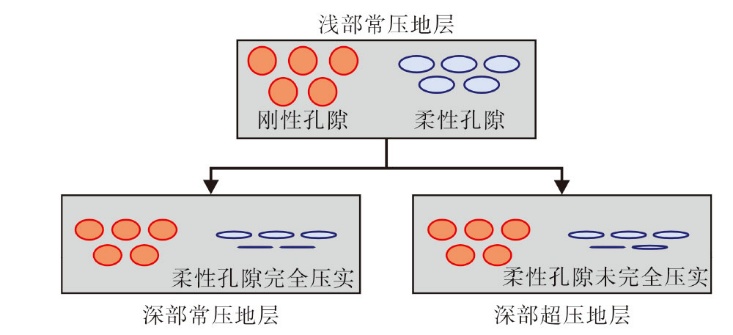
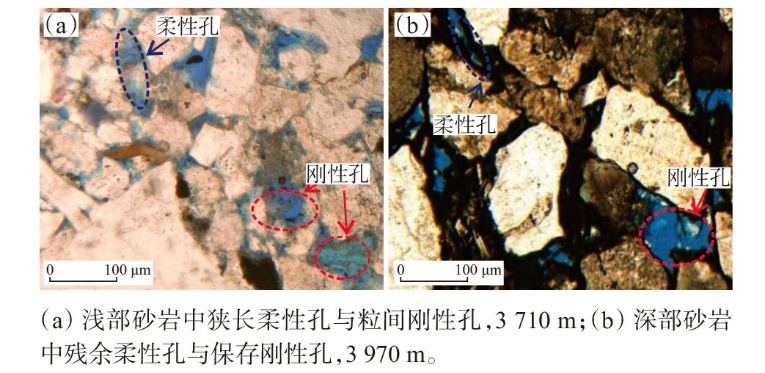
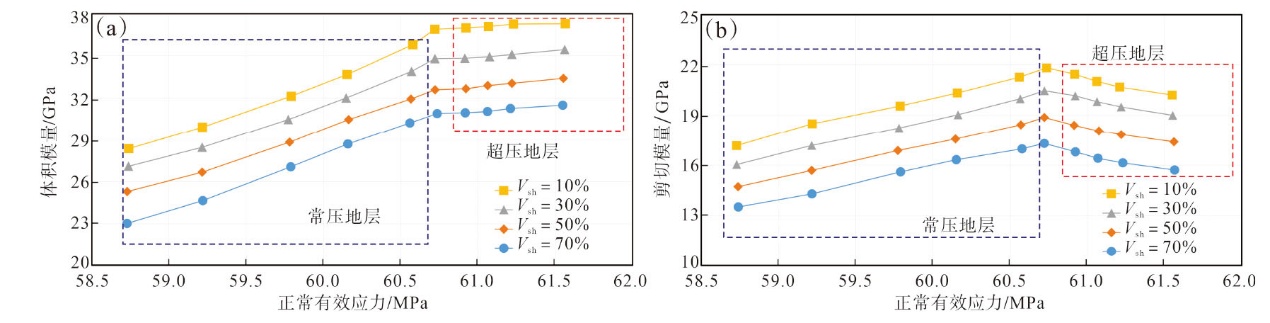
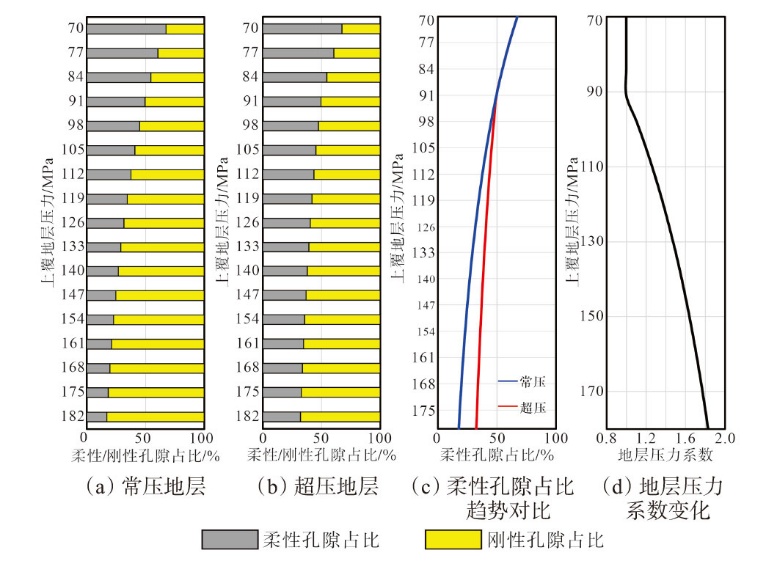
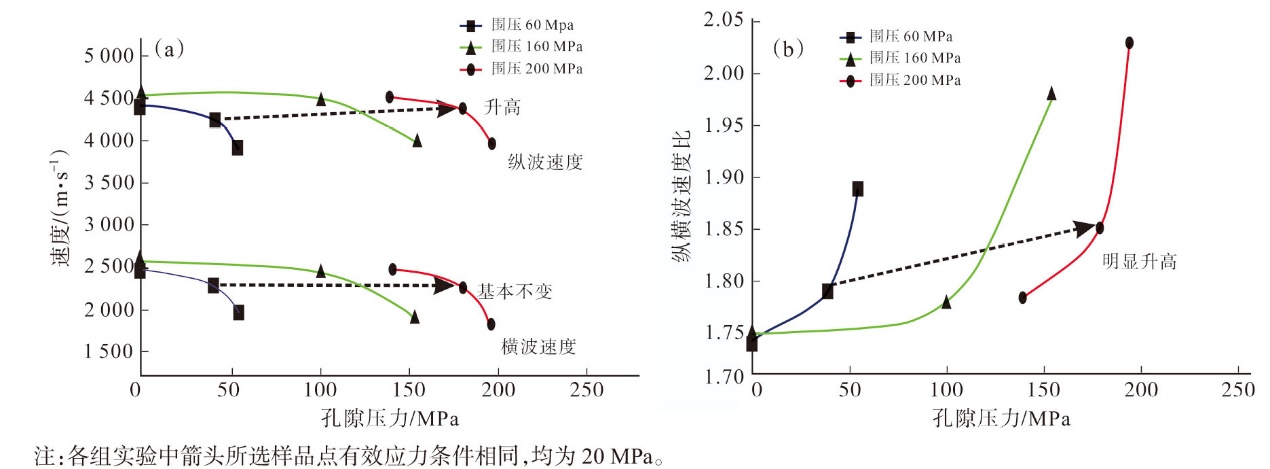
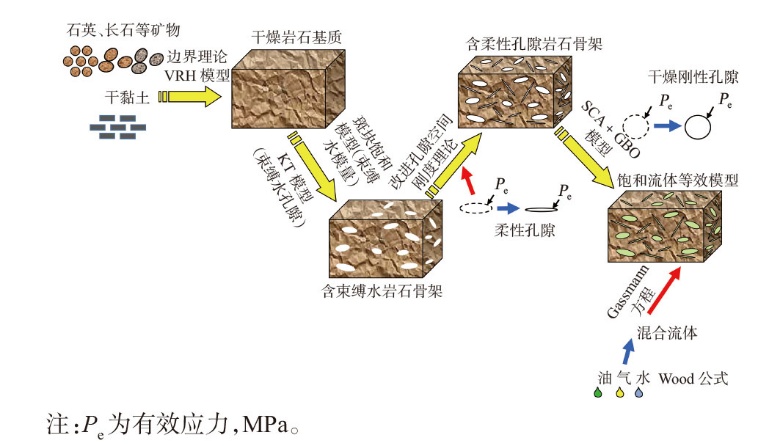
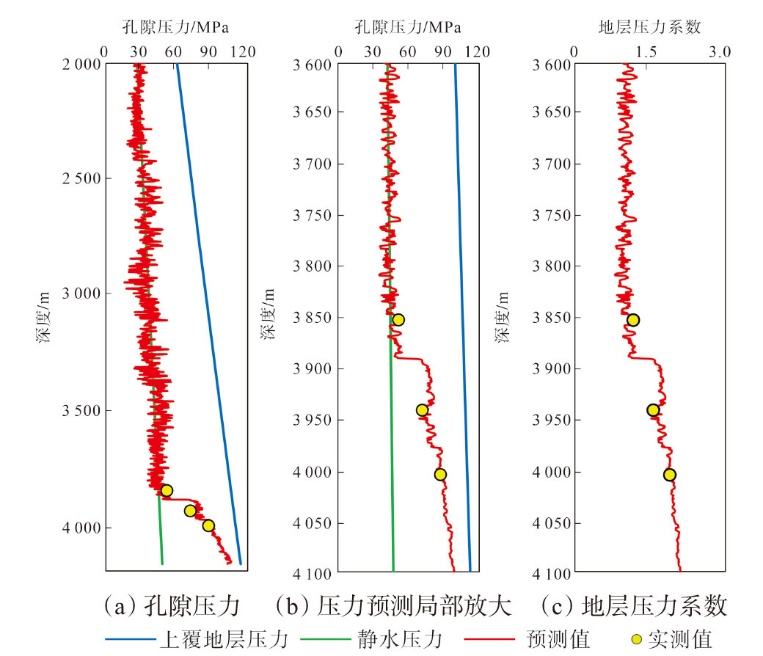
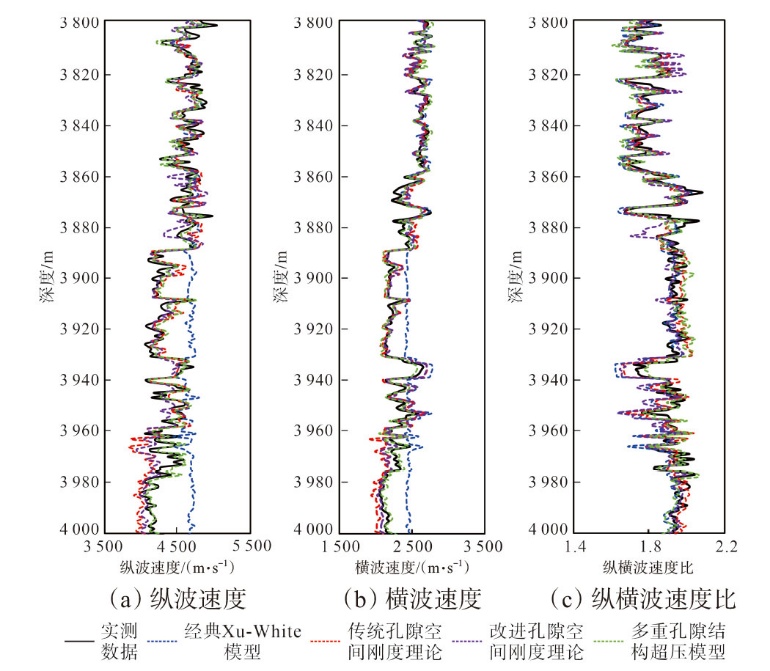
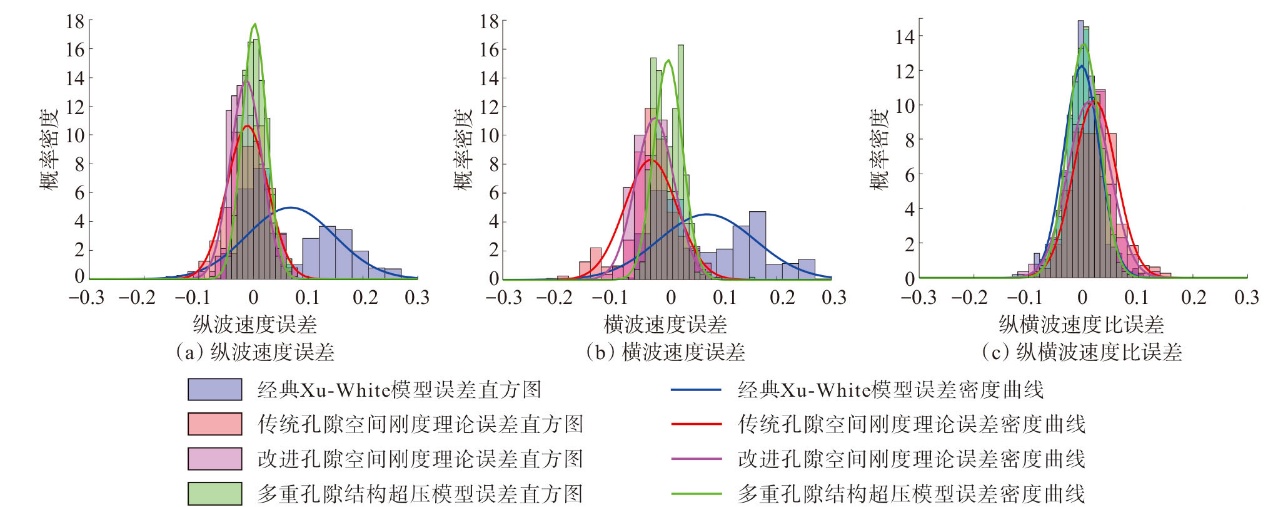
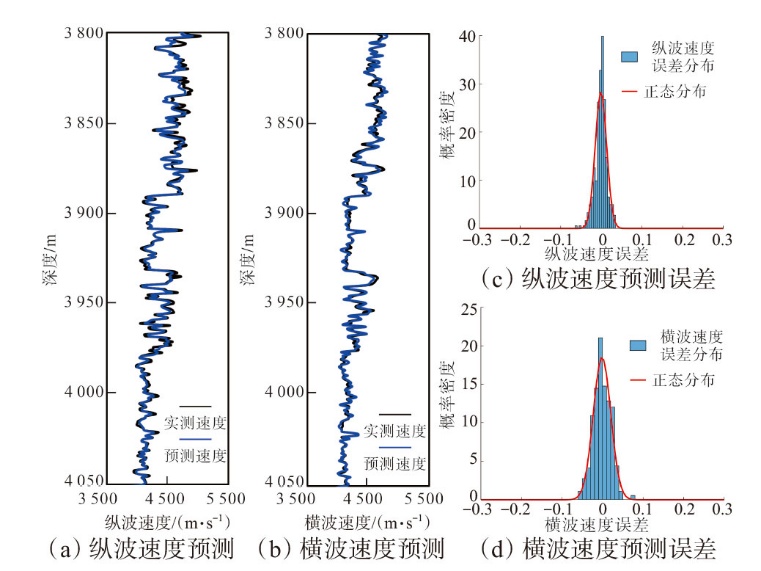
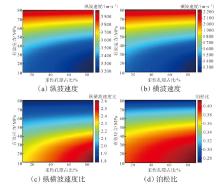
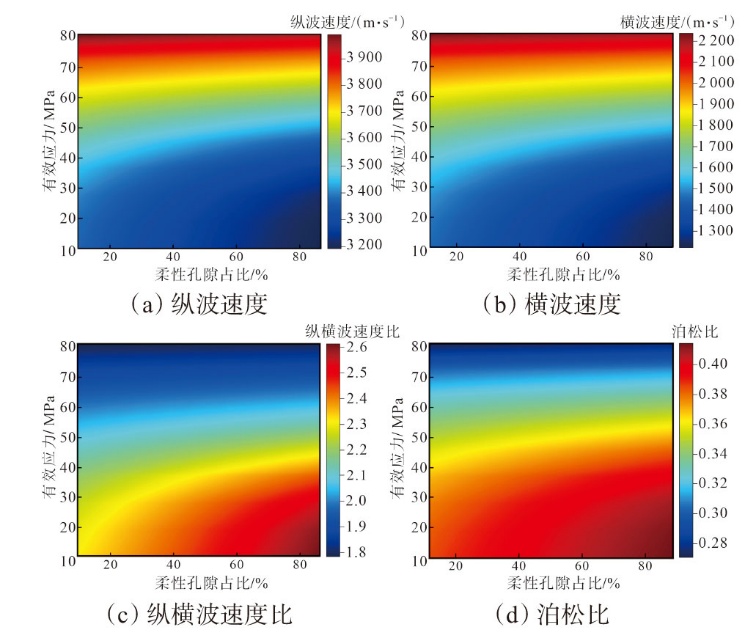
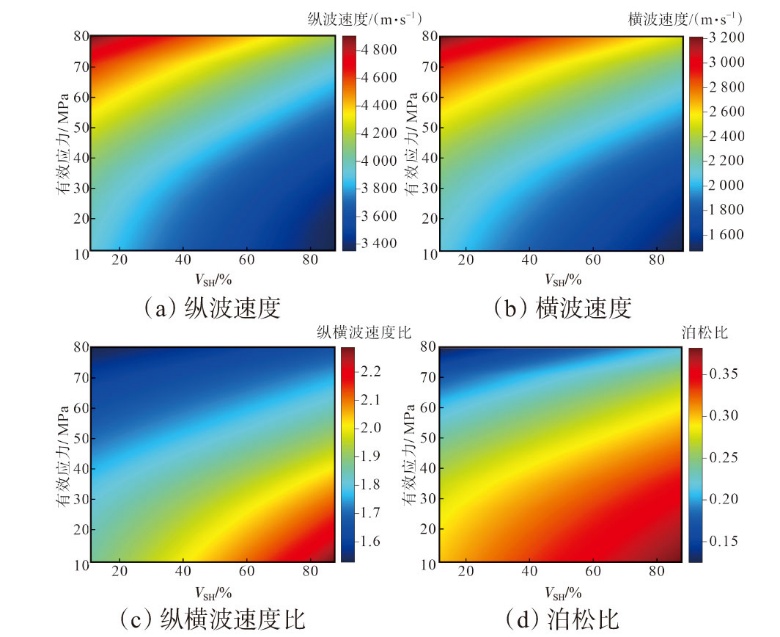
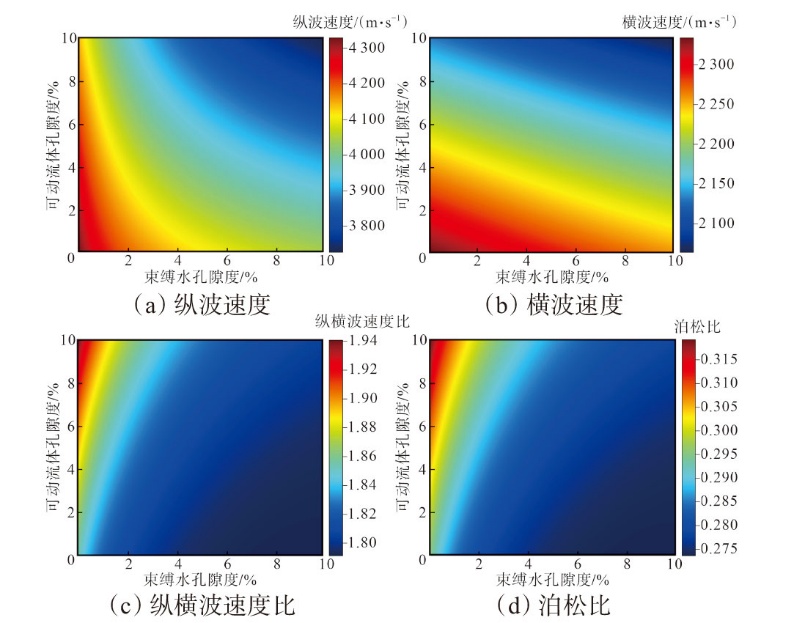
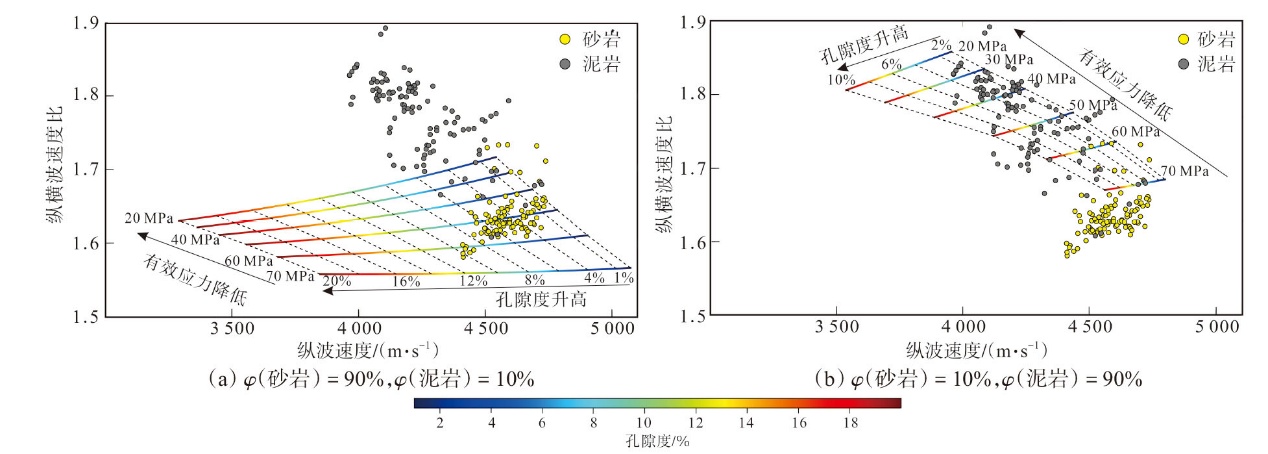
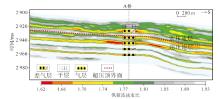
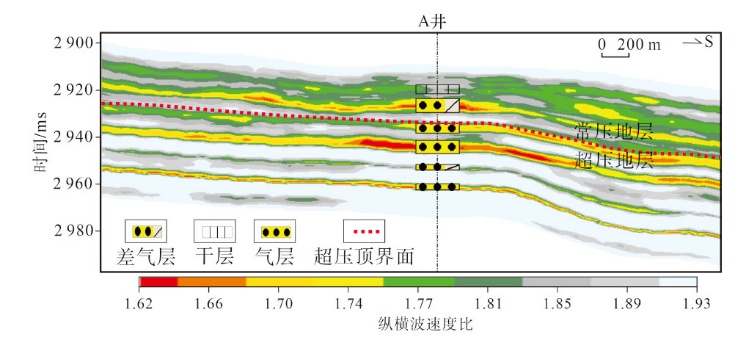
现有岩石物理模型难以准确描述超压条件下储层弹性参数的变化特征,限制了超压储层的刻画精度。以莺歌海盆地乐东斜坡带中新统黄流组超压储层为例,提出了一种多重孔隙结构超压岩石物理模型,对模型应用效果进行了分析;基于模型,对超压储层参数影响因素进行了分析,构建包含地层有效应力和孔隙度参数的岩石物理量版。研究结果表明:①多重孔隙结构超压岩石物理模型建模方法为,基于多重孔隙理论,综合考虑柔性孔隙、刚性孔隙及束缚水的影响,在孔隙空间刚度理论中引入地层压力系数和有效应力,采用梯度优化算法自适应优化孔隙纵横比,进而反映复杂孔隙结构下弹性参数随有效应力的变化规律。②该模型预测的乐东斜坡区黄流组纵、横波速度与测井解释高度吻合,预测误差低于8%,相较于传统模型,其拟合效果最佳,R2最高,分别为0.920、0.937。③超压储层岩石弹性参数受有效应力、柔性孔隙占比、泥质含量、束缚水孔隙度及可动流体孔隙度等5种因素的共同影响,在超压地层中,随着孔隙压力升高、有效应力减小,纵横波速度比呈上升趋势,与砂岩相比,泥岩具有低速、高纵横波速度比特征;纵横波速度比是区分超压碎屑岩储层中砂岩与泥岩的敏感参数,研究区常压段砂、泥岩纵横波速度比的判别阈值约为1.64,超压段为1.70~1.75。④基于多重孔隙结构超压岩石物理模型反演的纵横波速度比剖面预测的砂岩储层分布,与气测解释结论基本一致。
中图分类号:
- P631
| [1] | 陈鸣, 余立文, 秦瑞, 等. 泥页岩地层孔隙压力预测新方法[J]. 复杂油气藏, 2021, 14(3):27-30. |
| CHEN Ming, YU Liwen, QIN Rui, et al. A new method for prediction of pore pressure in shale formation[J]. Complex Hydrocarbon, 2021, 14(3):27-30. | |
| [2] | 陈红果, 张凤奇, 江青春, 等. 松辽盆地徐家围子断陷白垩系沙河子组超压形成机制及其演化特征[J]. 岩性油气藏, 2025, 37(1):102-114. |
| CHEN Hongguo, ZHANG Fengqi, JIANG Qingchun, et al. Overpressure-generating mechanism and its evolution characteristics of Cretaceous Shahezi Formation in Xujiaweizi Fault Depression,Songliao Basin[J]. Lithologic Reservoirs, 2025, 37(1):102-114. | |
| [3] | 赵军, 李勇, 文晓峰, 等. 基于斑马算法优化支持向量回归机模型预测页岩地层压力[J]. 岩性油气藏, 2024, 36(6):12-22. |
| ZHAO Jun, LI Yong, WEN Xiaofeng, et al. Prediction of shale formation pore pressure based on Zebra Optimization Algorithm-optimized support vector regression[J]. Lithologic Reservoirs, 2024, 36(6):12-22. | |
| [4] | RUIZ F, CHENG A. A rock physics model for tight gas sand[J]. The Leading Edge, 2010, 29(12):1484-1489. |
| [5] | 武陈月, 印兴耀, 印林杰, 等. 考虑压力的深部页岩储层地震岩石物理建模方法及应用[J]. 石油地球物理勘探, 2023, 58(4):893-901. |
| WU Chenyue, YIN Xingyao, YIN Linjie, et al. Rock physical modelling for deep shale reservoirs involving the influence of pressure[J]. Oil Geophysical Prospecting, 2023, 58(4):893-901. | |
| [6] | XU Shiyu, WHITE R E. A new velocity model for clay‐sand mixtures[J]. Geophysical Prospecting, 1995, 43(1):91-118. |
| [7] | 原宏壮. 各向异性介质岩石物理模型及应用研究[D]. 青岛: 中国石油大学(华东), 2007. |
| YUAN Hongzhuang. Study of anisotropic rock physics model and application[D]. Qingdao: China University of Petroleum(East China), 2007. | |
| [8] | 王璞, 吴国忱. 基于自相容近似的致密储层岩石物理建模[J]. 地球物理学进展, 2015, 30(5):2233-2238. |
| WANG Pu, WU Guochen. The rock physics modeling for tight reservoir based on the self-consistent approximation[J]. Progress in Geophysics, 2015, 30(5):2233-2238. | |
| [9] | 朱伟. 气饱和超压页岩的岩石物理建模研究[J]. 地球物理学进展, 2020, 35(3):1116-1121. |
| ZHU Wei. Rock physics modeling of gas-saturated over-pressured shale[J]. Progress in Geophysics, 2020, 35(3):1116-1121. | |
| [10] | 仲保温. 碎屑岩储层压力相关岩石物理建模方法研究[D]. 青岛: 中国石油大学(华东), 2022. |
| ZHONG Baowen. Research on pressure related rock physical modeling method of clastic rock reservoir[D]. Qingdao: China University of Petroleum (East China), 2022. | |
| [11] | RIAHI M A, FAKHARI M G. Pore pressure prediction using seismic acoustic impedance in an overpressure carbonate reservoir[J]. Journal of Petroleum Exploration and Production Technology, 2022, 12(12):3311-3323. |
| [12] | MAVKO G, MUKERJI T. Seismic pore space compressibility and Gassmann’s relation[J]. Geophysics, 1995, 60(6):1743-1749. |
| [13] | RUSSELL B. A Gassmann-consistent rock physics template[J]. CSEG Recorder, 2013, 38(6):22-30. |
| [14] | DINH H, MIRKO V D B, RUSSELL B. Pore space stiffness approach for a pressure-dependent rock-physics model[R]. Dallas: Society of Exploration Geophysicists, 2016. |
| [15] | ZONG Zhaoyun, JIANG Man, XU Miaomiao. Influencing factor analysis of the elastic properties of shale with rock-physical model including pressure effects[J]. Interpretation, 2020, 8(3):T515-T524. |
| [16] | 刘仕友, 仲保温, 周凡, 等. 高压背景砂岩储层岩石物理建模方法与应用[J]. 地球物理学进展, 2022, 37(4):1567-1575. |
| LIU Shiyou, ZHONG Baowen, ZHOU Fan, et al. Rock physical modeling method and application of sandstone reservoir in high pressure background[J]. Progress in Geophysics, 2022, 37(4):1567-1575. | |
| [17] | 姜曼. 考虑压力作用的地震岩石物理建模方法研究[D]. 青岛: 中国石油大学(华东), 2021. |
| JIANG Man. Rock physical models involving the influence of the pressure[D]. Qingdao: China University of Petroleum (East China), 2021. | |
| [18] | 杨骐羽, 李景叶, 吴凡, 等. 考虑软矿物纵横比的页岩岩石物理建模及其应用[J]. 物探与化探, 2024, 48(1):98-104. |
| YANG Qiyu, LI Jingye, WU Fan, et al. A petrophysical model of shales considering soft-mineral aspect ratios and its application[J]. Geophysical and Geochemical Exploration, 2024, 48(1):98-104. | |
| [19] | CHEN Fubin, ZONG Zhaoyun, YIN Xingyao. Rock elasticity and crack property descriptions using an improved acoustoelasticity model with nonlinear stress-strain relationship[J]. Geoenergy Science and Engineering, 2024, 241:213211. |
| [20] | 刘为, 杨希冰, 张秀苹, 等. 莺歌海盆地东部黄流组重力流沉积特征及其控制因素[J]. 岩性油气藏, 2019, 31(2):75-82. |
| LIU Wei, YANG Xibing, ZHANG Xiuping, et al. Characteristics and controlling factors of gravity flow deposits of Huangliu Formation in eastern Yinggehai Basin[J]. Lithologic Reservoirs, 2019, 31(2):75-82. | |
| [21] | 郝芳, 李思田, 龚再升, 等. 莺歌海盆地底辟发育机理与流体幕式充注[J]. 中国科学D辑:地球科学, 2001, 31(6):471-476. |
| HAO Fang, LI Sitian, GONG Zaisheng, et al. Mechanisms of diapir development and episodic fluid charging in the Yinggehai Basin[J]. Science in China Series D:Earth Science, 2001, 31(6):471-476. | |
| [22] | 刘平, 童传新, 曾小明, 等. 莺歌海盆地莺东斜坡乐东区中深层地层水特征及其与油气关系[J]. 海洋地质前沿, 2019, 35(8):44-50. |
| LIU Ping, TONG Chuanxin, ZENG Xiaoming, et al. Characte-ristics of stratigraphic water in the middle and deep layers of Ledong District,Yingdong Slope,Yinggehai Basin and its relationship with oil and gas[J]. Marine Geology Frontiers, 2019, 35(8):44-50. | |
| [23] | 李伟, 刘平, 艾能平, 等. 莺歌海盆地乐东地区中深层储层发育特征及成因机理[J]. 岩性油气藏, 2020, 32(1):19-26. |
| LI Wei, LIU Ping, AI Nengping, et al. Development characteristics and genetic mechanism of mid-deep reservoirs in Ledong area,Yinggehai Basin[J]. Lithologic Reservoirs, 2020, 32(1):19-26. | |
| [24] | 范彩伟, 贾茹, 柳波, 等. 莺歌海盆地中央坳陷带成藏体系的盖层评价及控藏作用[J]. 岩性油气藏, 2023, 35(1):36-48. |
| FAN Caiwei, JIA Ru, LIU Bo, et al. Caprock evaluation and its reservoir control of different accumulation systems in central depression zone of Yinggehai Basin[J]. Lithologic Reservoirs, 2023, 35(1):36-48. | |
| [25] | 杨计海, 黄保家. 莺歌海凹陷东斜坡L气田天然气成因及运移模式[J]. 石油勘探与开发, 2019, 46(3):450-460. |
| YANG Jihai, HUANG Baojia. Origin and migration model of natural gas in L gas field,eastern slope of Yinggehai Sag,China[J]. Petroleum Exploration and Development, 2019, 46(3):450-460. | |
| [26] | 李绪深, 杨计海, 范彩伟, 等. 南海北部海域高温超压天然气勘探新进展与关键技术:以莺歌海盆地乐东斜坡带为例[J]. 中国海上油气, 2020, 32(1):23-31. |
| LI Xushen, YANG Jihai, FAN Caiwei, et al. New progress and key technologies for high temperature and overpressure natural gas exploration in the northern part of South China Sea:Taking the Ledong slope belt of Yinggehai Basin as an example[J]. China Offshore Oil and Gas, 2020, 32(1):23-31. | |
| [27] | 王立锋, 宋瑞有, 陈殿远, 等. 莺歌海盆地D13区新近系黄流组大型海底扇地震识别及含气性预测[J]. 岩性油气藏, 2022, 34(4):42-52. |
| WANG Lifeng, SONG Ruiyou, CHEN Dianyuan, et al. Seismic identification and gas-bearing prediction of large-scale submarine fans of Neogene Huangliu Formation in D13 area of Yinggehai Basin[J]. Lithologic Reservoirs, 2022, 34(4):42-52. | |
| [28] | SHAPIRO S A, TROYAN V N. Stress dependences of velocities in porous and fractured rocks[R]. Horten,64th EAGE Conference & Exhibition, 2002. |
| [29] | ATHY L F. Density,porosity,and compaction of sedimentary rocks[J]. AAPG Bulletin, 1930, 14(1):1-24. |
| [30] | SHAPIRO S A. Elastic piezosensitivity of porous and fractured rocks[J]. Geophysics, 2003, 68(2):482-486. |
| [31] | CHRISTENSEN N I, WANG H F. The influence of pore pressure and confining pressure on dynamic elastic properties of Berea sandstone[J]. Geophysics, 1985, 50(2):207-213. |
| [32] | AGHLI G, MOGHADDAS N H, SABERI M R, et al. The effect of varying pore pressure on carbonate reservoirs elastic response available to purchase[J]. Geophysics, 2025, 90(3):M45-M58. |
| [33] | 吴亚宁, 黄捍东, 徐海, 等. 基于Wolfe搜索机制的随机梯度地震反演方法[J]. 地球物理学报, 2024, 67(11):4309-4324. |
| WU Yaning, HUANG Handong, XU Hai, et al. Seismic inversion method based on SGO-WS[J]. Chinese Journal of Geophysics, 2024, 67(11):4309-4324. | |
| [34] | 刘海钰, 胡林, 刘兵, 等. 琼东南盆地深水区中新统梅山组超压成因与天然气成藏特征[J]. 岩性油气藏, 2025, 37(5):70-82. |
| LIU Haiyu, HU Lin, LIU Bing, et al. Origin of overpressure and natural gas accumulation characteristics of Miocene Mei-shan Formation in the deepwater area,Qiongdongnan Basin[J]. Lithologic Reservoirs, 2025, 37(5):70-82. | |
| [35] | 李中, 刘和兴, 李磊, 等. 基于改进的Bowers法预测南海陵水深水高温地层异常压力[J]. 西安石油大学学报(自然科学版), 2019, 34(6):60-66. |
| LI Zhong, LIU Hexing, LI Lei, et al. Prediction of abnormal pressure in Lingshui deep-water high temperature formation based on improved bowers method[J]. Journal of Xi’an Shiyou University (Nature Science Edition), 2019, 34(6):60-66. |
| [1] | 任昱霏, 闫建平, 闫柯, 黄莉莎, 王敏, 耿斌. 基于改进电成像测井矿物概率谱的碎屑岩组分定量表征方法[J]. 岩性油气藏, 2026, 38(4): 91-100. |
| [2] | 陈志宏, 吕正祥, 胡高伟, 高梦天, 陈亚兵, 金峰, 孟宏宇. 莺歌海盆地莺东斜坡区中新统三亚组成藏条件及主控因素[J]. 岩性油气藏, 2025, 37(6): 1-12. |
| [3] | 范彩伟, 贾茹, 柳波, 付晓飞, 侯静娴, 靳叶军. 莺歌海盆地中央坳陷带成藏体系的盖层评价及控藏作用[J]. 岩性油气藏, 2023, 35(1): 36-48. |
| [4] | 杨楷乐, 何胜林, 杨朝强, 王猛, 张瑞雪, 任双坡, 赵晓博, 姚光庆. 高温-超压-高CO2背景下致密砂岩储层成岩作用特征——以莺歌海盆地LD10区新近系梅山组-黄流组为例[J]. 岩性油气藏, 2023, 35(1): 83-95. |
| [5] | 王立锋, 宋瑞有, 陈殿远, 徐涛, 潘光超, 韩光明. 莺歌海盆地D13区新近系黄流组大型海底扇地震识别及含气性预测[J]. 岩性油气藏, 2022, 34(4): 42-52. |
| [6] | 李伟, 刘平, 艾能平, 邵远, 侯静娴. 莺歌海盆地乐东地区中深层储层发育特征及成因机理[J]. 岩性油气藏, 2020, 32(1): 19-26. |
| [7] | 刘为, 杨希冰, 张秀苹, 段亮, 邵远, 郝德峰. 莺歌海盆地东部黄流组重力流沉积特征及其控制因素[J]. 岩性油气藏, 2019, 31(2): 75-82. |
| [8] | 韩光明,潘光超,付 琛,罗 琪,邵 远,汪 锐. 含气储层及盖层速度变化对地震响应和AVO 类型的影响[J]. 岩性油气藏, 2016, 28(2): 107-113. |
| [9] | 瞿建华,王泽胜,任本兵,白雨,王斌. 准噶尔盆地环玛湖斜坡区异常高压成因机理分析及压力预测方法[J]. 岩性油气藏, 2014, 26(5): 36-39. |
| [10] | 韩光明,周家雄,裴健翔,王立锋. 莺歌海盆地底辟本质及其与天然气成藏关系[J]. 岩性油气藏, 2012, 24(5): 27-31. |
| [11] | 刘雯林. 煤层气地球物理响应特征分析[J]. 岩性油气藏, 2009, 21(2): 113-115. |
|
||
 甘公网安备 62010202002827号