岩性油气藏 ›› 2026, Vol. 38 ›› Issue (4): 191–200.doi: 10.12108/yxyqc.20260417
• 石油工程与油气田开发 • 上一篇
准噶尔盆地莫北凸起侏罗系三工河组凝析气藏精细地质建模方法
丁雅洁( ), 李想, 韩子建, 谢磊, 魏璞, 魏婷(), 罗杨, 马鑫兆
中国石油新疆油田公司 石西油田作业区 新疆 克拉玛依 834000
Fine geological modeling method for Jurassic Sangonghe Formation condensate gas reservoir in Mobei uplift of Junggar Basin
DING Yajie(), LI Xiang, HAN Zijian, XIE Lei, WEI Pu, WEI Ting(), LUO Yang, MA Xinzhao
Shixi Oilfield Operation District ,PetroChina Xinjiang Oilfield Company Karamay 834000, Xinjiang, China
摘要:
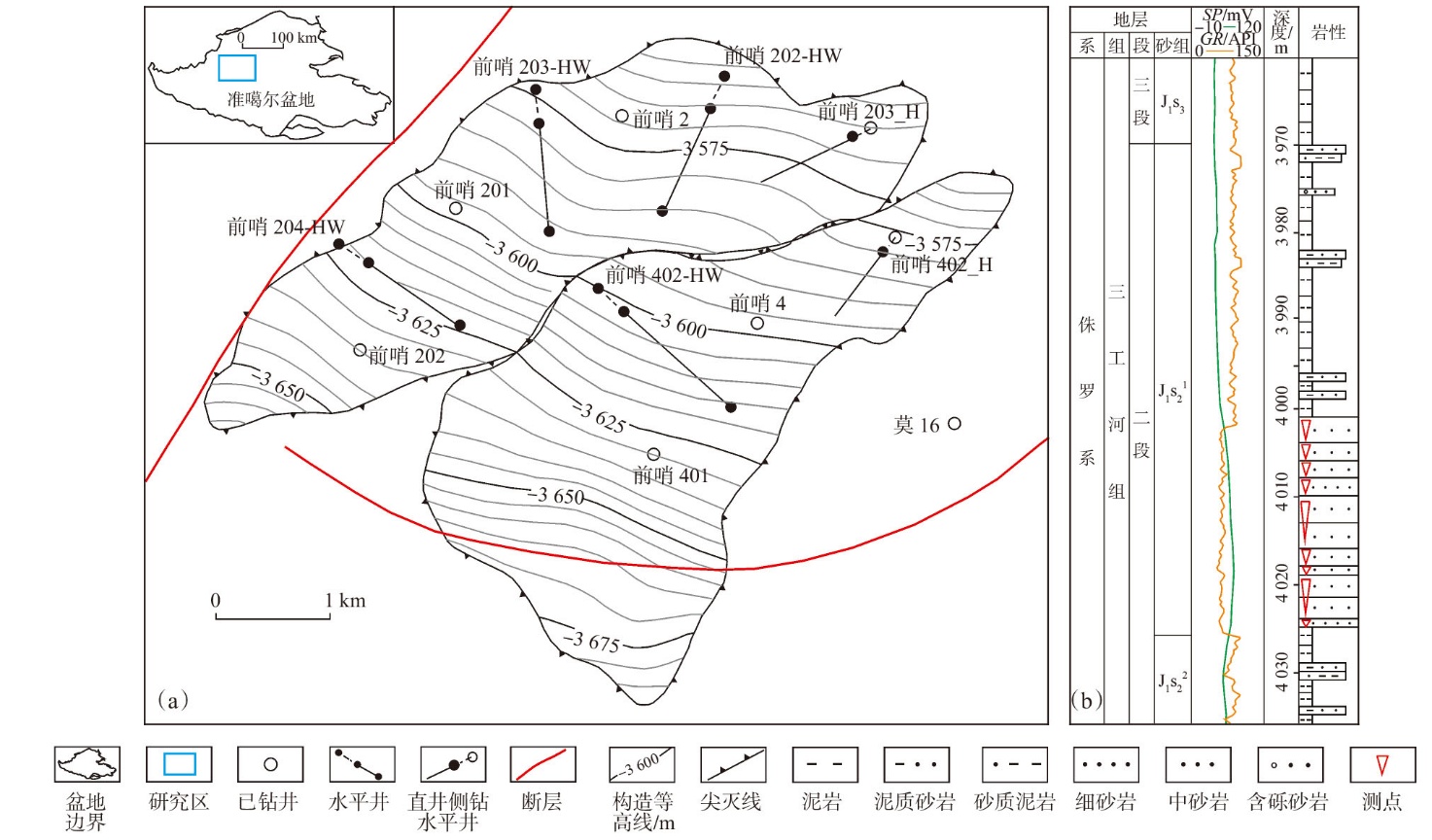
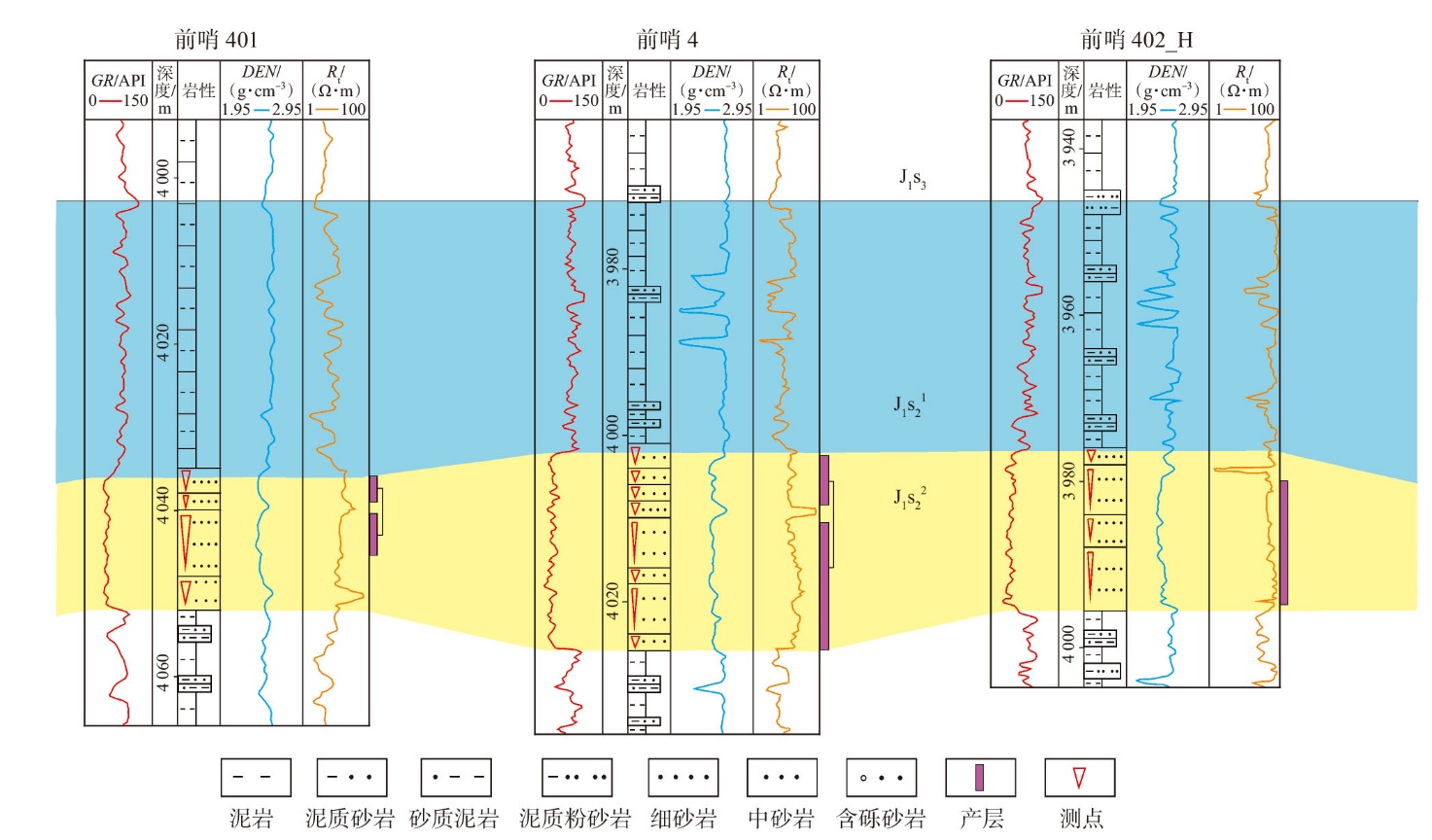
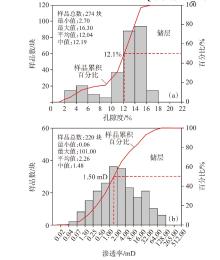
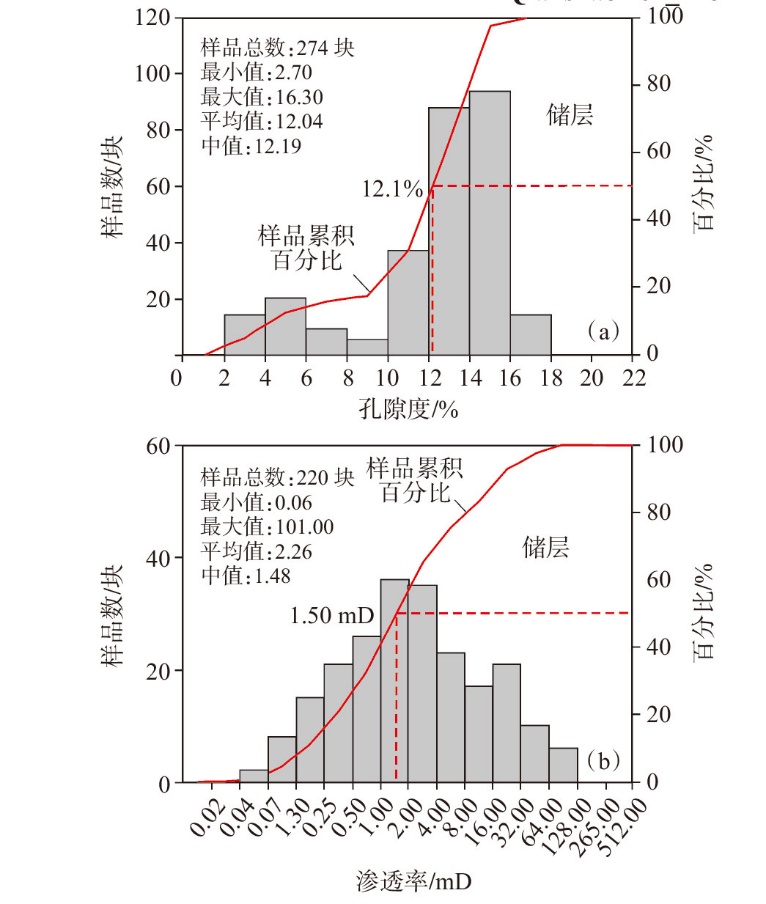
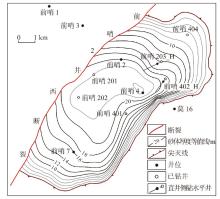
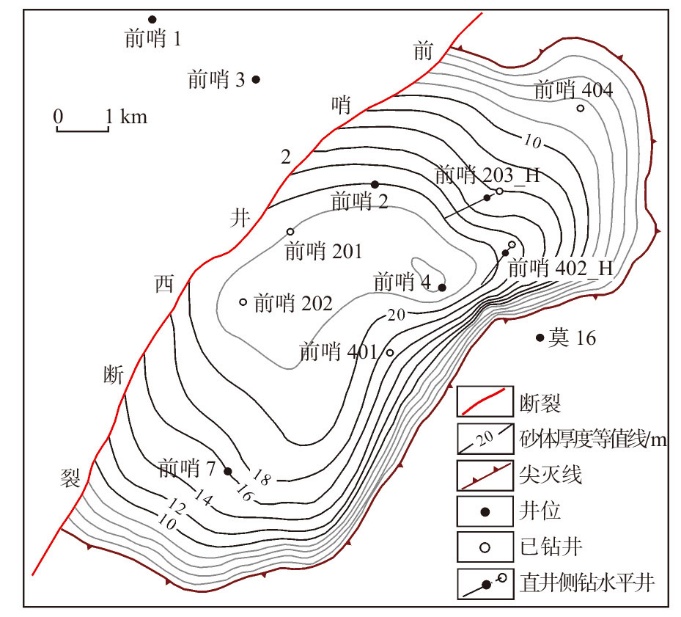
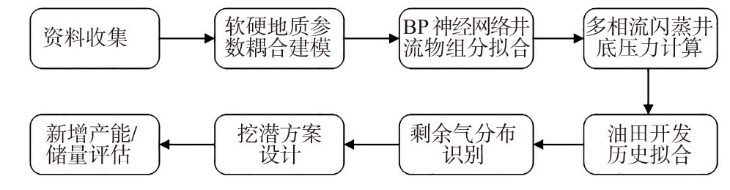
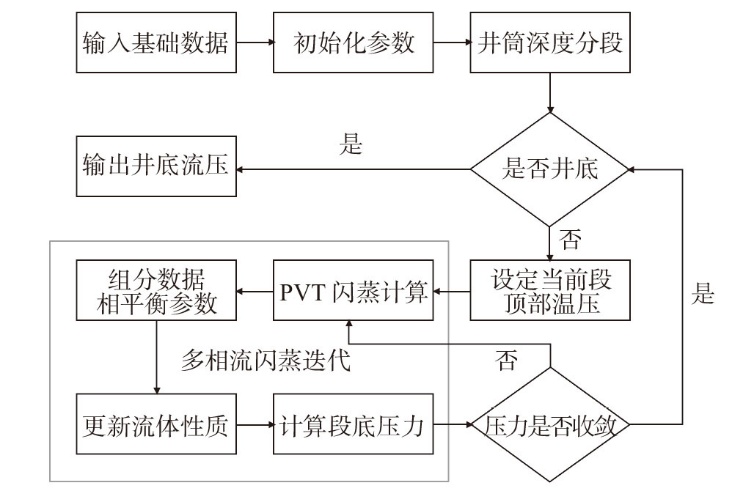
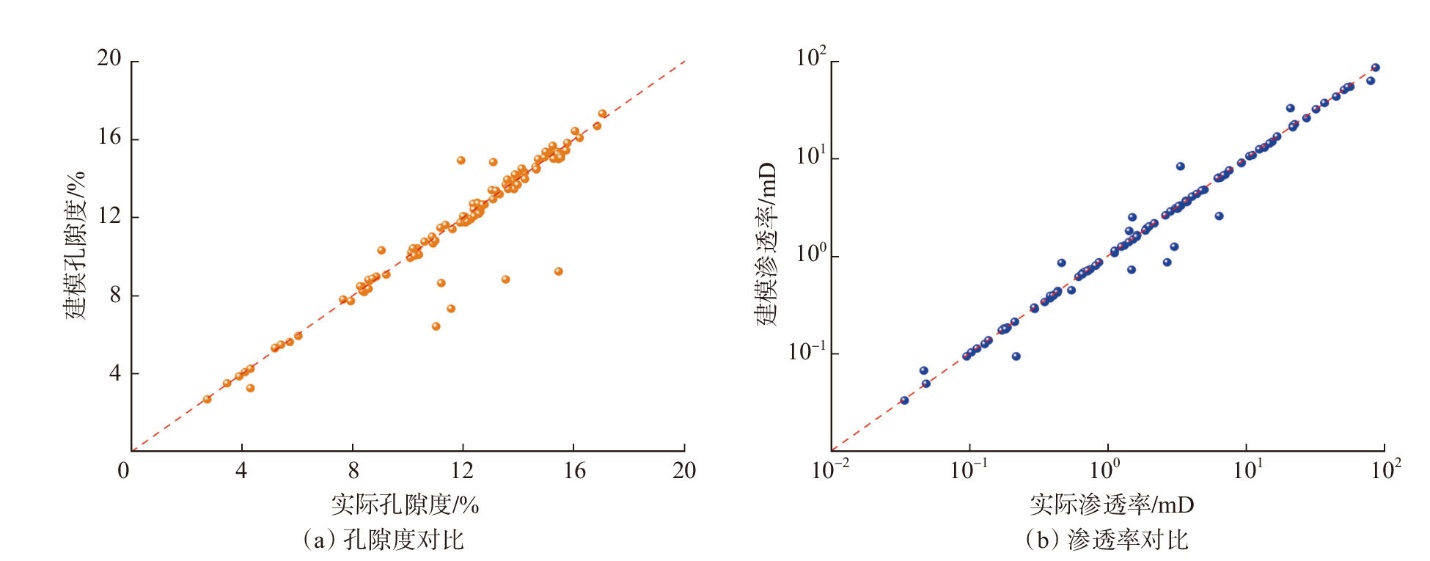
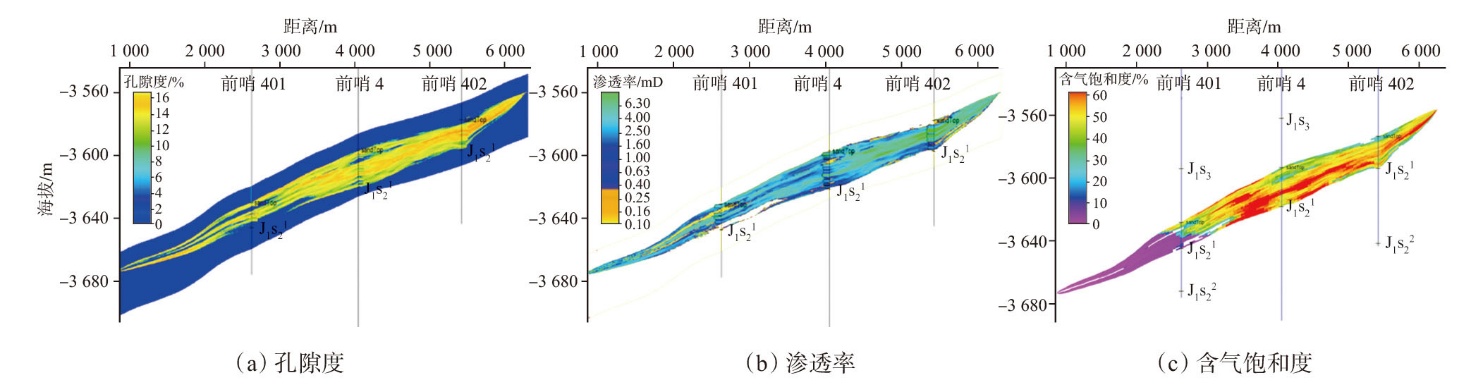
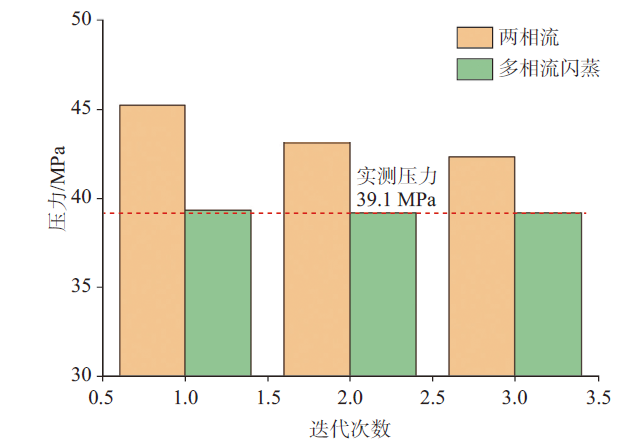
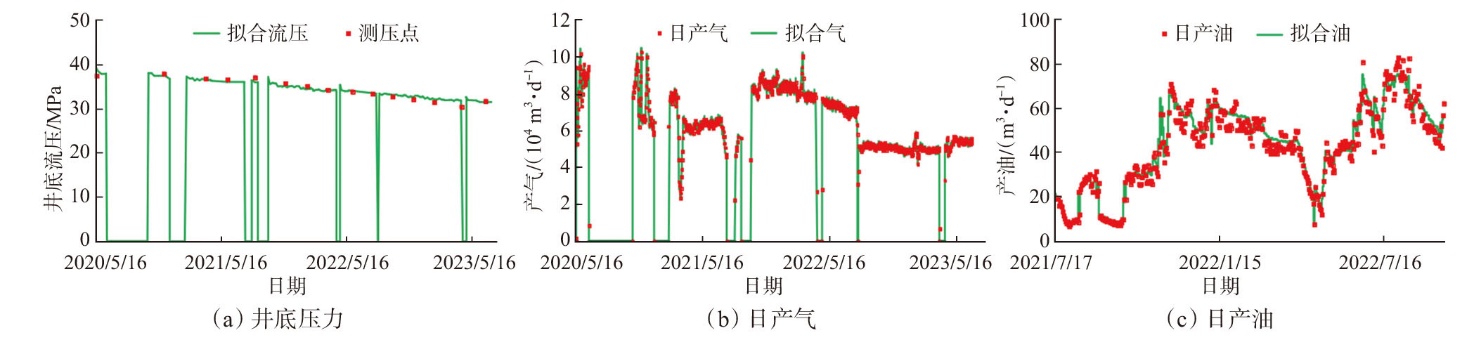
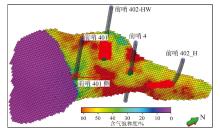
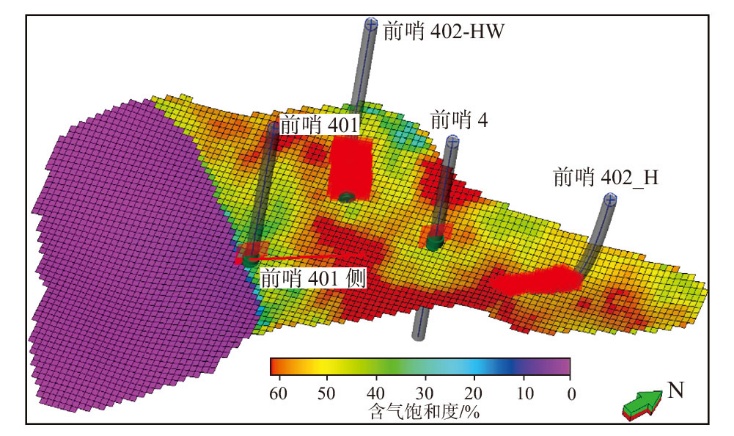
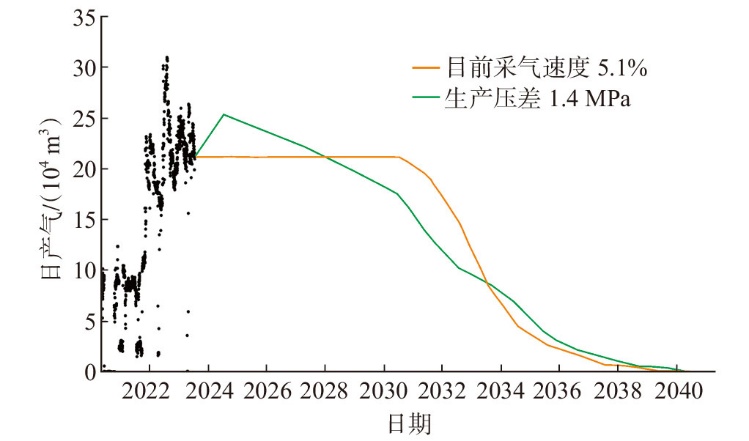
低渗凝析气藏开发中后期易出现产能衰减快、凝析油堵塞导致采收率降低等问题。以准噶尔盆地莫北凸起前哨4井区侏罗系三工河组二段一砂体为例,采用多尺度参数融合与井流相态校正相结合的方法,建立了高精度数值模拟模型,开展了剩余气分布预测与挖潜方案评价。研究结果表明:①准噶尔盆地莫北凸起侏罗系三工河组二段一砂体厚度约20 m,平均孔隙度约12%,平均渗透率约1.5 mD,非均质性强且局部连通性差。②通过数据协同约束砂体展布与孔渗参数,结合凝析气井流物组分反演与井底压力耦合,建立“地质-相态-井筒”一体化模型,有效提高了砂体展布与孔渗参数刻画精度,建模物性与实测值相关系数均大于0.99;基于该模型的计算结果与历史凝析气产量拟合精度大于96%,揭示了研究区前哨401井高部位为“含气饱和度高但连通性差”的典型富集剩余气区。③根据剩余气分布识别提出的前哨401井侧钻挖潜方案可新增动用储量0.37×10⁸ m3,日增产能4×10⁴ m3,预测结果显示,如果以5.1%的恒定采气速度,可稳产至2030年。
中图分类号:
- TE319
| [1] | 苏皓, 郭艳东, 曹立迎, 等. 顺北油田断控缝洞型凝析气藏衰竭式开采特征及保压开采对策[J]. 岩性油气藏, 2024, 36(5):178-188. |
| SU Hao, GUO Yandong, CAO Liying, et al. Natural depletion characteristics and pressure maintenance strategies of fault-controlled fracture-cavity condensate gas reservoirs in Shunbei Oilfield[J]. Lithologic Reservoirs, 2024, 36(5):178-188. | |
| [2] | 马斌, 张明, 闫兵帮, 等. 致密富水凝析气藏压裂水平井产能特征数值模拟[J]. 断块油气田, 2024, 31(5):885-892. |
| MA Bin, ZHANG Ming, YAN Bingbang, et al. Numerical simula-tion of productivity characteristics of fractured horizontal wells in tight water-rich condensate gas reservoirs[J]. Fault-Block Oil & Gas Field, 2024, 31(5):885-892. | |
| [3] | 曹建, 朱亮, 罗静, 等. 异常高压气藏井间连通气井动态储量计算新方法[J]. 非常规油气, 2024, 11(4):62-69. |
| CAO Jian, ZHU Liang, LUO Jing, et al. A new method for calculating dynamic reserves of interconnected gas wells in abnormally high pressure gas reservoirs[J]. Unconventional Oil & Gas, 2024, 11(4):62-69. | |
| [4] | 黄广庆. 离子组成及矿化度对低矿化度水驱采收率的影响[J]. 岩性油气藏, 2019, 31(5):129-133. |
| HUANG Guangqing. Influence of ion composition and salinity on recovery of water flooding with low salinity[J]. Lithologic Reservoirs, 2019, 31(5):129-133. | |
| [5] | 李文斌. 超高压裂缝性凝析气藏反凝析特征及生产动态分析[D]. 北京: 中国石油大学(北京), 2023. |
| LI Wenbin. Retrograde condensation characteristics and production performance analysis of ultra-high pressure fractured condensate gas reservoir[D]. Beijing: China University of Petroleum (Beijing), 2023. | |
| [6] | 钟海全, 刘通, 李颖川, 等. 考虑地层非稳态传热的井筒流体温度预测简化模型[J]. 岩性油气藏, 2012, 24(4):108-110. |
| ZHONG Haiquan, LIU Tong, LI Yingchuan, et al. A simplified model to predict wellbore fluid temperature in consideration of unsteady state heat transfer in formations[J]. Lithologic Reservoirs, 2012, 24(4):108-110. | |
| [7] | 宋江峰. 利用热化学流体反应生热增压解除致密砂岩凝析气反凝析伤害的新方法[J]. 大庆石油地质与开发, 2024, 43(2):78-85. |
| SONG Jiangfeng. A new method of heat generation and pressuri-zation by thermochemical fluid to remove retrograde condensate damage of tight sandstone condensate gas[J]. Petroleum Geology & Oilfield Development in Daqing, 2024, 43(2):78-85. | |
| [8] | LIU Nianxiao, HUANG Xiaoliang, LUO Hao, et al. Study on eliminating retrograde condensate pollution in low-permeability condensate gas reservoir[J]. Journal of Porous Media, 2023, 26(9):1-19. |
| [9] | 辛小军. 凝析气井异常产能资料评价方法及应用[J]. 石化技术, 2025, 32(2):94-96. |
| XIN Xiaojun. Evaluation method and application of abnormal productivity data for condensate gas wells[J]. Petrochemical In-dustry Technology, 2025, 32(2):94-96. | |
| [10] | 黄磊, 孙藏军, 康凯, 等. 基于生产动态资料的凝析气藏流体分布及潜力再认识:以渤海BZ油气田太古宇潜山为例[J]. 断块油气田, 2022, 29(1):72-77. |
| HUANG Lei, SUN Cangjun, KANG Kai, et al. Recognition of fluid distribution and potential of condensate gas reservoir based on production performance data:A case study of Archean buried hill in BZ oil and gas field,Bohai Bay[J]. Fault-Block Oil & Gas Field, 2022, 29(1):72-77. | |
| [11] | 邱一新. 致密火山岩凝析气藏生产动态特征与影响因素研究:以龙凤山气藏B213井区为例[J]. 非常规油气, 2021, 8(6):68-76. |
| QIU Yixin. Research on production dynamic characteristics and interfering factors of tight volcanic condensate gas reservoir:Taking B213 well area of Longfengshan gas reservoir as an example[J]. Unconventional Oil & Gas, 2021, 8(6):68-76. | |
| [12] | 廖恒杰, 蒋哲昊, 李元生. 不同凝析油含量凝析气藏储层伤害及解除实验[J]. 天然气勘探与开发, 2025, 48(5):91-100. |
| LIAO Hengjie, JIANG Zhehao, LI Yuansheng. Experimental study on reservoir damage and its relief in condensate gas reservoirs with different condensate contents[J]. Natural Gas Explora-tion and Development, 2025, 48(5):91-100. | |
| [13] | 刘子雄, 李啸南, 魏志鹏. 低渗压裂气井水锁伤害数值模拟方法研究[J]. 非常规油气, 2024, 11(5):141-148. |
| LIU Zixiong, LI Xiaonan, WEI Zhipeng. Numerical simulation of water lock damage in fractured well in low permeability reservoirs[J]. Unconventional Oil & Gas, 2024, 11(5):141-148. | |
| [14] | 崔晓朵, 廖浩奇, 陈德坡, 等. 丰深1低渗透凝析气藏反凝析污染特征及解除措施实验[J]. 油气地质与采收率, 2023, 30(6):160-166. |
| CUI Xiaoduo, LIAO Haoqi, CHEN Depo, et al. Experiments about retrograde condensate pollution characteristics and relief measures in Fengshen 1 condensate gas reservoir with low permea-bility[J]. Petroleum Geology and Recovery Efficiency, 2023, 30(6):160-166. | |
| [15] | 薛洪刚. ZJ气田凝析气藏反凝析与反渗吸伤害机理实验研究[J]. 非常规油气, 2025, 12(4):81-90. |
| XUE Honggang. Experimental study on mechanisms of retrograde condensation and reverse imbibition damage in condensate gas reservoirs of ZJ gas field[J]. Unconventional Oil & Gas, 2025, 12(4):81-90. | |
| [16] | ZHANG Haowei, HOU Jiangen, LONG Qingbo, et al. Multiple-point geostatistical modeling for fault-controlled tight sandstone reservoirs based on probability fusion of permanence of ratios:A tight sandstone oil reservoir in the southern margin of the Ordos Basin[J]. Frontiers in Earth Science, 2025, 13:1552058. |
| [17] | 高福坤, 周丽萍, 李东阳, 等. 地震多信息联合分级约束油藏建模技术在特低渗油藏开发中的应用[J]. 地球物理学进展, 2025, 40(1):121-130. |
| GAO Fukun, ZHOU Liping, LI Dongyang, et al. Application of the multi-information seismic-constrained reservoir modeling in extra-low permeability reservoir development[J]. Progress in Geophysics, 2025, 40(1):121-130. | |
| [18] | ZARIFI A, MADANI M, JAFARZADEGAN M. Auto-tuning PVT data using multi-objective optimization:Application of NSGA- Ⅱ algorithm[J]. Petroleum, 2024, 10(1):135-149. |
| [19] | ZARIFI A, DARYASAFAR A. Auto-tune of PVT data using an efficient engineering method:Application of sensitivity and opti-mization analyses[J]. Fluid Phase Equilibria, 2018, 473:70-79. |
| [20] | ANSARI A M, SYLVESTER N D, SHOHAM C S O, et al. A comprehensive mechanistic model for upward two-phase flow in wellbores[J]. SPE Production & Facilities, 1994, 9(2):143-151. |
| [21] | 周银邦, 王锐, 赵淑霞, 等. CO2封存过程中“适应性”地质建模方法及案例[J]. 非常规油气, 2022, 9(6):1-8. |
| ZHOU Yinbang, WANG Rui, ZHAO Shuxia, et al. “Fit to purpose” geological modeling methods and cases in the process of CO2 storage[J]. Unconventional Oil & Gas, 2022, 9(6):1-8. | |
| [22] | 杨占伟, 姜振学, 梁志凯, 等. 基于2种机器学习方法的页岩TOC含量评价:以川南五峰组—龙马溪组为例[J]. 岩性油气藏, 2022, 34(1):130-138. |
| YANG Zhanwei, JIANG Zhenxue, LIANG Zhikai, et al. Evaluation of shale TOC content based on two machine learning methods:A case study of Wufeng-Longmaxi Formation in southern Sichuan Basin[J]. Lithologic Reservoirs, 2022, 34(1):130-138. | |
| [23] | 何智慧, 李枝禄, 卜掌印. 伯努利方程法计算天然气井底压力[J]. 石化技术, 2017, 24(2):169. |
| HE Zhihui, LI Zhilu, BU Zhangyin. Calculation of natural gas well bottom-hole pressure by Bernoulli equation[J]. Petroche-mical Industry Technology, 2017, 24(2):169. | |
| [24] | 王锦昌, 赵润冬. 高压集输气井井筒积液量与流压计算方法[J]. 西安石油大学学报(自然科学版), 2024, 39(3):50-57. |
| WANG Jinchang, ZHAO Rundong. Calculation method for well-bore liquid volume and bottom-hole flowing pressure of high-pressure gathering and transmission natural gas wells[J]. Journal of Xi’an Shiyou University (Natural Science Edition), 2024, 39(3):50-57. | |
| [25] | 季鹏, 杜卫刚, 谢梦春, 等. 凝析气井积液预测模型研究[J]. 精细石油化工, 2023, 40(2):52-56. |
| JI Peng, DU Weigang, XIE Mengchun, et al. Study on prediction model of liquid accumulation in condensate gas wells[J]. Speciality Petrochemicals, 2023, 40(2):52-56. | |
| [26] | 明瑞卿, 张全立, 罗淮东, 等. 一种预测凝析气井临界携液流量的通用模型[J]. 钻采工艺, 2019, 42(6):69-72. |
| MING Ruiqing, ZHANG Quanli, LUO Huaidong, et al. A universal model for predicting critical continuous liquid removal rate from condensate gas wells[J]. Drilling & Production Techno-logy, 2019, 42(6):69-72. | |
| [27] | GHOJEHBEYGLOU M. Geostatistical modeling of porosity and evaluating the local and global distribution[J]. Journal of Petroleum Exploration and Production Technology, 2021, 11(12):4227-4241. |
| [28] | 姜瑞忠, 沈泽阳, 崔永正, 等. 双重介质低渗油藏斜井压力动态特征分析[J]. 岩性油气藏, 2018, 30(6):131-137. |
| JIANG Ruizhong, SHEN Zeyang, CUI Yongzheng, et al. Dyna-mical characteristics of inclined well in dual medium low permea-bility reservoir[J]. Lithologic Reservoirs, 2018, 30(6):131-137. | |
| [29] | 武中原, 张欣, 张春雷, 等. 基于LSTM循环神经网络的岩性识别方法[J]. 岩性油气藏, 2021, 33(3):120-128. |
| WU Zhongyuan, ZHANG Xin, ZHANG Chunlei, et al. Lithology identification based on LSTM recurrent neural network[J]. Lithologic Reservoirs, 2021, 33(3):120-128. |
| [1] | 薛建勤, 马峰, 龙国徽, 孙秀建, 王爱萍, 朱世发, 武云昭, 游仁宗. 柴北缘侏罗系—古近系天然气成藏条件及路探1井的勘探发现[J]. 岩性油气藏, 2026, 38(4): 1-11. |
| [2] | 王彦君, 卞保力, 向辉, 张永军, 孙永兴, 许学龙, 马德龙, 李赟. 准噶尔盆地阜康断裂带周缘二叠纪原型盆地重建及油气勘探潜力[J]. 岩性油气藏, 2026, 38(4): 126-136. |
| [3] | 王敬国, 赵正威, 秦大鹏, 高磊, 白帅, 潘晓飞, 安庆, 肖富强. 三塘湖盆地侏罗系低煤阶煤层气成藏特征及勘探潜力[J]. 岩性油气藏, 2026, 38(4): 157-169. |
| [4] | 李照永, 罗雕, 迟博, 刘爽, 赵久玉. 基于高精度CT扫描的水驱剩余油赋存状态与演化规律——以松辽盆地大庆长垣东部白垩系萨葡油层为例[J]. 岩性油气藏, 2026, 38(4): 170-179. |
| [5] | 未志杰, 刘奔, 张健, 周文胜, 雍唯, 刘玉洋. 海上非连续化学驱注采能力变化规律实验表征[J]. 岩性油气藏, 2026, 38(4): 180-190. |
| [6] | 张杰志, 朱光有, 季长军, 李茜, 李欢, 温琛, 高和婷, 郑凯航. 羌塘盆地侏罗系钾盐成矿潜力及勘探方向[J]. 岩性油气藏, 2026, 38(4): 38-52. |
| [7] | 聂明龙, 刘皓源, 王兆明, 赵书茂, 于太极. 哈萨克斯坦楚-萨雷苏盆地富氦气藏特征、富集条件及勘探启示[J]. 岩性油气藏, 2026, 38(3): 162-172. |
| [8] | 张晓燕, 刘思宏, 曹青赟, 雷甜, 王玥, 唐蕾, 谢雨芯, 闫健. 油环型凝析气藏多轮次注采过程中相态变化模拟实验[J]. 岩性油气藏, 2026, 38(3): 182-189. |
| [9] | 庞志超, 张奔, 党宛笛, 高明, 毛晨飞, 陈国军. 基于白鲸算法的致密砂砾岩储层测井最优化评价[J]. 岩性油气藏, 2026, 38(2): 153-161. |
| [10] | 占王忠, 隋博雨, 王忠伟, 霍飞, 戚俊, 谢尚克, 曾胜强, 侯乾. 北羌塘坳陷东部玛曲地区侏罗系雀莫错组沉积特征及储层评价[J]. 岩性油气藏, 2026, 38(2): 162-177. |
| [11] | 彭芬, 任登峰, 彭建新, 魏红兴. 库车坳陷迪北气藏侏罗系阿合组致密储层流体活动属性约束反演方法[J]. 岩性油气藏, 2026, 38(2): 76-85. |
| [12] | 张红, 邹妞妞, 殷远燕, 叶志龙. 准噶尔盆地玛北斜坡下三叠统百口泉组沉积环境及油气地质意义[J]. 岩性油气藏, 2026, 38(2): 86-96. |
| [13] | 李滨, 闵忠顺, 孟令娜, 张源李, 尹剑峰, 周培杰. 基于高精度地质建模技术的断层侧向封闭性评价方法——以辽河坳陷兴隆台构造带太古界潜山油气藏为例[J]. 岩性油气藏, 2026, 38(1): 126-135. |
| [14] | 孟阳, 曹小朋, 赵浩, 杨明林, 李志鹏, 田振磊, 乌洪翠, 蒋越. 准噶尔盆地永进地区侏罗系齐古组天然裂缝发育特征及主控因素[J]. 岩性油气藏, 2026, 38(1): 13-25. |
| [15] | 张庆福, 张世明, 曹小朋, 吕琦, 李宗阳, 于金彪, 汪勇. 页岩油藏CO2吞吐渗流场-应力场耦合数值模拟方法[J]. 岩性油气藏, 2026, 38(1): 172-179. |
|
||
 甘公网安备 62010202002827号