岩性油气藏 ›› 2026, Vol. 38 ›› Issue (5): 159–169.doi: 10.12108/yxyqc.20260515
基于混合随机森林的煤岩气储层孔隙度地震智能预测方法——以鄂尔多斯盆地米脂北地区石炭系本溪组8#煤为例
赵森( ), 陈胜(), 李新豫, 杜文辉, 王秀姣, 杨昊, 李艳东, 代春萌
中国石油勘探开发研究院 北京 100083
Intelligent seismic prediction method for porosity of coal rock gas reservoirs based on hybrid random forest: A case study of Carboniferous Benxi Formation 8# coal in northern Mizhi area, Ordos Basin
ZHAO Sen(), CHEN Sheng(), LI Xinyu, DU Wenhui, WANG Xiujiao, YANG Hao, LI Yandong, DAI Chunmeng
Research Institute of Petroleum Exploration & Development Beijing 100083, China
摘要:
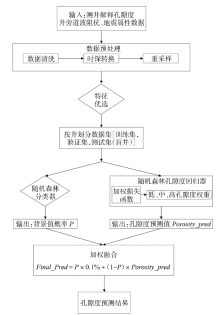
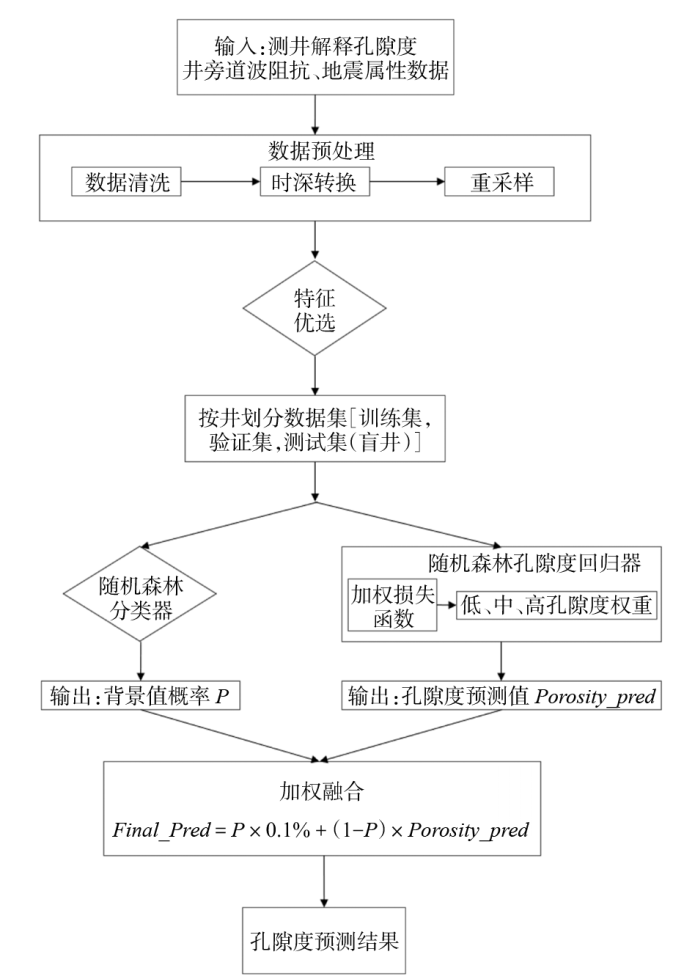
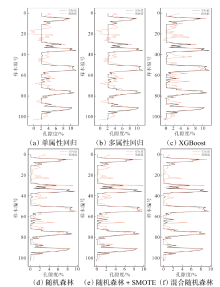
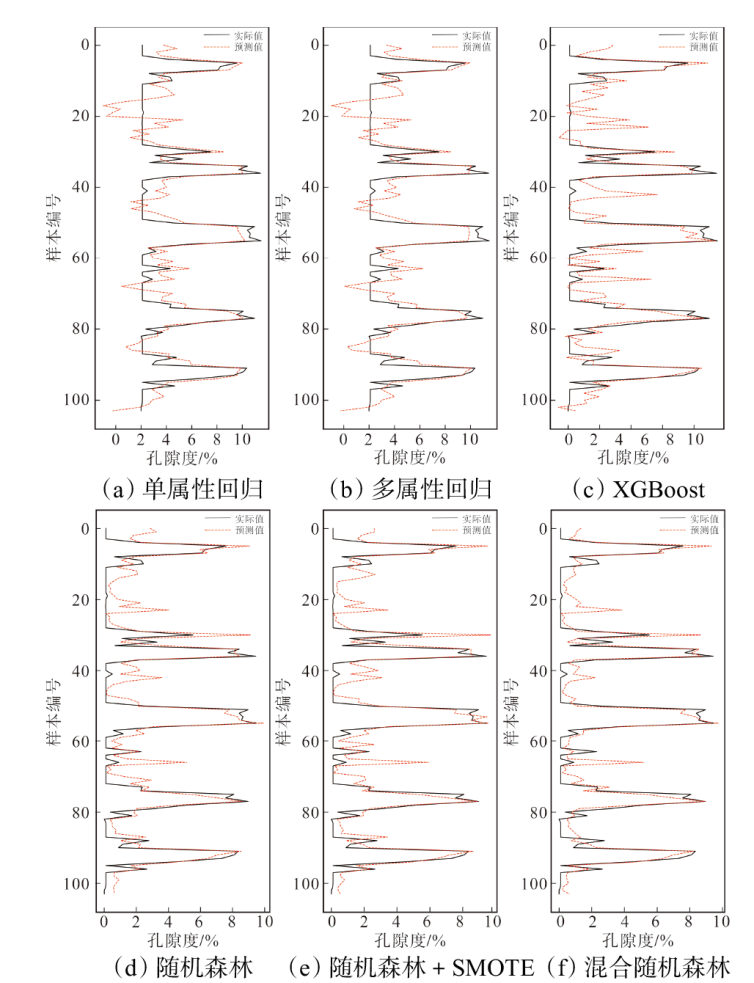
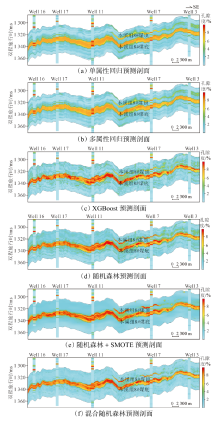
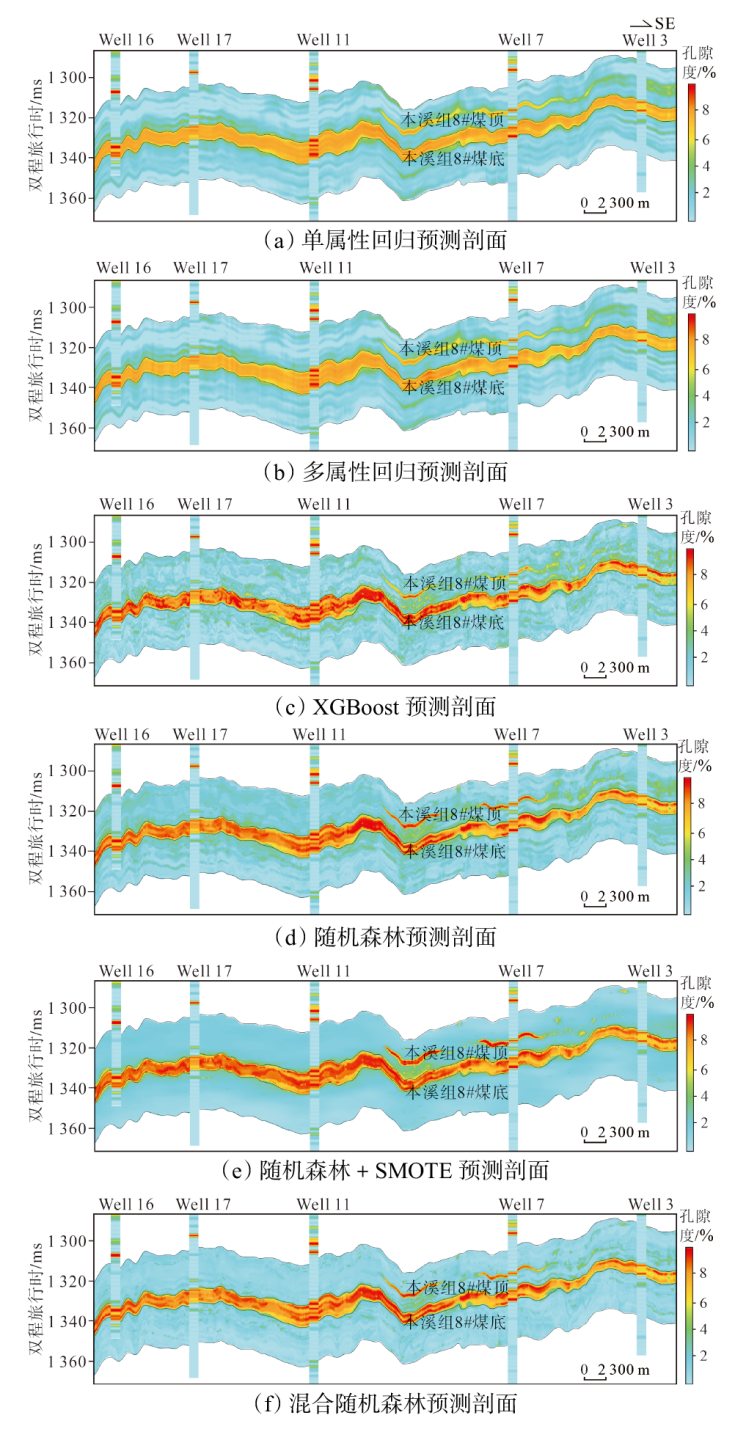
针对鄂尔多斯盆地米脂北地区石炭系本溪组8#煤常规方法对高孔隙度储层刻画精度不足的问题,基于斯皮尔曼相关分析优选敏感地震属性,构建低冗余输入特征集,提出了一种“分类—回归”两阶段协同的混合随机森林孔隙度预测方法,将该方法与6种常规方法进行了对比。研究结果表明:①混合随机森林孔隙度预测方法利用带类别平衡的分类器识别无效值,输出对应概率;在回归器训练中引入孔隙度分段样本权重,将低、中、高孔隙度区间的权重纳入优化;通过概率加权机制对预测结果进行自适应调整,在非储层段抑制背景值虚高、在储层段保持回归精度。②混合随机森林盲井预测孔隙度决定系数R2为0.864 4,显著优于单属性回归(0.720 4)、多属性线性回归(0.766 5)、XGBoost(0.717 5)、常规随机森林(0.791 0)及SMOTE+随机森林(0.771 3);该方法低孔背景段预测结果偏差为0.416 4%,较常规随机森林(0.829 8%)和XGBoost(0.881 6%)明显降低,有效抑制了背景值虚高;在“甜点”段(孔隙度 ≥ 6%)预测平均绝对误差为0.703 8%。③连井剖面和平面预测结果表明,该方法在储层横向连续性、“甜点”带识别及背景区控制方面均优于对比方法,能够准确刻画本溪组8#煤孔隙度平面展布特征。
中图分类号:
- TE311

| [1] | 李国欣, 张水昌, 何海清, 等. 煤岩气:概念、内涵与分类标准[J]. 石油勘探与开发, 2024, 51(4):783-795. |
| LI Guoxin, ZHANG Shuichang, HE Haiqing, et al. Coal-rock gas:Concept,connotation and classification criteria[J]. Petroleum Exploration and Development, 2024, 51(4):783-795. | |
| [2] | 邹才能, 赵群, 刘翰林, 等. 中国煤岩气突破及意义[J]. 天然气工业, 2025, 45(4):1-18. |
| ZOU Caineng, ZHAO Qun, LIU Hanlin, et al. China’s breakthrough in coal-rock gas and its significance[J]. Natural Gas Industry, 2025, 45(4):1-18. | |
| [3] | 桂志先, 朱广生, 熊新斌, 等. 孔隙度与纵横波速度间的关系及其在孔隙度预测中的应用[J]. 石油物探, 1998, 37(2):36-40. |
| GUI Zhixian, ZHU Guangsheng, XIONG Xinbin, et al. Relationship between porosity and P- and S-wave velocities and its application in porosity prediction[J]. Geophysical Prospecting for Petroleum, 1998, 37(2):36-40. | |
| [4] | HAMPSON D, SCHUELKE J S, QUIREIN J. Use of multiattribute transforms to predict log properties from seismic data[J]. Geophysics, 2001, 66(1):220-236. |
| [5] | BERRYMAN J G, PRIDE S R, WANG H F. A differential scheme for elastic properties of rocks with dry or saturated cracks[J]. Geophysical Journal International, 2002, 151(2):597-611. |
| [6] | HE Xile, HE Zhenhua, WANG Xuben, et al. Rock skeleton mo-dels and seismic porosity inversion[J]. Applied Geophysics, 2012, 9:349-358. |
| [7] | 杨午阳, 魏新建, 李海山. 智能物探技术的过去、现在与未来[J]. 岩性油气藏, 2024, 36(2):170-188. |
| YANG Wuyang, WEI Xinjian, LI Haishan. The past,present and future of intelligent geophysical technology[J]. Lithologic Reservoirs, 2024, 36(2):170-188. | |
| [8] | CHEN Wei, YANG Liuping, ZHA Bei, et al. Deep learning re-servoir porosity prediction based on multilayer long short-term memory network[J]. Geophysics, 2020, 85(4):WA213-WA225. |
| [9] | 路萍, 郭京哲, 高春云, 等. 基于机器学习的CO2封存致密砂岩储层孔隙度预测[J]. 地球物理学进展, 2024, 39(3):1129-1140. |
| LU Ping, GUO Jingzhe, GAO Chunyun, et al. Machine learning-based prediction of porosity in tight sandstone reservoirs for CO2 geological sequestration[J]. Progress in Geophysics, 2024, 39(3):1129-1140. | |
| [10] | 桂金咏, 李胜军, 高建虎, 等. 基于特征变量扩展的含气饱和度随机森林预测方法[J]. 岩性油气藏, 2024, 36(2):65-75. |
| GUI Jinyong, LI Shengjun, GAO Jianhu, et al. A random fo-rests prediction method for gas saturation based on feature variable extension[J]. Lithologic Reservoirs, 2024, 36(2):65-75. | |
| [11] | 甄艳, 康锦涛, 赵晓明, 等. 基于改进SMOTE和随机森林算法的致密砂岩成岩相测井解释方法[J]. 西南石油大学学报(自然科学版), 2025, 47(4):62-74. |
| ZHEN Yan, KANG Jintao, ZHAO Xiaoming, et al. A logging interpretation method for tight sandstone diagenetic facies based on improved SMOTE and random forest algorithm[J]. Journal of Southwest Petroleum University (Science & Technology Edition), 2025, 47(4):62-74. | |
| [12] | 翟咏荷, 何登发, 开百泽. 鄂尔多斯盆地及邻区中—晚二叠世构造-沉积环境与原型盆地演化[J]. 岩性油气藏, 2024, 36(1):32-44. |
| ZHAI Yonghe, HE Dengfa, KAI Baize. Tectonic-depositional environment and prototype basin evolution of Middle-Late Permian in Ordos Basin and adjacent areas[J]. Lithologic Re-servoirs, 2024, 36(1):32-44. | |
| [13] | 何登发, 包洪平, 开百泽, 等. 鄂尔多斯盆地及其邻区关键构造变革期次及其特征[J]. 石油学报, 2021, 42(10):1255-1269. |
| HE Dengfa, BAO Hongping, KAI Baize, et al. Critical tectonic modification periods and its geologic features of Ordos Basin and adjacent area[J]. Acta Petrolei Sinica, 2021, 42(10):1255-1269. | |
| [14] | 赵喆, 徐旺林, 赵振宇, 等. 鄂尔多斯盆地石炭系本溪组煤岩气地质特征与勘探突破[J]. 石油勘探与开发, 2024, 51(2):234-247. |
| ZHAO Zhe, XU Wanglin, ZHAO Zhenyu, et al. Geological cha-racteristics and exploration breakthroughs of coal rock gas in Carboniferous Benxi Formation,Ordos Basin,NW China[J]. Petroleum Exploration and Development, 2024, 51(2):234-247. | |
| [15] | 张盟勃, 彭剑康, 崔晓杰, 等. 鄂尔多斯盆地米脂北地区石炭系本溪组煤岩气储层地震预测技术[J]. 岩性油气藏, 2026, 38(1):162-171. |
| ZHANG Mengbo, PENG Jiankang, CUI Xiaojie, et al. Seismic prediction technology for coal rock gas reservoir of Carbonife-rous Benxi Formation in northern Mizhi area,Ordos Basin[J]. Lithologic Reservoirs, 2026, 38(1):162-171. | |
| [16] | MALLEY J D, MALLEY K G, PAJEVIC S. Random forests-trees everywhere[M]// Statistical learning for biomedical data. Cambridge: Cambridge University Press,2011:137-154. |
| [17] | BREIMAN L. Bagging predictors[J]. Machine Learning, 1996, 24:123-140. |
| [18] | BREIMAN L, FRIEDMAN J H, OLSHEN R A, et al. Classification and regression trees[M]. Belmont:Wadsworth, 1984. |
| [19] | 方匡南, 吴见彬, 朱建平, 等. 随机森林方法研究综述[J]. 统计与信息论坛, 2011, 26(3):32-38. |
| FANG Kuangnan, WU Jianbin, ZHU Jianping, et al. A review of technologies on random forests[J]. Journal of Statistics and Information, 2011, 26(3):32-38. | |
| [20] | 宋述芳, 何入洋. 基于随机森林的重要性测度指标体系[J]. 国防科技大学学报, 2021, 43(2):25-32. |
| SONG Shufang, HE Ruyang. Importance measure index system based on random forest[J]. Journal of National University of Defense Technology, 2021, 43(2):25-32. | |
| [21] | 王光宇, 宋建国, 徐飞, 等. 不平衡样本集随机森林岩性预测方法[J]. 石油地球物理勘探, 2021, 56(4):679-687. |
| WANG Guangyu, SONG Jianguo, XU Fei, et al. Random forest lithology prediction method for imbalanced data sets[J]. Oil Geophysical Prospecting, 2021, 56(4):679-687. | |
| [22] | SPEARMAN C. The proof and measurement of association between two things[J]. The American Journal of Psychology, 1904, 15(1):72-101. |
| [23] | 马如辉, 张平. 利用波阻抗反演预测地层孔隙率[J]. 石油地球物理勘探, 2002, 37(5):537-540. |
| MA Ruhui, ZHANG Ping. Study of method for prediction of formation porosity by wave impedance inversion[J]. Oil Geophysical Prospecting, 2002, 37(5):537-540. | |
| [24] | 邹冠贵, 彭苏萍, 张辉, 等. 地震波阻抗反演预测采区孔隙度方法[J]. 煤炭学报, 2009, 34(11):1507-1511. |
| ZOU Guangui, PENG Suping, ZHANG Hui, et al. Predicting aquifer porosity of coal mine by impedance inversion[J]. Journal of China Coal Society, 2009, 34(11):1507-1511. | |
| [25] | 罗登贵, 刘江平, 金聪, 等. 活断层的地震响应特征与瞬时地震属性[J]. 地球科学, 2017, 42(3):462-470. |
| LUO Denggui, LIU Jiangping, JIN Cong, et al. Instantaneous seismic attributes and response characteristics of active faults[J]. Earth Science, 2017, 42(3):462-470. | |
| [26] | 王开燕, 徐清彦, 张桂芳, 等. 地震属性分析技术综述[J]. 地球物理学进展, 2013, 28(2):815-823. |
| WANG Kaiyan, XU Qingyan, ZHANG Guifang, et al. Summary of seismic attribute analysis[J]. Progress in Geophysics, 2013, 28(2):815-823. | |
| [27] | 张军华, 侯静, 辛星, 等. 道积分属性理论诠释及其在薄河道砂体预测中的应用[J]. 地球物理学进展, 2018, 33(1):326-333. |
| ZHANG Junhua, HOU Jing, XIN Xing, et al. Theory annotation and application of trace integration attribute in the prediction of thin channel sand body[J]. Progress in Geophysics, 2018, 33(1):326-333. | |
| [28] | 田文忠, 乔林, 袁剑, 等. 浅水三角洲前缘薄砂岩储层地震预测方法:以川西坳陷侏罗系蓬莱镇组二段为例[J]. 岩性油气藏, 2026, 38(1):78-88. |
| TIAN Wenzhong, QIAO Lin, YUAN Jian, et al. Seismic prediction method for thin sandstone reservoirs in shallow water delta front:A case study of the second member of Jurassic Penglaizhen Formation in Western Sichuan Depression[J]. Lithologic Reservoirs, 2026, 38(1):78-88. | |
| [29] | 邹冠贵, 彭苏萍, 郝小霞, 等. 基于楔形模型分析煤厚与地震振幅属性关系[J]. 煤炭科学技术, 2014, 42(4):88-91. |
| ZOU Guangui, PENG Suping, HAO Xiaoxia, et al. Analysis on relationship between seam thickness and seismic amplitude attribute based on wedge model[J]. Coal Science and Techno-logy, 2014, 42(4):88-91. | |
| [30] | WU Xiaoyang, CHAPMAN M, LI Xiangyang, et al. Quantitative gas saturation estimation by frequency-dependent amplitude-versus-offset analysis[J]. Geophysical Prospecting, 2014, 62(6):1224-1237. |
| [31] | 李毓, 张春霞. 基于out-of-bag样本的随机森林算法的超参数估计[J]. 系统工程学报, 2011, 26(4):566-572. |
| LI Yu, ZHANG Chunxia. Estimation of the hyper-parameter in random forest based on out-of-bag sample[J]. Journal of Systems Engineering, 2011, 26(4):566-572. | |
| [32] | 殷疆, 焦雪君, 李小龙, 等. 基于随机森林优化算法的低电阻率储层含油饱和度评价方法[J]. 岩性油气藏, 2026, 38(1):55-66. |
| YIN Jiang, JIAO Xuejun, LI Xiaolong, et al. Evaluation method for oil saturation in low resistivity reservoirs based on random forest optimization algorithm[J]. Lithologic Reservoirs, 2026, 38(1):55-66. |
| [1] | 黄力, 赵龙梅, 陈东, 赵浩阳, 张艺馨, 石石, 张稳, 季亮. 鄂尔多斯盆地宜川地区石炭系—二叠系煤岩气储层特征及勘探潜力[J]. 岩性油气藏, 2026, 38(5): 40-50. |
| [2] | 张卫刚, 刘广林, 王勇, 宁凡, 马绍辉, 闫百泉. 鄂尔多斯盆地铁边城地区三叠系长7段夹层型页岩油储层特征及主控因素[J]. 岩性油气藏, 2026, 38(5): 94-103. |
| [3] | 樊宇洁, 万永平, 蒲仁海, 折印楠, 崔宏俊, 高小平. 鄂尔多斯盆地延安—甘泉地区山23亚段大型河道带沉积特征及勘探潜力[J]. 岩性油气藏, 2026, 38(5): 125-135. |
| [4] | 李新泽, 吴浩, 晁嘉豪, 李娜, 王苏冉, 白玉湖, 冯汝勇, 程加陆. 鄂尔多斯盆地神府区块二叠系太原组煤层气产能预测方法[J]. 岩性油气藏, 2026, 38(5): 191-200. |
| [5] | 白益远, 弓虎军, 王东旭, 李渊, 罗芬红, 王军军. 鄂尔多斯盆地延长探区氦气分布特征及控制因素[J]. 岩性油气藏, 2026, 38(3): 149-161. |
| [6] | 任佳伟, 李莉, 王德玉, 白晓虎, 康博, 白宇恩, 白建文, 陈军斌. 页岩油藏水平井四维地应力演化及重复压裂时机优化方法——以鄂尔多斯盆地庆城油田三叠系长7段为例[J]. 岩性油气藏, 2026, 38(3): 190-200. |
| [7] | 薛博文, 张兆辉, 张皎生, 邹建栋, 张闻亭. 基于GWO-XGBoost模型的致密砂岩储层流体测井智能识别——以鄂尔多斯盆地洪德地区三叠系长8段为例[J]. 岩性油气藏, 2026, 38(2): 111-121. |
| [8] | 杨占龙, 郝彬, 谭开俊, 张晶, 张丽萍, 廖建波, 李在光, 史江龙. 中国陆上中小盆地群发育特征与油气勘探方向[J]. 岩性油气藏, 2026, 38(2): 12-31. |
| [9] | 周文娟, 蒲仁海, 卢子兴, 王康乐, 张鹏, 闻星宇, 王通, 关蕴文. 鄂尔多斯盆地中东部奥陶系马五段膏盐岩分布特征及主控因素[J]. 岩性油气藏, 2026, 38(2): 122-133. |
| [10] | 李涛, 马国福, 赵乐义, 袁莉, 马淇琳, 谢菁钰, 张博, 李赫楠. 鄂尔多斯盆地环县地区三叠系长7段烃源岩特征及油源对比[J]. 岩性油气藏, 2026, 38(2): 134-144. |
| [11] | 龙礼文, 肖文华, 严宝年, 王建国, 李少勇, 李丛林, 郭耀轩, 任雪瑶. 鄂尔多斯盆地环西地区三叠系长81油气成藏主控因素[J]. 岩性油气藏, 2026, 38(2): 65-75. |
| [12] | 郭昱辛, 白玉彬, 赵靖舟, 张军, 曹丹丹. 鄂尔多斯盆地志丹地区三叠系长7泥页岩非均质性及控油作用[J]. 岩性油气藏, 2026, 38(2): 97-110. |
| [13] | 张盟勃, 彭剑康, 崔晓杰, 张栋, 倪娜, 龙盛芳, 魏朋辉. 鄂尔多斯盆地米脂北地区石炭系本溪组煤岩气储层地震预测技术[J]. 岩性油气藏, 2026, 38(1): 162-171. |
| [14] | 荀小全, 李宏涛, 李长平, 杨帆, 刘雄. 强非均质性气藏压裂水平井分段产量劈分新方法——以鄂尔多斯盆地东胜气田二叠系盒1段气藏为例[J]. 岩性油气藏, 2026, 38(1): 191-200. |
| [15] | 殷疆, 焦雪君, 李小龙, 李泰福, 申战勇, 李梦茜, 孙睿, 朱玉双. 基于随机森林优化算法的低电阻率储层含油饱和度评价方法[J]. 岩性油气藏, 2026, 38(1): 55-66. |
|
||
 甘公网安备 62010202002827号