岩性油气藏 ›› 2026, Vol. 38 ›› Issue (6): 117–125.doi: 10.12108/yxyqc.20260611
四川盆地寒武系龙王庙组溶蚀孔隙表征及成因
李勇1( ), 张本健1, 龙虹宇1, 张亚1, 周刚1, 严威1, 钟瀚霆2, 葛毓柱2,3()
- 1
中国石油西南油气田公司 勘探开发研究院 成都 610041
2成都理工大学 沉积地质研究院 成都 610059
3国家能源碳酸盐岩油气重点实验室 北京 102206
Characterization and genesis of dissolution pores in Cambrian Longwangmiao Formation, Sichuan Basin
LI Yong1(), ZHANG Benjian1, LONG Hongyu1, ZHANG Ya1, ZHOU Gang1, YAN Wei1, ZHONG Hanting2, GE Yuzhu2,3()
- 1
Exploration and Development Research Institute ,PetroChina Southwest Oil & Gasfield Company Chengdu 610041, China
2Institute of Sedimentary Geology ,Chengdu University of Technology Chengdu 610059, China
3State Energy Key Laboratory for Carbonate Oil and Gas Beijing 102206, China
摘要:
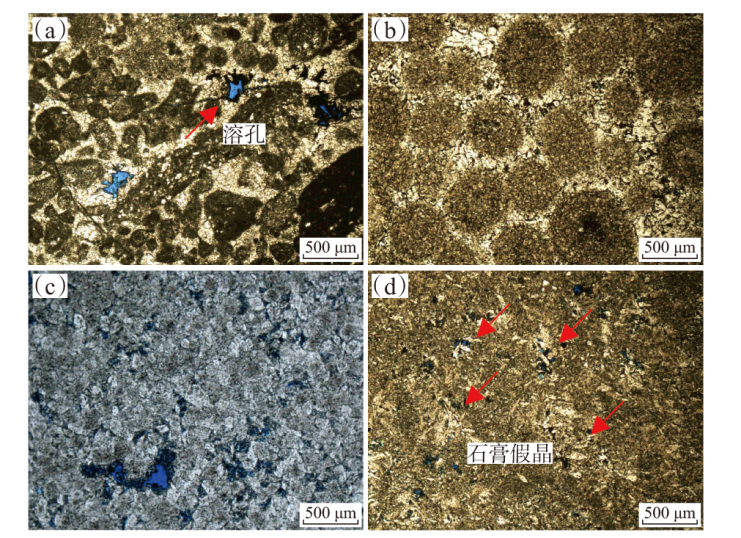
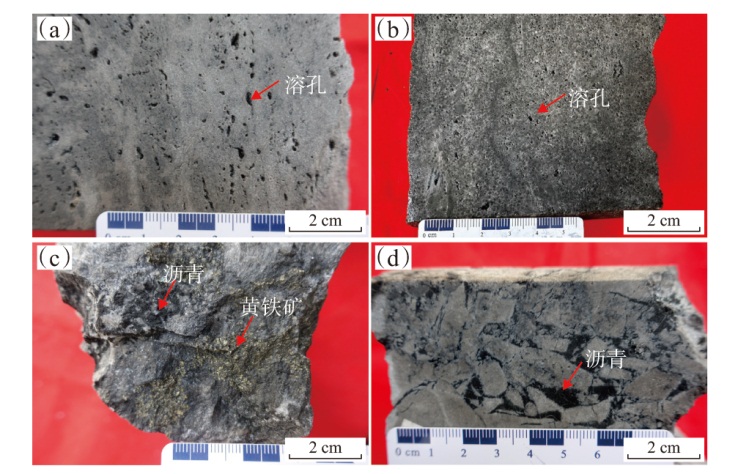
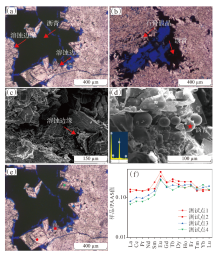
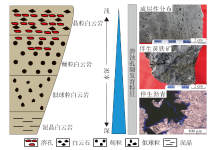
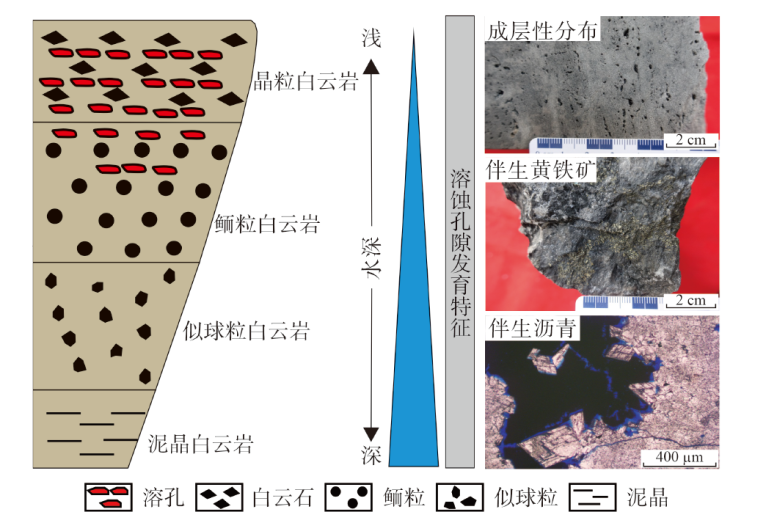
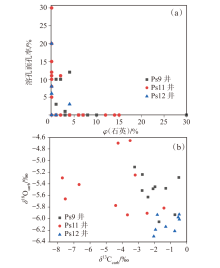
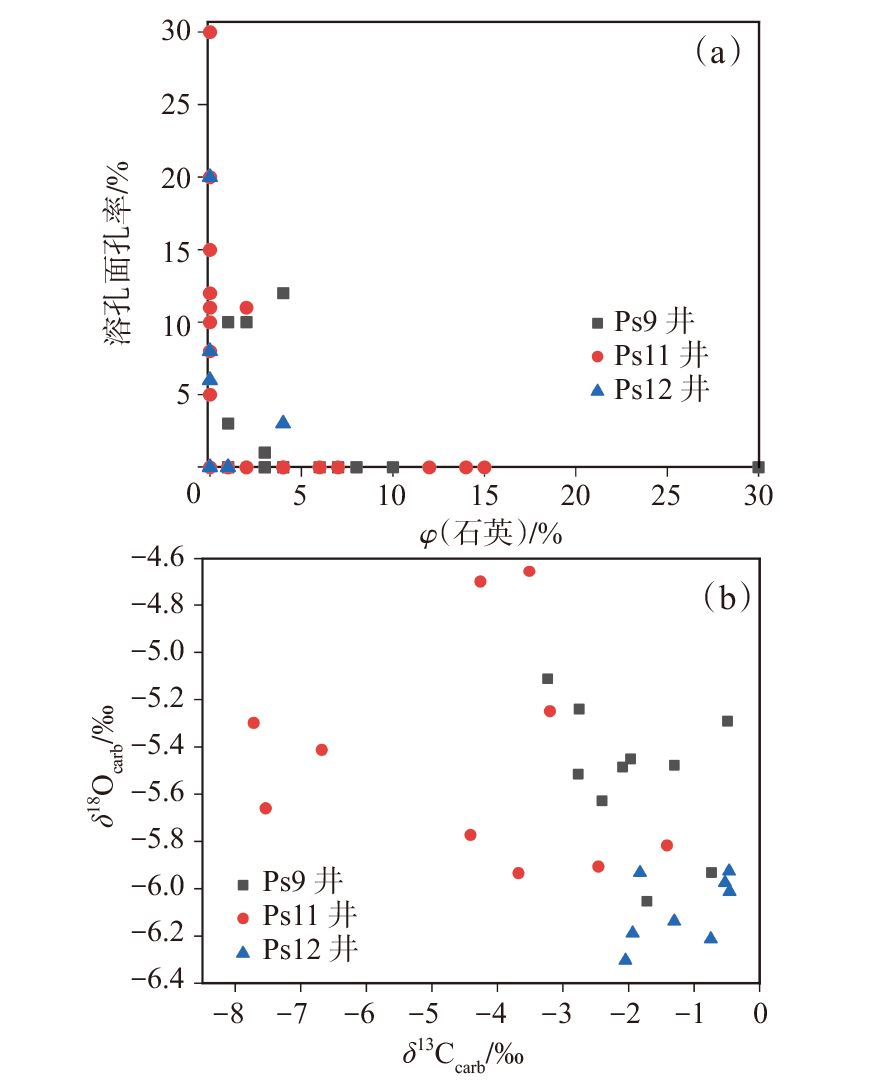
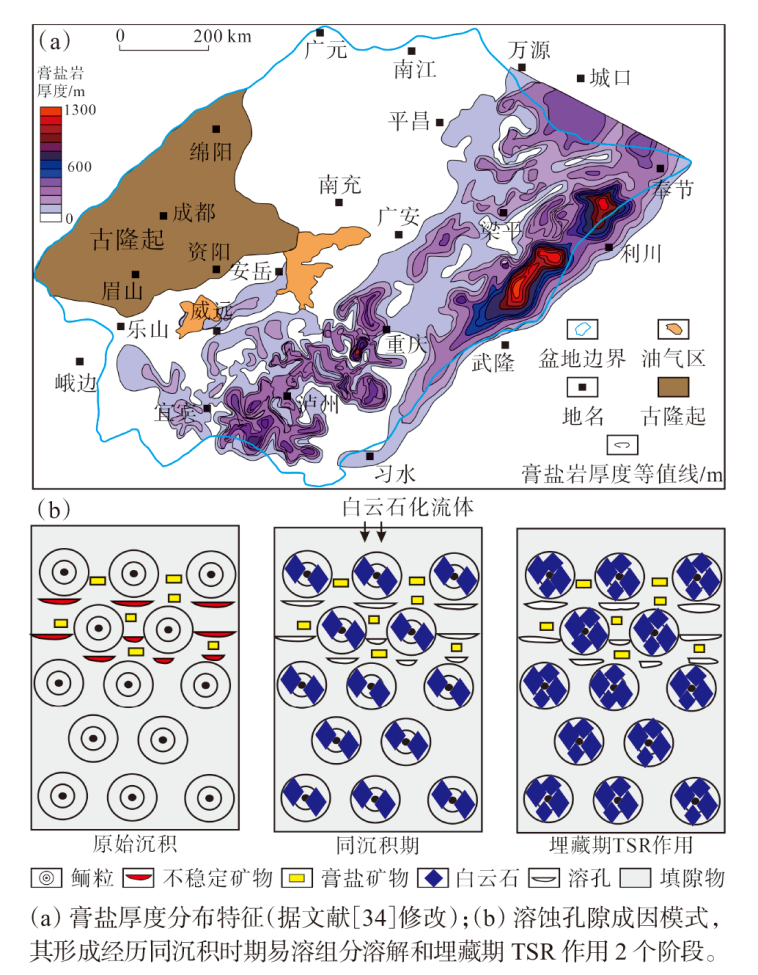
溶蚀孔隙是深层—超深层碳酸盐岩油气储层发育的核心要素之一,但其成因机制尚存在争议。以四川盆地寒武系龙王庙组为研究对象,通过沉积学、岩石学、矿物学与地球化学测试分析,对溶蚀孔隙发育特征与成因机制进行了系统研究,并对优质储层进行预测。研究结果表明:①四川盆地寒武系龙王庙组储层岩性以颗粒白云岩和晶粒白云岩为主,垂向上呈向上变浅的岩性旋回;无机碳、氧同位素值无明显负偏特征,不支持大规模大气淡水成岩改造。②研究区龙王庙组溶蚀孔隙层控明显,主要发育于向上变浅旋回的中上部,陆源碎屑含量较低,孔隙常与黄铁矿、沥青及石膏假晶共生;溶蚀孔隙发育层段岩心与薄片未见大气淡水溶蚀痕迹,区别于传统准同生暴露及地表淋滤成因模式。③溶蚀孔隙发育可能主要受沉积期物质组成及热化学硫酸盐还原反应(TSR)作用共同控制,沉积期干热蒸发环境促使膏盐沉淀并产生白云石化流体,优先溶蚀文石、高镁方解石等不稳定矿物,形成早期溶孔;埋藏阶段膏盐与烃类发生TSR,生成酸性流体,进一步扩展早期溶孔。④颗粒滩沉积与膏盐类沉积耦合有利于溶蚀孔隙发育与保存,这与四川盆地天然气藏多伴随出现薄层膏盐沉积及普遍含H2S特征相一致,因此深层—超深层优质碳酸盐岩储层勘探需考虑膏盐沉积特征及H2S分布。
中图分类号: TE122;P512.2

| [1] | 江怀友, 宋新民, 王元基, 等. 世界海相碳酸盐岩油气勘探开发现状与展望[J]. 海洋石油, 2008, 28(4):6-13. |
| JIANG Huaiyou, SONG Xinmin, WANG Yuanji, et al. Current situation and forecast of the world’s carbonate oil and gas exploration and development[J]. Offshore Oil, 2008, 28(4):6-13. | |
| [2] |
杜江民, 刘泊远, 张毅, 等. 中国典型白云岩储集层特征及成藏模式[J]. 岩性油气藏, 2023, 35(3):86-98.
doi: 10.12108/yxyqc.20230308 |
|
DU Jiangmin, LIU Boyuan, ZHANG Yi, et al. Characteristics and accumulation model of typical dolomite reservoirs in China[J]. Lithologic Reservoirs, 2023, 35(3):86-98.
doi: 10.12108/yxyqc.20230308 |
|
| [3] | 孙龙德, 邹才能, 朱如凯, 等. 中国深层油气形成、分布与潜力分析[J]. 石油勘探与开发, 2013, 40(6):641-649. |
| SUN Longde, ZOU Caineng, ZHU Rukai, et al. Formation,distribution and potential of deep hydrocarbon resources in China[J]. Petroleum Exploration and Development, 2013, 40(6):641-649. | |
| [4] | 刘树根, 孙玮, 李智武, 等. 四川叠合盆地海相碳酸盐岩油气分布特征及其构造主控因素[J]. 岩性油气藏, 2016, 28(5):1-17. |
|
LIU Shugen, SUN Wei, LI Zhiwu, et al. Distribution characte-ristics of marine carbonate reservoirs and their tectonic controlling factors across the Sichuan superimposed basin[J]. Lithologic Reservoirs, 2016, 28(5):1-17.
doi: 10.3969/j.issn.1673-8926.2016.05.001 |
|
| [5] |
李勇, 张亚, 周刚, 等. 四川盆地蓬莱气田寒武系龙王庙组优质储层特征及主控因素[J]. 岩性油气藏, 2025, 37(6):35-47.
doi: 10.12108/yxyqc.20250604 |
|
LI Yong, ZHANG Ya, ZHOU Gang, et al. Characteristics and main controlling factors of high-quality reservoirs in Cambrian Longwangmiao Formation of Penglai Gasfield,Sichuan Basin[J]. Lithologic Reservoirs, 2025, 37(6):35-47.
doi: 10.12108/yxyqc.20250604 |
|
| [6] | 李茜, 朱光有, 张志遥. 超深层白云岩成因与规模储层控制因素:以四川盆地震旦系灯影组和寒武系龙王庙组为例[J]. 中国科学:地球科学, 2024, 54(7):2389-2418. |
| LI Xi, ZHU Guangyou, ZHANG Zhiyao. Genesis of ultra-deep dolostone and controlling factors of large-scale reservoir:A case study of the Sinian Dengying Formation and the Cambrian Longwangmiao Formation in the Sichuan Basin[J]. Scientia Sinica(Terrae), 2024, 54(7):2389-2418. | |
| [7] |
邢倩, 李杨凡, 李翔, 等. 川北米仓山地区寒武系仙女洞组碳酸盐岩储集特征及主控因素[J]. 岩性油气藏, 2025, 37(4):50-62.
doi: 10.12108/yxyqc.20250405 |
|
XING Qian, LI Yangfan, LI Xiang, et al. Reservoir characteristics and main controlling factors of carbonate rock of Cambrian Xiannüdong Formation in Micangshan area,northern Sichuan Basin[J]. Lithologic Reservoirs, 2025, 37(4):50-62.
doi: 10.12108/yxyqc.20250405 |
|
| [8] |
SHAN Anjiang, HU Anping, QIAO Zhanfeng, et al. Development and preservation mechanism of deep and ultra-deep carbonate reservoirs[J]. Science China Earth Sciences, 2024, 67(11):1-19.
doi: 10.1007/s11430-023-1210-5 |
| [9] |
李璐萍, 梁金同, 刘四兵, 等. 川中地区寒武系洗象池组白云岩储层成岩作用及孔隙演化[J]. 岩性油气藏, 2022, 34(3):39-48.
doi: 10.12108/yxyqc.20220304 |
|
LI Luping, LIANG Jintong, LIU Sibing, et al. Diagenesis and pore evolution of dolomite reservoirs of Cambrian Xixiangchi Formation in central Sichuan Basin[J]. Lithologic Reservoirs, 2022, 34(3):39-48.
doi: 10.12108/yxyqc.20220304 |
|
| [10] |
周刚, 阎泽昊, 雷鼎丞, 等. 白云岩成因模式及其对碳酸盐岩优质储层发育的影响[J]. 天然气勘探与开发, 2024, 47(1):1-11.
doi: 10.12055/gaskk.issn.1673-3177.2024.01.001 |
|
ZHOU Gang, YAN Zehao, LEI Dingcheng, et al. Genetic model of dolomite and its influence on development of high-quality carbonate reservoir[J]. Natural Gas Exploration and Development, 2024, 47(1):1-11.
doi: 10.12055/gaskk.issn.1673-3177.2024.01.001 |
|
| [11] | 朱光有, 张水昌, 梁英波, 等. TSR对深部碳酸盐岩储层的溶蚀改造:四川盆地深部碳酸盐岩优质储层形成的重要方式[J]. 岩石学报, 2006, 22(8):2182-2194. |
| ZHU Guangyou, ZHANG Shuichang, LIANG Yingbo, et al. Dissolution and alteration of the deep carbonate reservoirs by TSR:An important type of deep-buried high-quality carbonate reservoirs in Sichuan basin[J]. Acta Petrologica Sinica, 2006, 22(8):2182-2194. | |
| [12] |
文龙, 罗冰, 张本健, 等. 深层灰岩孔隙发育与保持机理:以四川盆地中部上二叠统长兴组为例[J]. 石油勘探与开发, 2025, 52(2):292-305.
doi: 10.11698/PED.20240411 |
| WEN Long, LUO Bing, ZHANG Benjian, et al. Formation and preservation of pores in deep limestone reservoirs:A case study of Upper Permian Changxing Formation,central Sichuan Basin,SW China[J]. Petroleum Exploration and Development, 2025, 52(2):292-305. | |
| [13] |
卢科良, 吴康军, 李志军, 等. 川中古隆起北斜坡寒武系龙王庙组油气成藏特征及演化模式[J]. 岩性油气藏, 2024, 36(4):159-168.
doi: 10.12108/yxyqc.20240414 |
|
LU Keliang, WU Kangjun, LI Zhijun, et al. Characteristics and evolution model of hydrocarbon accumulation of Cambrian Longwangmiao Formation in the north slope of central Sichuan paleo-uplift[J]. Lithologic Reservoirs, 2024, 36(4):159-168.
doi: 10.12108/yxyqc.20240414 |
|
| [14] |
杨威, 魏国齐, 谢武仁, 等. 川中地区龙王庙组优质储层发育的主控因素及成因机制[J]. 石油学报, 2020, 41(4):421-432.
doi: 10.7623/syxb202004005 |
|
YANG Wei, WEI Guoqi, XIE Wuren, et al. Main controlling factors and genetic mechanism for the development of high-quality reservoirs in Longwangmiao Formation,central Sichuan Basin[J]. Acta Petrolei Sinica, 2020, 41(4):421-432.
doi: 10.7623/syxb202004005 |
|
| [15] | 刘树根, 宋金民, 赵异华, 等. 四川盆地龙王庙组优质储层形成与分布的主控因素[J]. 成都理工大学学报(自然科学版), 2014, 41(6):657-670. |
| LIU Shugen, SONG Jinmin, ZHAO Yihua, et al. Controlling factors of formation and distribution of Lower Cambrian Longwangmiao Formation high-quality reservoirs in Sichuan Basin,China[J]. Journal of Chengdu University of Technology (Science & Technology Edition), 2014, 41(6):657-670. | |
| [16] | 杨雪飞, 王兴志, 代林呈, 等. 川中地区下寒武统龙王庙组沉积相特征[J]. 岩性油气藏, 2015, 27(1):95-101. |
|
YANG Xuefei, WANG Xingzhi, DAI Lincheng, et al. Sedimentary features of the Lower Cambrian Longwangmiao Formation in the central Sichuan Basin[J]. Lithologic Reservoirs, 2015, 27(1):95-101.
doi: 10.3969/j.issn.1673-8926.2015.01.014 |
|
| [17] | 陈荣庆, 丁一, 刘树根, 等. 川北旺苍-南江地区龙王庙组颗粒滩储集层特征及致密化机理[J]. 成都理工大学学报(自然科学版), 2025, 52(4):658-673. |
| CHEN Rongqing, DING Yi, LIU Shugen, et al. Characteristics and densification mechanism of shoal reservoir from the Longwangmiao Formation in Wangcang-Nanjiang area of northern Sichuan[J]. Journal of Chengdu University of Technology (Science & Technology Edition), 2025, 52(4):658-673. | |
| [18] |
车国琼, 汪轰静, 范玲, 等. 龙女寺龙王庙组高含沥青储层开发潜力分析[J]. 天然气勘探与开发, 2023, 46(3):67-76.
doi: 10.12055/gaskk.issn.1673-3177.2023.03.008 |
|
CHE Guoqiong, WANG Hongjing, FAN Ling, et al. Development potential of reservoirs with rich bitumen in Longwangmiao Formation,Longnvsi block,Sichuan Basin[J]. Natural Gas Exploration and Development, 2023, 46(3):67-76.
doi: 10.12055/gaskk.issn.1673-3177.2023.03.008 |
|
| [19] |
REN Ying, ZHONG Dakang, GAO Chonglong, et al. The paleoenvironmental evolution of the Cambrian Longwangmiao Formation (stage 4,Toyonian) on the Yangtze platform,South China:Petrographic and geochemical constraints[J]. Marine and Petroleum Geology, 2019, 100:391-411.
doi: 10.1016/j.marpetgeo.2018.10.022 |
| [20] |
ZHANG Pengyuan, WANG Yongli, ZHANG Xiaojun, et al. Carbon,oxygen and strontium isotopic and elemental characteristics of the Cambrian Longwangmiao Formation in South China:Paleoenvironmental significance and implications for carbon isotope excursions[J]. Gondwana Research, 2022, 106:174-190.
doi: 10.1016/j.gr.2022.01.008 |
| [21] |
宋金民, 刘树根, 赵异华, 等. 川中地区中下寒武统风暴岩特征及沉积地质意义[J]. 石油学报, 2016, 37(1):30-42.
doi: 10.7623/syxb201601003 |
|
SONG Jinmin, LIU Shugen, ZHAO Yihua, et al. Characteristics and sedimentary geological significance of Lower-Middle Cambrian tempestites in central Sichuan Basin[J]. Acta Petrolei Sinica, 2016, 37(1):30-42.
doi: 10.7623/syxb201601003 |
|
| [22] | 杨伟强, 黎霆, 兰才俊, 等. 四川盆地下寒武统龙王庙组白云岩分布与控制因素[J]. 地球科学, 2024, 49(7):2388-2406. |
| YANG Weiqiang, LI Ting, LAN Caijun, et al. Distribution and controlling factors of dolostone in Lower Cambrian Longwangmiao Formation,Sichuan Basin[J]. Earth Science, 2024, 49(7):2388-2406. | |
| [23] | 陈娅娜, 张建勇, 李文正, 等. 四川盆地寒武系龙王庙组岩相古地理特征及储层成因与分布[J]. 海相油气地质, 2020, 25(2):171-180. |
| CHEN Yana, ZHANG Jianyong, LI Wenzheng, et al. Lithofacies paleogeography,reservoir origin and distribution of the Cambrian Longwangmiao Formation in Sichuan Basin[J]. Marine Origin Petroleum Geology, 2020, 25(2):171-180. | |
| [24] | 韩波, 何治亮, 任娜娜, 等. 四川盆地东缘龙王庙组碳酸盐岩储层特征及主控因素[J]. 岩性油气藏, 2018, 30(1):75-85. |
|
HAN Bo, HE Zhiliang, REN Nana, et al. Characteristics and main controlling factors of carbonate reservoirs of Longwangmiao Formation in eastern Sichuan Basin[J]. Lithologic Reservoirs, 2018, 30(1):75-85.
doi: 10.3969/j.issn.1673-8926.2018.01.008 |
|
| [25] | 牛思琪, 柳广弟, 王云龙, 等. 川中地区震旦系灯影组-寒武系龙王庙组储层焦沥青赋存特征与成因机制[J]. 石油实验地质, 2024, 46(5):1039-1049. |
| NIU Siqi, LIU Guangdi, WANG Yunlong, et al. Occurrence characteristics and genesis mechanism of pyrobitumen in Sinian Dengying to Cambrian Longwangmiao reservoirs in central Sichuan Basin[J]. Petroleum Geology & Experiment, 2024, 46(5):1039-1049. | |
| [26] | 谭秀成, 李凌, 刘宏, 等. 四川盆地中三叠统雷口坡组碳酸盐台地巨型浅滩化研究[J]. 中国科学:地球科学, 2014, 44(3):457-471. |
| TAN Xiucheng, LI Ling, LIU Hong, et al. Mega-shoaling in carbonate platform of the Middle Triassic Leikoupo Formation,Sichuan Basin,southwest China[J]. Scientia Sinica (Terrae), 2014, 44(3):457-471. | |
| [27] |
刘伟, 黄擎宇, 白莹, 等. 同生-准同生期大气淡水溶蚀对微生物碳酸盐岩储层的控制作用:以塔里木盆地下寒武统为例[J]. 地学前缘, 2021, 28(1):225-234.
doi: 10.13745/j.esf.sf.2020.5.21 |
|
LIU Wei, HUANG Qingyu, BAI Ying, et al. Meteoric water dissolution controls on microbial carbonate reservoir formation in the penecontemporaneous stage:Insight from the Lower Cambrian formation of the Tarim Basin[J]. Earth Science Frontiers, 2021, 28(1):225-234.
doi: 10.13745/j.esf.sf.2020.5.21 |
|
| [28] |
LAND L S. The origin of massive dolomite[J]. Journal of Geological Education, 1985, 33(2):112-125.
doi: 10.5408/0022-1368-33.2.112 |
| [29] |
BOLD U, AHM A C, SCHRAG D P, et al. Effect of dolomitization on isotopic records from Neoproterozoic carbonates in southwestern Mongolia[J]. Precambrian Research, 2020, 350:105902.
doi: 10.1016/j.precamres.2020.105902 |
| [30] |
BUDD D A, LAND L S. Geochemical imprint of meteoric diagenesis in Holocene ooid sands,Schooner Cays,Bahamas;correlation of calcite cement geochemistry with extant groundwaters[J]. Journal of Sedimentary Research, 1990, 60(3):361-378.
doi: 10.1306/212F919C-2B24-11D7-8648000102C1865D |
| [31] |
VEIZER J, ALA D, AZMY K, et al. 87Sr/86Sr,δ13C and δ18O evolution of Phanerozoic seawater[J]. Chemical Geology, 1999, 161:59-88.
doi: 10.1016/S0009-2541(99)00081-9 |
| [32] | 刘大卫, 蔡春芳, 扈永杰, 等. 深层白云岩多期白云石化及其对孔隙演化的影响:以川中地区下寒武统龙王庙组为例[J]. 中国矿业大学学报, 2020, 49(6):1150-1165. |
| LIU Dawei, CAI Chunfang, HU Yongjie, et al. Multi-stage dolomitization process of deep burial dolostones and its influence on pore evolution:A case study of Longwangmiao formation in the Lower Cambrian of central Sichuan Basin[J]. Journal of China University of Mining & Technology, 2020, 49(6):1150-1165. | |
| [33] | GE Yuzhu, PEDERSON C L, LOKIER S W, et al. Late Holocene to Recent aragonite-cemented transgressive lag deposits in the Abu Dhabi lagoon and intertidal sabkha[J]. Sedimento-logy, 2020, 67(5):2426-2454. |
| [34] | 徐安娜, 胡素云, 汪泽成, 等. 四川盆地寒武系碳酸盐岩-膏盐岩共生体系沉积模式及储层分布[J]. 天然气工业, 2016, 36(6):11-20. |
| XU Anna, HU Suyun, WANG Zecheng, et al. Sedimentary mode and reservoir distribution of the Cambrian carbonate & evaporite paragenesis system in the Sichuan Basin[J]. Natural Gas Industry, 2016, 36(6):11-20. | |
| [35] |
WANG Guangwei, LI Pingping, HAO Fang, et al. Dolomitization process and its implications for porosity development in dolostones:A case study from the Lower Triassic Feixianguan Formation,Jiannan area,Eastern Sichuan Basin,China[J]. Journal of Petroleum Science and Engineering, 2015, 131:184-199.
doi: 10.1016/j.petrol.2015.04.011 |
| [36] | 蔡春芳, 赵龙. 热化学硫酸盐还原作用及其对油气与储集层的改造作用:进展与问题[J]. 矿物岩石地球化学通报, 2016, 35(5):851-859. |
| CAI Chunfang, ZHAO Long. Thermochemical sulfate reduction and its effects on petroleum composition and reservoir quality:Advances and problems[J]. Bulletin of Mineralogy,Petrology and Geochemistry, 2016, 35(5):851-859. | |
| [37] | 张文济, 叶朝阳, 李世临, 等. 川东地区五探 1 井寒武系龙王庙组流体包裹体特征及成藏期次[J]. 石油地质与工程, 2020, 34(4):19-23. |
| ZHANG Wenji, YE Chaoyang, LI Shilin, et al. Fluid inclusion characteristics and reservoir forming stages of Cambrian Longwangmiao Formation of Wutan-1 well in eastern Sichuan region[J]. Petroleum Geology and Engineering, 2020, 34(4):19-23. | |
| [38] | 帅燕华, 张水昌, 胡国艺, 等. 四川盆地高石梯-磨溪地区震旦系-寒武系天然气 TSR 效应及气源启示[J]. 地质学报, 2019, 93(7):1754-1766. |
| SHUAI Yanhua, ZHANG Shuichang, HU Guoyi, et al. Thermochemical sulphate reduction of Sinian and Cambrian natural gases in the Gaoshiti-Moxi area,Sichuan basin,and its enligh-tenment for gas sources[J]. Acta Geologica Sinica, 2019, 93(7):1754-1766. | |
| [39] |
LIU Dawei, CAI Chunfang, HU Yongjie, et al. Multistage dolomitization and formation of ultra-deep Lower Cambrian Longwangmiao Formation reservoir in central Sichuan Basin,China[J]. Marine and Petroleum Geology, 2021, 123:104752.
doi: 10.1016/j.marpetgeo.2020.104752 |
| [40] | 朱光有, 费安国, 赵杰, 等. TSR成因H2S的硫同位素分馏特征与机制[J]. 岩石学报, 2014, 30(12):3772-3786. |
| ZHU Guangyou, FEI Anguo, ZHAO Jie, et al. Sulfur isotopic fractionation and mechanism for Thermochemical Sulfate Reduction genetic H2S[J]. Acta Petrologica Sinica, 2014, 30(12):3772-3786. |
| [1] | 李怡雯, 林怡, 邓雅霓, 陈文, 张亚, 李勇, 汪泽宇, 马乾. 川西北柘坝场地区超深层寒武系龙王庙组储层特征及气藏控制因素[J]. 岩性油气藏, 2026, 38(6): 42-53. |
| [2] | 胡浩, 杨坚, 隆辉, 江林, 刘田, 汪敏, 沈秋媛, 李成海. 四川盆地泸州古隆起茅口组岩溶储层成藏机制及勘探前景[J]. 岩性油气藏, 2026, 38(6): 126-136. |
| [3] | 云建兵, 尚文亮, 刘朱睿鸷, 胡潇, 张大智, 石书缘. 四川盆地寒武系洗象池组沉积古地理新认识及有利勘探区带[J]. 岩性油气藏, 2026, 38(6): 137-150. |
| [4] | 王斌, 陈立豪, 杨连刚, 屈洋, 杨鹏飞, 田雷, 王宏斌, 刘军. 塔里木盆地西南部巴什托普断裂构造特征及形成机制[J]. 岩性油气藏, 2026, 38(5): 51-59. |
| [5] | 金值民, 张本健, 关旭, 王小娟, 冯昌, 吴长江, 杨棵, 马诗杰. 四川盆地梓潼地区断裂演化特征及控储作用[J]. 岩性油气藏, 2026, 38(5): 60-70. |
| [6] | 李素华, 肖斌. 川西南三叠系嘉陵江组四段白云岩薄互层储层地震识别及勘探有利区[J]. 岩性油气藏, 2026, 38(5): 83-93. |
| [7] | 穆洁, 史飞洲, 高宇航, 陈胜红, 朱博华. 基于全方位成像的碳酸盐岩缝洞异常提取与识别[J]. 岩性油气藏, 2026, 38(5): 115-124. |
| [8] | 王铮, 徐守成, 胡修权, 凌航, 涂文茂, 周月, 张小青, 孙文娜. 四川盆地元坝地区二叠系长兴组低幅生物礁沉积模式与精细刻画[J]. 岩性油气藏, 2026, 38(4): 12-22. |
| [9] | 李洪玺, 李柱正, 曹永洪, 赵磊, 付宇, 邢超超, 甯濛. 川西北汉南古陆周缘震旦系陡山沱组沉积特征及油气地质意义[J]. 岩性油气藏, 2026, 38(4): 148-156. |
| [10] | 苟哲培, 魏倩倩, 严雪齐, 隆辉, 卢嘉勋, 高儇博, 唐银海, 谭先锋. 四川盆地威远地区奥陶系天然气地球化学特征及富集规律[J]. 岩性油气藏, 2026, 38(3): 120-131. |
| [11] | 白益远, 弓虎军, 王东旭, 李渊, 罗芬红, 王军军. 鄂尔多斯盆地延长探区氦气分布特征及控制因素[J]. 岩性油气藏, 2026, 38(3): 149-161. |
| [12] | 周凯, 齐仁理, 徐文礼, 尹青, 高璐, 李双双, 黄钦阳, 全豪. 四川盆地普光地区下三叠统嘉陵江组二段储层发育特征及主控因素[J]. 岩性油气藏, 2026, 38(3): 67-78. |
| [13] | 郑马嘉, 刘勇, 伍亚, 陈俊宇, 陈颖, 钟梓月, 詹淋, 范存辉. 四川盆地西南部寒武系筇竹寺组页岩储层特征及成藏条件[J]. 岩性油气藏, 2026, 38(3): 79-93. |
| [14] | 刘若彤, 张大智, 隋立伟, 肖利梅, 田亚, 孙山, 彭丹丹, 李建智. 川中合川地区志留系龙马溪组页岩岩相测井智能识别方法[J]. 岩性油气藏, 2026, 38(3): 94-106. |
| [15] | 顾雯, 陈辉, 朱亚东, 巫芙蓉, 赵洲, 王书言, 王尉. 四川盆地蜀南地区三叠系嘉二段成藏主控因素及勘探方向[J]. 岩性油气藏, 2026, 38(2): 56-64. |
|
||
 甘公网安备 62010202002827号