岩性油气藏 ›› 2026, Vol. 38 ›› Issue (2): 194–200.doi: 10.12108/yxyqc.20260217
• 石油工程与油气田开发 • 上一篇
断溶体油藏水侵评价方法——以顺北一区奥陶系一间房组油藏为例
刘洪1( ), 张文学2
- 1
东华理工大学 理学院 南昌 330013
2中石化西北油田分公司 采油四厂 新疆 阿克苏 843000
Evaluation method for water influx in fault-karst reservoirs: Taking Ordovician Yijianfang Formation reservoir in Shunbei-1 area as an example
LIU Hong1(), ZHANG Wenxue2
- 1
School of Science ,East China University of Technology Nanchang 330013, China
2No. 4 Oil Production Plant ,Sinopec Northwest Oilfield Branch Akesu 843000, Xinjiang, China
摘要:
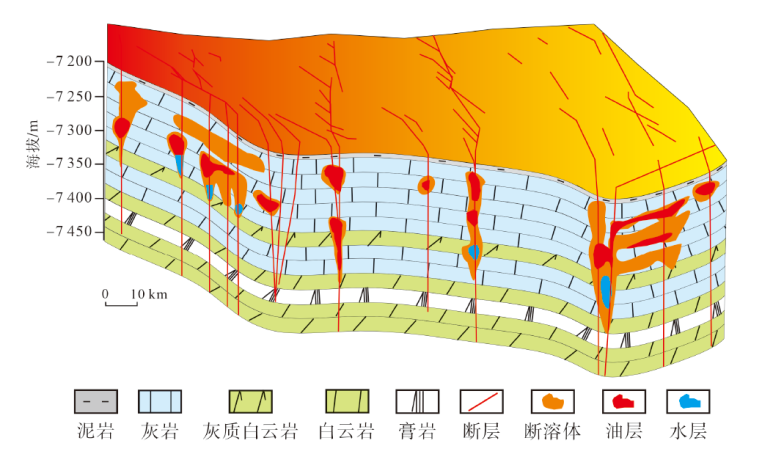
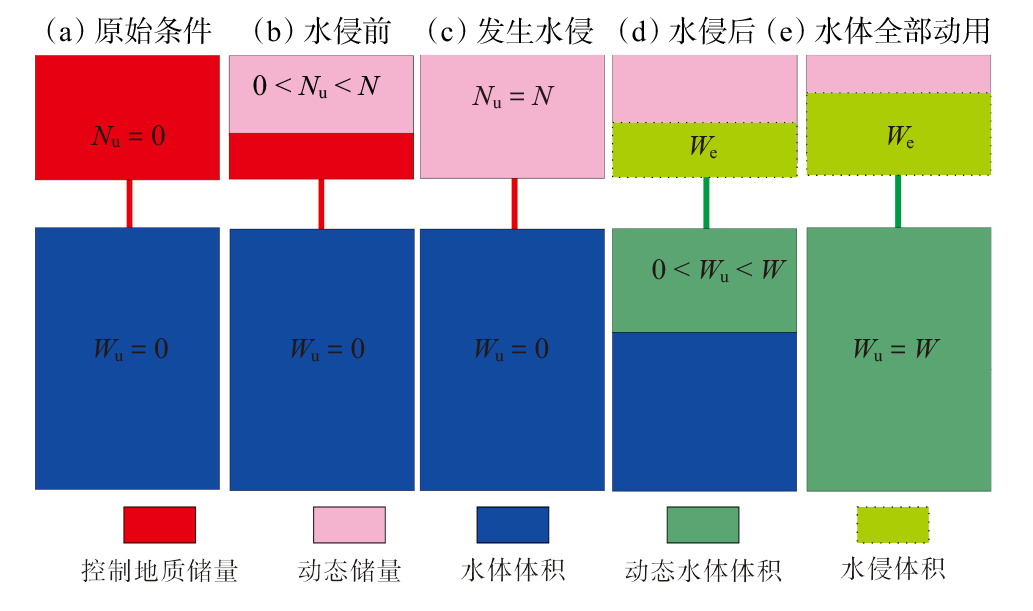
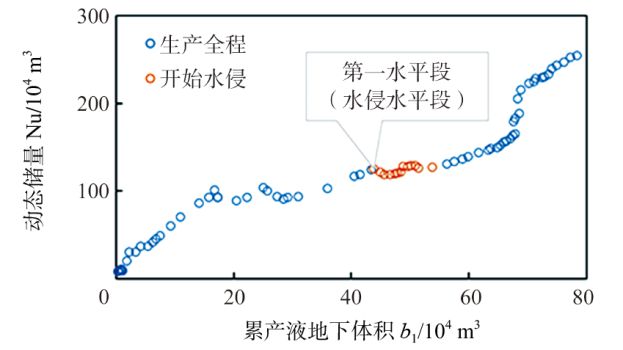
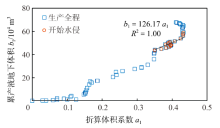
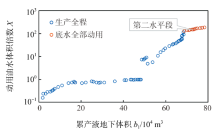
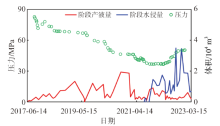
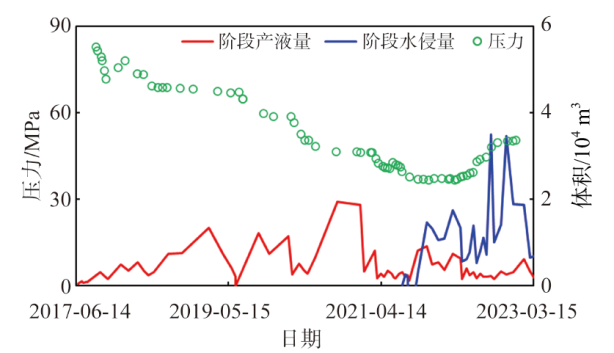
塔里木盆地顺北一区断溶体油藏随着累产增加,地层压力呈先下降后回升的非单调变化趋势,这一现象无法用传统水侵模型解释,比较符合渐进式动用特征。基于“逐步动用”思想和物质平衡理论,将水侵过程分为水侵前和水侵后2个阶段,分别建立了动态储量和水体体积评价模型。研究结果表明:①顺北油田奥陶系油藏是典型的断溶体油藏,具有水平窄条带、垂向跨度大的立体成藏模式,受控于NE向走滑断裂系统,一间房组碳酸盐岩储层为“断裂-岩溶”型储集体,物性差,断溶体沿主干断裂连续分布。②研究区断溶体油藏可采用新建立的水侵评价模型计算动态储量、水侵量、动态水体体积,进而计算单井的控制地质储量和水体大小。累产液地下体积-动态储量图版会出现水平段,水平段对应水侵开始时间,此时动态储量代表单井控制地质储量;累产液地下体积-动用油水体积倍数图版末端也会出现水平段,水平段高度减1为水体体积倍数。③模型成功计算出了研究区最大动态储量为126.17×10⁴ m3,最大动用水体为182倍地质储量,模型合理解释了断溶体油藏水侵过程压力变化的原因。
中图分类号:
- TE344



| [1] |
王清华, 徐振平, 张荣虎, 等. 塔里木盆地油气勘探新领域、新类型及资源潜力[J]. 石油学报, 2024, 45(1):15-32.
doi: 10.7623/syxb202401002 |
|
WANG Qinghua, XU Zhenping, ZHANG Ronghu, et al. New fields,new types of hydrocarbon explorations and their resource potentials in Tarim Basin[J]. Acta Petrolei Sinica, 2024, 45(1):15-32.
doi: 10.7623/syxb202401002 |
|
| [2] |
宋传真, 马翠玉. 塔河油田奥陶系缝洞型油藏油水流动规律[J]. 岩性油气藏, 2022, 34(4):150-158.
doi: 10.12108/yxyqc.20220414 |
|
SONG Chuanzhen, MA Cuiyu. Oil-water flow law of Ordovician fractured-vuggy reservoirs in Tahe Oilfield[J]. Lithologic Reservoirs, 2022, 34(4):150-158.
doi: 10.12108/yxyqc.20220414 |
|
| [3] | SCHILTHUIS R J. Active oil and reservoir energy[J]. Transactions of the AIME, 1930, 86:74. |
| [4] | FETKOVICH M J. A simplified approach to water influx calculations-finite aquifer systems[J]. Journal of Petroleum Techno-logy, 1971, 23(7):814-828. |
| [5] |
VAN EVERDINGEN A F, HURST W. The application of the Laplace transformation to flow problems in reservoirs[J]. Journal of Petroleum Technology, 1949, 1(12):305-324.
doi: 10.2118/949305-G |
| [6] | 孙召勃, 贾晓飞, 李彦来, 等. 有限水体底水油藏水平井压力动态分析模型[J]. 大庆石油地质与开发, 2018, 37(6):49-53. |
| SUN Zhaobo, JIA Xiaofei, LI Yanlai, et al. Analyzing model of the pressure dynamics of the horizontal well in the bottom-water oil reservoir with finite water bodies[J]. Petroleum Geology & Oilfield Development in Daqing, 2018, 37(6):49-53. | |
| [7] |
岳世俊, 刘应如, 项燚伟, 等. 一种水侵气藏动态储量和水侵量计算新方法[J]. 岩性油气藏, 2023, 35(5):153-160.
doi: 10.12108/yxyqc.20230515 |
|
YUE Shijun, LIU Yingru, XIANG Yiwei, et al. A new method for calculating dynamic reserves and water influx of water-invaded gas reservoirs[J]. Lithologic Reservoirs, 2023, 35(5):153-160.
doi: 10.12108/yxyqc.20230515 |
|
| [8] |
EDWARDSON M J, GIRNER H M, PARKISON H R, et al. Calculation of formation temperature disturbances caused by mud circulation[J]. Journal of Petroleum Technology, 1962, 14(4):416-425.
doi: 10.2118/124-PA |
| [9] |
KLINS M A, BOUCHARD A J, CABLE C L. A polynomial approach to the van everdingen-hurst dimensionless variables for water encroachment[J]. SPE Reservoir Engineering, 1988, 3(1):320-326.
doi: 10.2118/15433-PA |
| [10] | 廖运涛. 计算天然水侵量的回归公式[J]. 石油勘探与开发, 1990, 17(1):71-75. |
| LIAO Yuntao. Regression formulas for calculating natural water influx[J]. Petroleum Exploration and Development, 1990, 17(1):71-75. | |
| [11] |
蔡珺君, 刘微, 胡怡, 等. 异常高压有水气藏物质平衡方程式的推导及应用[J]. 岩性油气藏, 2025, 37(5):178-185.
doi: 10.12108/yxyqc.20250516 |
|
CAI Junjun, LIU Wei, HU Yi, et al. Derivation and application of material balance equation for abnormal high pressure gas reservoirs with aquifer[J]. Lithologic Reservoirs, 2025, 37(5):178-185.
doi: 10.12108/yxyqc.20250516 |
|
| [12] |
李冬梅, 李会会, 朱苏阳, 等. 断溶体油气藏流动物质平衡方法[J]. 岩性油气藏, 2022, 34(1):154-162.
doi: 10.12108/yxyqc.20220116 |
|
LI Dongmei, LI Huihui, ZHU Suyang, et al. Modified flowing material balance method for fault-karst reservoirs[J]. Lithologic Reservoirs, 2022, 34(1):154-162.
doi: 10.12108/yxyqc.20220116 |
|
| [13] | 谭捷, 唐海, 李娜, 等. 塔河六区缝洞型油藏水体及水侵量计算[J]. 特种油气藏, 2011, 18(3):87-90. |
| TAN Jie, TANG Hai, LI Na, et al. Water body and water influx calculation for fracture-vug reservoirs in Block 6 of the Tahe oilfield[J]. Special Oil & Gas Reservoirs, 2011, 18(3):87-90. | |
| [14] | 刘学, 张占华, 黄晶, 等. 缝洞型碳酸盐岩油藏天然水体倍数估算方法[J]. 陕西科技大学学报, 2018, 36(4):97-101. |
| LIU Xue, ZHANG Zhanhua, HUANG Jing, et al. Estimation method of natural water bodies in the fracture cavity carbonate reservoir[J]. Journal of Shanxi University of Science & Techno-logy, 2018, 36(4):97-101. | |
| [15] | 薛婷, 吉雨, 成良丙, 等. 一种确定水驱气藏动态储量及水体能量的新方法[J]. 大庆石油地质与开发, 2022, 41(1):63-68. |
| XUE Ting, JI Yu, CHENG Liangbing, et al. A new method for determining dynamic reserves and water energy in water drive gas reservoirs[J]. Petroleum Geology & Oilfield Development in Daqing, 2022, 41(1):63-68. | |
| [16] | 彭小东, 朱绍鹏, 王庆帅, 等. 有限封闭水体气藏动储量计算新方法[J]. 中国海上油气, 2018, 30(2):97-101. |
| PENG Xiaodong, ZHU Shaopeng, WANG Qingshuai, et al. A new method to calculate dynamic OGIP of gas reservoirs with restricted and closed aquifers[J]. China Offshore Oil and Gas, 2018, 30(2):97-101. | |
| [17] | 宋红伟, 张智, 任文博. 缝洞型碳酸盐岩油藏物质平衡法计算储量探讨[J]. 天然气勘探与开发, 2012, 35(1):32-35. |
| SONG Hongwei, ZHANG Zhi, REN Wenbo. Reserves calculation of fractured-cavity carbonate reservoirs by material balance method[J]. Natural Gas Exploration and Development, 2012, 35(1):32-35. | |
| [18] | 李勇, 于清艳, 李保柱, 等. 缝洞型有水油藏动态储量及水体大小定量评价方法[J]. 中国科学:技术科学, 2017, 47(7):708-717. |
| LI Yong, YU Qingyan, LI Baozhu, et al. Quantitative evaluation method of OOIP and aquifer size for fractured-caved carbonate reservoirs with active aquifer support[J]. Scientia Sinica (Technologica), 2017, 47(7):708-717. | |
| [19] | 李冬梅, 李会会, 朱苏阳, 等. 顺北油田断溶体油藏孔隙压缩系数理论模型[J]. 新疆石油地质, 2021, 42(2):194-200. |
| LI Dongmei, LI Huihui, ZHU Suyang, et al. Theoretical model of pore compressibility for fault-karst reservoirs in Shunbei Oilfield[J]. Xinjiang Petroleum Geology, 2021, 42(2):194-200. | |
| [20] |
杨美华, 钟海全, 李颖川. 缝洞型碳酸盐岩油藏新型油藏生产指示曲线[J]. 岩性油气藏, 2021, 33(2):163-170.
doi: 10.12108/yxyqc.20210217 |
|
YANG Meihua, ZHONG Haiquan, LI Yingchuan. New production index curve of fractured-vuggy carbonate reservoirs[J]. Lithologic Reservoirs, 2021, 33(2):163-170.
doi: 10.12108/yxyqc.20210217 |
| [1] | 周文娟, 蒲仁海, 卢子兴, 王康乐, 张鹏, 闻星宇, 王通, 关蕴文. 鄂尔多斯盆地中东部奥陶系马五段膏盐岩分布特征及主控因素[J]. 岩性油气藏, 2026, 38(2): 122-133. |
| [2] | 常少英, 董科良, 曾溅辉, 杨冀宁, 王孟修, 刘玲利. 塔里木盆地富满油田走滑断裂演化特征及其对油气运聚的影响[J]. 岩性油气藏, 2026, 38(2): 44-55. |
| [3] | 关宝珠, 王爱萍, 杨新影, 裴明利, 万超凡, 倪祥龙, 张强, 杨巍. 缝洞型碳酸盐岩岩溶体系表征及油气富集主控因素——以塔北地区轮古油田奥陶系为例[J]. 岩性油气藏, 2026, 38(1): 136-145. |
| [4] | 黄诚, 朱莲花, 卜旭强, 曾溅辉, 隆辉, 廖文毫, 刘亚洲, 乔俊程. 塔里木盆地顺北地区走滑断裂特征及控藏作用[J]. 岩性油气藏, 2025, 37(6): 107-118. |
| [5] | 陆江, 王健, 吴楠, 李程善, 冯子飞. 鄂尔多斯盆地西缘奥陶系乌拉力克组页岩气勘探潜力[J]. 岩性油气藏, 2025, 37(5): 34-48. |
| [6] | 蔡珺君, 刘微, 胡怡, 李秋, 徐睿, 毛正林, 田野, 马旸. 异常高压有水气藏物质平衡方程式的推导及应用[J]. 岩性油气藏, 2025, 37(5): 178-185. |
| [7] | 赵润冬, 王锦昌, 罗懿, 周瑞立, 周舰. 鄂尔多斯盆地大牛地气田气水同产定容气藏动态储量计算新方法[J]. 岩性油气藏, 2025, 37(5): 186-192. |
| [8] | 江山, 唐永建, 焦霞蓉, 李文亮, 黄成, 王泽. 塔里木盆地顺北油田4号断裂带断控体凝析气藏剩余气分布规律[J]. 岩性油气藏, 2025, 37(4): 84-94. |
| [9] | 陈钰桦, 施泽进, 李文杰, 易永杰, 刘恒, 田亚铭, 谭谦. 川东南习水地区下奥陶统层序地层特征及储层发育主控因素[J]. 岩性油气藏, 2025, 37(4): 147-158. |
| [10] | 谢会文, 张亮, 王斌, 罗浩渝, 张科, 章国威, 李玲, 申林. 塔里木盆地库车坳陷三叠纪古构造特征及对沉积的控制作用[J]. 岩性油气藏, 2025, 37(3): 13-22. |
| [11] | 梁鑫鑫, 张银涛, 陈石, 谢舟, 周建勋, 康鹏飞, 陈九洲, 彭梓俊. 塔里木盆地富满油田走滑断裂多核破碎带地震响应特征[J]. 岩性油气藏, 2025, 37(2): 127-138. |
| [12] | 徐兆辉, 曾洪流, 胡素云, 张君龙, 刘伟, 周红英, 马德波, 傅启龙. 地震沉积学在塔里木盆地古城地区下寒武统沉积结构与储层预测中的应用[J]. 岩性油气藏, 2025, 37(2): 153-165. |
| [13] | 熊昶, 王彭, 刘小钰, 王伟, 赵星星, 孙冲. 塔中隆起奥陶系油气性质及运聚富集模式[J]. 岩性油气藏, 2025, 37(1): 53-67. |
| [14] | 吴松, 冯冰, 于继良, 蓝宝锋, 李龙, 王胜, 沈家宁, 李刚权. 黔北正安地区安场向斜奥陶系五峰组—志留系龙马溪组页岩气富集规律[J]. 岩性油气藏, 2025, 37(1): 182-193. |
| [15] | 陈肖, 缪云, 李伟, 谢明英, 施浩, 王伟峰. 海上边水驱砂岩油田合理油水井数比计算方法[J]. 岩性油气藏, 2025, 37(1): 194-200. |
|
||
 甘公网安备 62010202002827号