岩性油气藏 ›› 2026, Vol. 38 ›› Issue (5): 149–158.doi: 10.12108/yxyqc.20260514
珠江口盆地开平凹陷断层封闭性与圈闭有效性评价
蔡俊杰1( ), 李雅琪2,3, 高中亮1, 姜福杰2,3(), 姜大朋1, 牛鹏1, 郝绵柱1
- 1
中海石油(中国)有限公司 深圳分公司 广东 深圳 518054
2中国石油大学(北京)油气资源与探测国家重点实验室 北京 102249
3中国石油大学(北京)地球科学学院 北京 102249
Evaluation of fault sealing and trap effectiveness of Kaiping Sag, Pearl River Mouth Basin
CAI Junjie1(), LI Yaqi2,3, GAO Zhongliang1, JIANG Fujie2,3(), JIANG Dapeng1, NIU Peng1, HAO Mianzhu1
- 1
Shenzhen Branch ,CNOOC (China) Co., Ltd. Shenzhen 518054, Guangdong, China
2State Key Laboratory of Petroleum Resources and Exploration ,China University of Petroleum (Beijing) Beijing 102249, China
3School of Geosciences ,China University of Petroleum (Beijing) Beijing 102249, China
摘要:
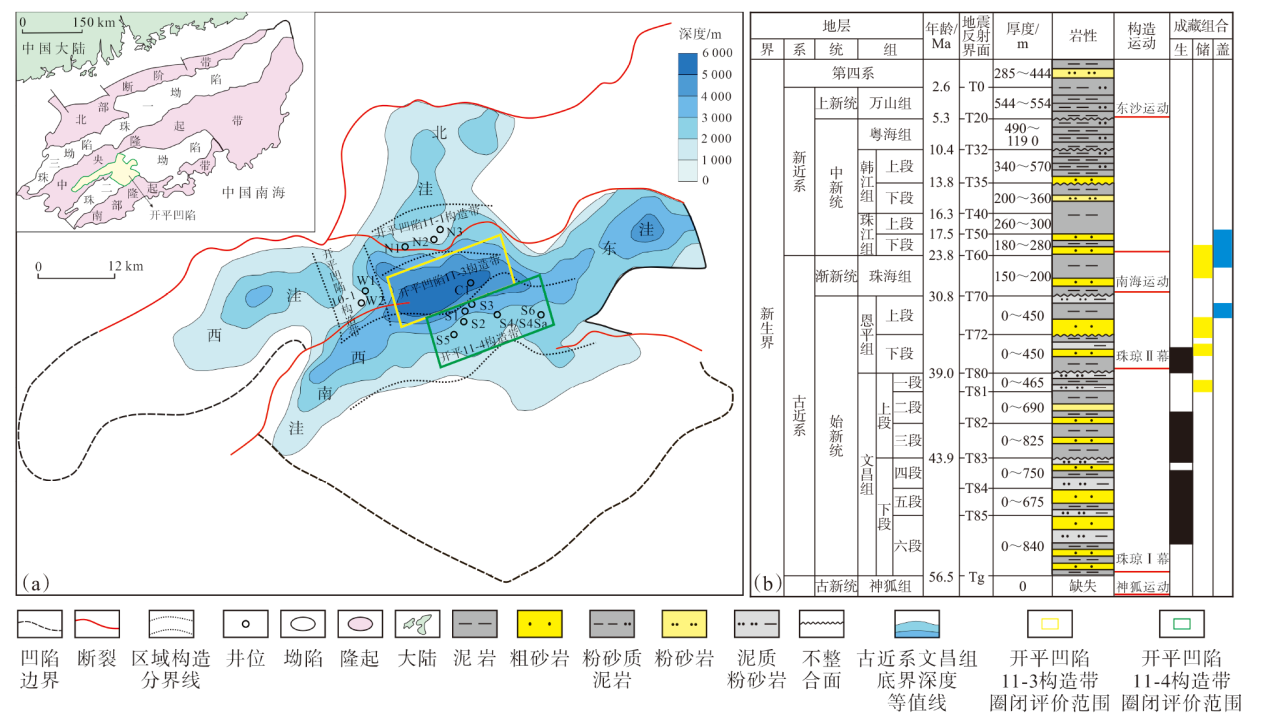
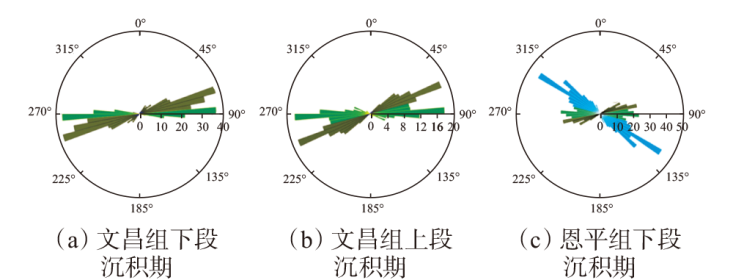
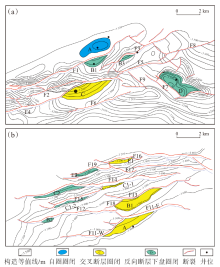
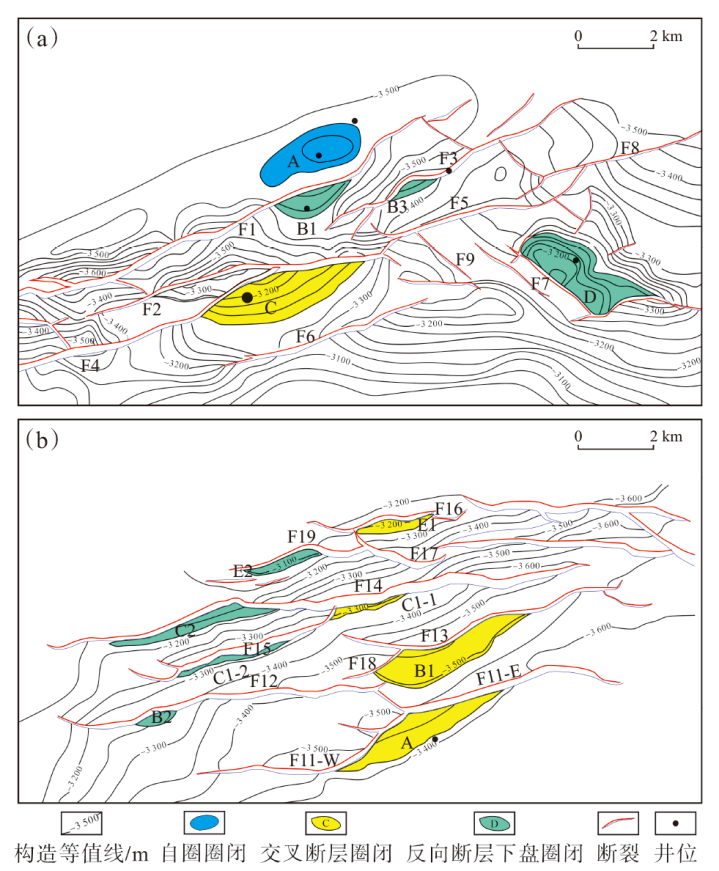
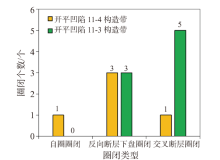
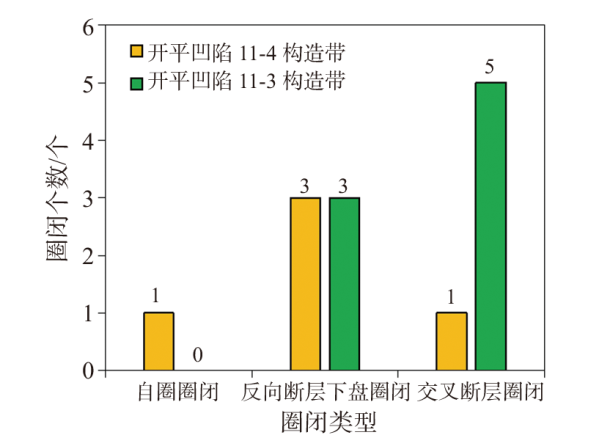
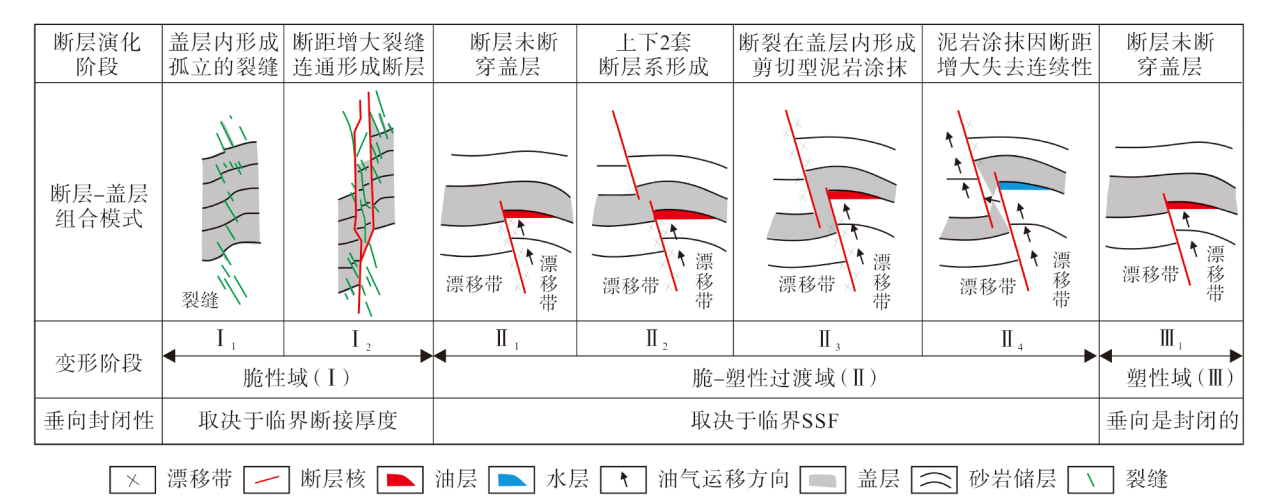
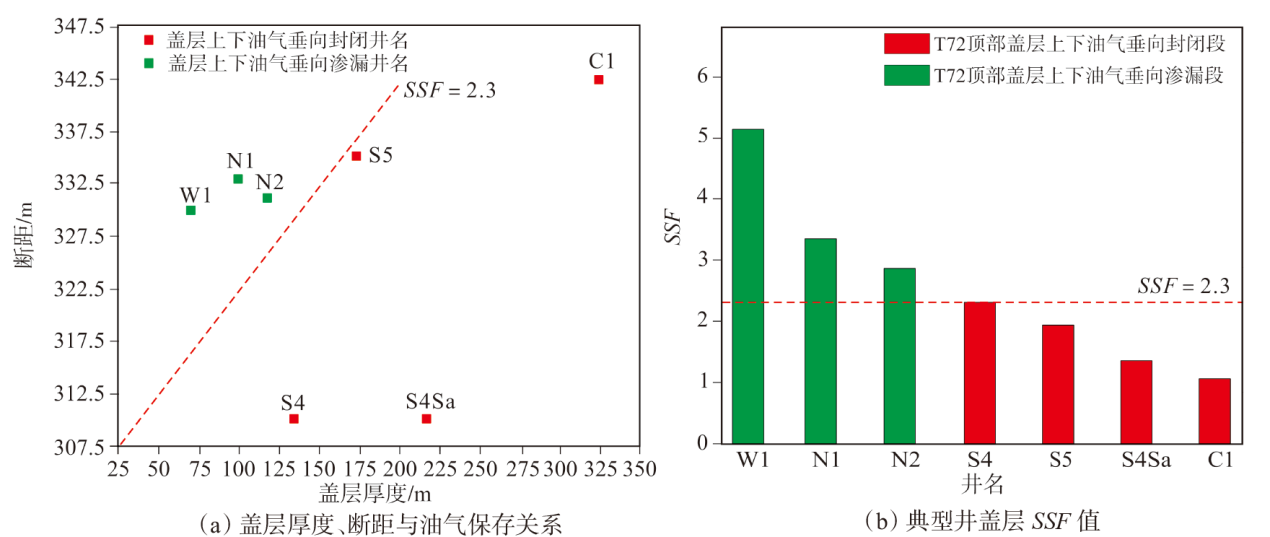
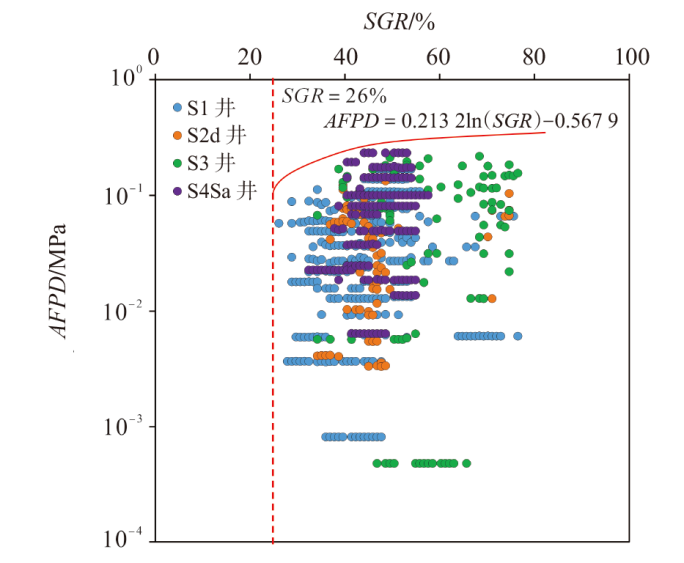
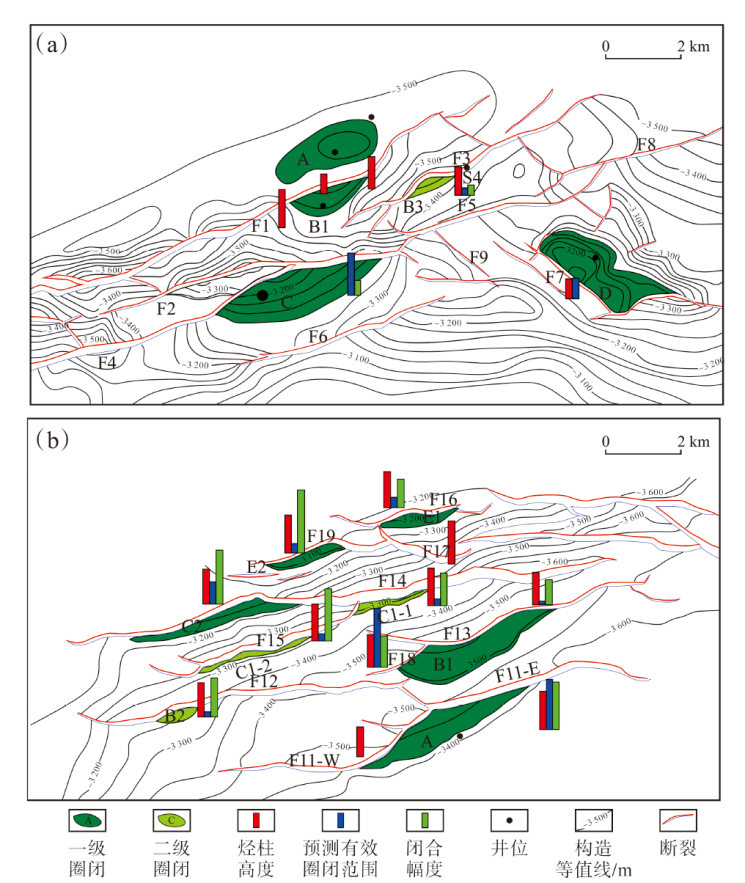
开平南油田勘探程度低、断裂系统复杂,亟待厘清其断层差异封闭性与圈闭有效性。在对断裂体系特征、圈闭类型进行梳理的基础上,综合运用泥岩涂抹系数(SSF)方法与断层泥比率(SGR)属性,对区内4个主要构造带断层的垂向与侧向封闭能力进行了系统评价;综合圈闭闭合幅度、烃柱高度、圈闭面积及预测有效圈闭面积,建立了圈闭有效性评价分级、分类划分标准,并确定了有效圈闭范围。研究结果表明:①开平凹陷断裂体系具多期活动特征,文昌组主要发育NEE—近EW向断裂,恩平组发育NNE、近EW及NW向断裂;圈闭类型主要包括反向断层圈闭、交叉断块圈闭和自圈圈闭。②开平凹陷含油层段断层垂向封闭SSF临界值为2.3,11-3与11-4构造带SSF小于2.3,断层垂向封闭性较好,有助于保存油气;区域北部(11-1构造带)与西部斜坡(10-1构造带)SSF大于2.3,盖层受到破坏,具有渗漏风险。断裂侧向封闭SGR下限值为26%,11-3和11-4构造带控圈断层可封闭的平均烃柱高度分别为90 m和75 m,11-3构造带控圈断层侧向封闭能力略高,圈闭形成规模较小(圈闭面积为0.28~6.76 km²,预测的有效圈闭面积为0.22~2.90 km²),但具有相对高的闭合幅度(为32~296 m,60%以上的样本大于50 m)。③研究区圈闭按照有效性由高到低可分为一级、二级和三级圈闭,11-3和11-4构造带发育一级圈闭6个,占所有评价圈闭的60%以上,二级圈闭7个,其中11-3构造带B1、E1圈闭可优先部署。
中图分类号:
- TE5
| [1] | 印朋. 我国发现首个深水深层亿吨级油田[J]. 企业观察家, 2024,(3):38-39. |
| YIN Peng. China’s first deep-water oil field of 100 million tons has been discovered[J]. Enterprise Observer, 2024,(3):38-39. | |
| [2] | 刘小兵, 窦立荣, 万仑坤, 等. 全球深水油气勘探开发业务发展及启示[J]. 天然气与石油, 2022, 40(4):75-83. |
| LIU Xiaobing, DOU Lirong, WAN Lunkun, et al. Business development and inspiration of global deep water exploration and development[J]. Natural Gas and Oil, 2022, 40(4):75-83. | |
| [3] | 徐长贵, 高阳东, 刘军, 等. 南海陆缘“拆离-核杂岩型”盆地发现与油气地质条件:以南海北部开平凹陷为例[J]. 地学前缘, 2024, 31(6):381-404. |
| XU Changgui, GAO Yangdong, LIU Jun, et al. Discovery of “detachment-core complex type” basins offshore the northern South China Sea and their oil and gas geological conditions:A case study of the Kaiping sag in the northern South China Sea[J]. Earth Science Frontiers, 2024, 31(6):381-404. | |
| [4] | WEBER K J, MANDL G, PILAAR W F, et al. The role of faults in hydrocarbon migration and trapping in Nigerian growth fault structures[R]. Houston,Offshore Technology Conference, 1978. |
| [5] | LINDSAY N G, MURPHY F C, WALSH J J, et al. Outcrop studies of shale smears on fault surfaces[M]. London: The International Association of Sedimentologists, 1993, 15:113-123. |
| [6] | YIELDING G, FREEMAN B, NEEDHAM D T. Quantitative fault seal prediction[J]. AAPG Bulletin, 1997, 81(6):897-917. |
| [7] | 杨海长, 曾清波, 纪沫, 等. 珠江口盆地深水区开平凹陷拆离型裂陷石油形成条件与勘探方向[J]. 石油学报, 2023, 44(6):933-947. |
| YANG Haizhang, ZENG Qingbo, JI Mo, et al. Accumulation conditions and exploration direction of crude oil in detachment rift of Kaiping sag in deep water area of Pearl River Mouth Basin[J]. Acta Petrolei Sinica, 2023, 44(6):933-947. | |
| [8] | BRADLEY D C. Passive margins through earth history[J]. Earth-Science Reviews, 2008, 91:1-26. |
| [9] | 张志业, 何登发, 李智, 等. 珠江口盆地开平凹陷边界断层三维几何学与运动学[J]. 地球物理学报, 2018, 61(10):4296-4307. |
| ZHANG Zhiye, HE Dengfa, LI Zhi, et al. 3D geometry and kinematic of the boundary fault in the Kaiping Depression,Pearl River Mouth Basin[J]. Chinese Journal of Geophysics, 2018, 61(10):4296-4307. | |
| [10] | 李智, 张志业, 何登发, 等. 珠江口盆地开平凹陷构造单元划分与平面复原[J]. 海洋地质前沿, 2023, 39(7):70-78. |
| LI Zhi, ZHANG Zhiye, HE Dengfa, et al. Tectonic division and plane restoration of Kaiping Sag,Pearl River Mouth Basin[J]. Marine Geology Frontiers, 2023, 39(7):70-78. | |
| [11] | 庞雄, 郑金云, 梅廉夫, 等. 先存俯冲陆缘背景下南海北部陆缘断陷特征及成因[J]. 石油勘探与开发, 2021, 48(5):1069-1080. |
| PANG Xiong, ZHENG Jinyun, MEI Lianfu, et al. Characteristics and origin of continental marginal fault depressions under the background of preexisting subduction continental margin,northern South China Sea,China[J]. Petroleum Exploration and Development, 2021, 48(5):1069-1080. | |
| [12] | 蔡嵩, 彭光荣, 陈兆明, 等. 珠江口盆地开平凹陷古近系构造特征及构造演化分析[J]. 海洋地质与第四纪地质, 2023, 43(2):106-118. |
| CAI Song, PENG Guangrong, CHEN Zhaoming, et al. Paleogene tectonic evolution of Kaiping Sag,Pearl River Mouth Basin[J]. Marine Geology & Quaternary Geology, 2023, 43(2):106-118. | |
| [13] | 吕彩丽, 张功成, 杨东升. 珠江口盆地珠二坳陷文昌组构造差异性与动力学成因机制[J]. 地学前缘, 2017, 24(6):333-341. |
| LYU Caili, ZHANG Gongcheng, YANG Dongsheng. Differential structure and dynamic mechanism of Wenchang Formation in the Zhu II Depression of the Pearl River Mouth Basin[J]. Earth Science Frontiers, 2017, 24(6):333-341. | |
| [14] | THORSEN C E. Age of growth faulting in southeast Louisiana[J]. Gulf Coast Association of Geological Societies Transactions, 1963, 13(2):103-110. |
| [15] | KOLEDOYE B A, AYDIN A, EYAL Y. A new process-based methodology for analysis of shale smear along normal faults in the Niger Delta[J]. AAPG Bulletin, 2003, 87(3):445-463. |
| [16] | 付广, 吴伟. 乌尔逊—贝尔凹陷油气成藏模式及其主控因素[J]. 岩性油气藏, 2015, 27(1):14-20. |
| FU Guang, WU Wei. Oil-gas accumulation models and their main controlling factors in Wuerxun-Beier Depression[J]. Lithologic Reservoirs, 2015, 27(1):14-20. | |
| [17] | TISSOT B P, WELTE D H. Petroleum Formation and Occurrence[M]. Berlin,Heidelberg:Springer-Verlag, 1978. |
| [18] | 杨为华. 松辽盆地双城断陷白垩系营城组四段致密油成藏主控因素及模式[J]. 岩性油气藏, 2024, 36(4):25-34. |
| YANG Weihua. Hydrocarbon accumulation model and main controlling factors of tight oil of the fourth member of Cretaceous Yingcheng Formation in Shuangcheng fault depression,Songliao Basin[J]. Lithologic Reservoirs, 2024, 36(4):25-34. | |
| [19] | SEGALL P, POLLARD D D. Mechanics of discontinuous faults[J]. Journal of Geophysical Research, 1980, 85(B8):4337-4350. |
| [20] | 吕延防, 黄劲松, 付广, 等. 砂泥岩薄互层段中断层封闭性的定量研究[J]. 石油学报, 2009, 30(6):824-829. |
| LYU Yanfang, HUANG Jinsong, FU Guang, et al. Quantitative study on fault sealing ability in sandstone and mudstone thin interbed[J]. Acta Petrolei Sinica, 2009, 30(6):824-829. | |
| [21] | 张新顺, 王建平, 李亚晶, 等. 断层封闭性研究方法评述[J]. 岩性油气藏, 2013, 25(2):123-128. |
| ZHANG Xinshun, WANG Jianping, LI Yajing, et al. A comment on research methods of fault sealing capacity[J]. Lithologic Reservoirs, 2013, 25(2):123-128. | |
| [22] | 吕延防, 王有功, 付广, 等. 珠江口盆地珠一坳陷断层圈闭钻探风险性评价[J]. 石油学报, 2011, 32(1):95-100. |
| LYU Yanfang, WANG Yougong, FU Guang, et al. Evaluation of the drilling risk of fault traps in the Zhu Ⅰ Depression in the Pearl River Mouth Basin[J]. Acta Petrolei Sinica, 2011, 32(1):95-100. | |
| [23] | 付广, 王浩然, 胡欣蕾. 断层垂向封闭的断-储排替压力差法及其应用[J]. 石油学报, 2014, 35(4):685-691. |
| FU Guang, WANG Haoran, HU Xinlei. Modification and application of fault-reservoir displacement pressure differential method for vertical sealing of faults[J]. Acta Petrolei Sinica, 2014, 35(4):685-691. | |
| [24] | 付广, 史集建, 吕延防. 断层侧向封闭性定量研究方法的改进[J]. 石油学报, 2012, 33(3):414-418. |
| FU Guang, SHI Jijian, LYU Yanfang. An improvement in quantitatively studying lateral seal of faults[J]. Acta Petrolei Sinica, 2012, 33(3):414-418. | |
| [25] | 付广, 宿碧霖, 历娜. 一种利用断层岩泥质含量判断断层侧向封闭性的方法及其应用[J]. 岩性油气藏, 2016, 28(2):101-106. |
| FU Guang, XU Bilin, LI Na. A method of judging lateral sealing of fault by mudstone content of fault rock and its application[J]. Lithologic Reservoirs, 2016, 28(2):101-106. | |
| [26] | 付广, 郎岳, 胡欣蕾. 反向和顺向断裂侧向封闭油气的差异性研究[J]. 岩性油气藏, 2014, 26(6):28-33. |
| FU Guang, LANG Yue, HU Xinlei. Research on differences of lateral sealing between transoid fault and cisoid fault[J]. Lithologic Reservoirs, 2014, 26(6):28-33. | |
| [27] | KNIPE R J, FISHER Q J, JONES G, et al. Fault seal analysis:Successful methodologies,application and future directions[J]. Norwegian Petroleum Society Special Publications, 1997, 7:15-38. |
| [28] | 高阳东, 彭光荣, 陈兆明, 等. 珠江口盆地开平凹陷深水古近系勘探重大发现及意义[J]. 石油学报, 2023, 44(7):1029-1040. |
| GAO Yangdong, PENG Guangrong, CHEN Zhaoming, et al. Breakthrough and significance of deep-water Paleogene exploration in Kaiping sag,Pearl River Mouth Basin[J]. Acta Petrolei Sinica, 2023, 44(7):1029-1040. | |
| [29] | 付晓飞, 宋宪强, 王海学, 等. 裂陷盆地断层圈闭含油气有效性综合评价:以渤海湾盆地歧口凹陷为例[J]. 石油勘探与开发, 2021, 48(4):677-686. |
| FU Xiaofei, SONG Xianqiang, WANG Haixue, et al. Comprehensive evaluation on hydrocarbon-bearing availability of fault traps in a rift basin:A case study of the Qikou Sag in the Bohai Bay Basin,China[J]. Petroleum Exploration and Development, 2021, 48(4):677-686. | |
| [30] | 何贵松, 何希鹏, 高玉巧, 等. 中国南方3套海相页岩气成藏条件分析[J]. 岩性油气藏, 2019, 31(1):57-68. |
| HE Guisong, HE Xipeng, GAO Yuqiao, et al. Analysis of accumulation conditions of three sets of marine shale gas in southern China[J]. Lithologic Reservoirs, 2019, 31(1):57-68. | |
| [31] | 安天下. 地层圈闭油气成藏有效性评价方法:以渤海湾盆地济阳坳陷为例[J]. 科学技术与工程, 2020, 20(10):3919-3926. |
| AN Tianxia. An effective evaluation method for stratigraphic trap hydrocarbon accumulation:A case study of Jiyang Depression,Bohai Bay Basin[J]. Science Technology and Engineering, 2020, 20(10):3919-3926. | |
| [32] | 侯连华, 杨帆, 杨春, 等. 常规油气区带与圈闭有效性定量评价原理及方法[J]. 石油学报, 2021, 42(9):1126-1141. |
| HOU Lianhua, YANG Fan, YANG Chun, et al. Principles and methods for quantitatively evaluating the effectiveness of conventional petroleum zones and traps[J]. Acta Petrolei Sinica, 2021, 42(9):1126-1141. |
| [1] | 杨金海, 余一欣, 欧阳杰, 许马光, 金峰, 张宇航, 余浪. 南海西缘中建南盆地构造格局及油气成藏模式[J]. 岩性油气藏, 2026, 38(3): 141-148. |
| [2] | 李滨, 闵忠顺, 孟令娜, 张源李, 尹剑峰, 周培杰. 基于高精度地质建模技术的断层侧向封闭性评价方法——以辽河坳陷兴隆台构造带太古界潜山油气藏为例[J]. 岩性油气藏, 2026, 38(1): 126-135. |
| [3] | 严宇洋, 熊连桥, 何幼斌, 陈莹, 赵仲祥, 刘圣乾, 罗进雄, 冯斌. 珠江口盆地惠州凹陷古近纪源-汇系统及其控储作用[J]. 岩性油气藏, 2025, 37(5): 166-177. |
| [4] | 陈肖, 缪云, 李伟, 谢明英, 施浩, 王伟峰. 海上边水驱砂岩油田合理油水井数比计算方法[J]. 岩性油气藏, 2025, 37(1): 194-200. |
| [5] | 何雁兵, 肖张波, 郑仰帝, 刘君毅, 易浩, 赵庆, 张月霞, 贺勇. 珠江口盆地陆丰13洼转换带中生界陆丰7-9潜山成藏特征[J]. 岩性油气藏, 2023, 35(3): 18-28. |
| [6] | 黄军立, 张伟, 刘力辉, 蔡国富, 曾有良, 孟庆友, 刘浩. 珠江口盆地番禺4洼古近系文昌组三元地震构形解释技术[J]. 岩性油气藏, 2023, 35(2): 103-112. |
| [7] | 应凯莹, 蔡长娥, 梁煜琦, 陈鸿, 尚文亮, 苏桂娇. 伊通盆地岔路河断陷古近系断层的垂向封闭性及其控藏作用[J]. 岩性油气藏, 2023, 35(2): 136-143. |
| [8] | 贺勇, 邱欣卫, 雷永昌, 谢世文, 肖张波, 李敏. 珠江口盆地陆丰13东洼新生代构造演化与油气成藏特征[J]. 岩性油气藏, 2023, 35(1): 74-82. |
| [9] | 张卫卫, 刘军, 刘力辉, 张晓钊, 白海军, 杨登锋. 珠江口盆地番禺4洼古近系文昌组岩性预测技术及应用[J]. 岩性油气藏, 2022, 34(6): 118-125. |
| [10] | 李承泽, 陈国俊, 田兵, 袁晓宇, 孙瑞, 苏龙. 珠江口盆地深层高温高压下的水岩作用[J]. 岩性油气藏, 2022, 34(4): 141-149. |
| [11] | 张威, 李磊, 邱欣卫, 龚广传, 程琳燕, 高毅凡, 杨志鹏, 杨蕾. A/S对断陷湖盆三角洲时空演化的控制及数值模拟——以珠江口盆地陆丰22洼古近系文昌组为例[J]. 岩性油气藏, 2022, 34(3): 131-141. |
| [12] | 赵军, 韩东, 何胜林, 汤翟, 张涛. 基于水气比计算的低对比度储层流体性质识别[J]. 岩性油气藏, 2021, 33(4): 128-136. |
| [13] | 向巧维, 李小平, 丁琳, 杜家元. 珠江口盆地珠一坳陷古近系高自然伽马砂岩形成机制及油气地质意义[J]. 岩性油气藏, 2021, 33(2): 93-103. |
| [14] | 罗泽, 谢明英, 梁杰, 涂志勇, 侯凯. 地震伪井速度点宏观校正方法与应用——以珠江口盆地M气田为例[J]. 岩性油气藏, 2020, 32(3): 115-121. |
| [15] | 杜旭林, 戴宗, 辛晶, 李海龙, 曹仁义, 罗东红. 强底水稠油油藏水平井三维水驱物理模拟实验[J]. 岩性油气藏, 2020, 32(2): 141-148. |
|
||
 甘公网安备 62010202002827号