岩性油气藏 ›› 2026, Vol. 38 ›› Issue (5): 60–70.doi: 10.12108/yxyqc.202600506
四川盆地梓潼地区断裂演化特征及控储作用
金值民1( ), 张本健1, 关旭1, 王小娟1, 冯昌2(), 吴长江1, 杨棵1, 马诗杰1
- 1
中国石油西南油气田公司 勘探开发研究院 成都 610059
2东北石油大学 地球科学学院 黑龙江 大庆 163318
Fault evolution characteristics and their control on reservoirs of Zitong area, Sichuan Basin
JIN Zhimin1(), ZHANG Benjian1, GUAN Xu1, WANG Xiaojuan1, FENG Chang2(), WU Changjiang1, YANG Ke1, MA Shijie1
- 1
Research Institute of Exploration and Development ,PetroChina Southwest Oil & Gasfield Company Chengdu 610059, China
2School of Earth Sciences ,Northeast Petroleum University Daqing 163318,Heilongjiang, China
摘要:
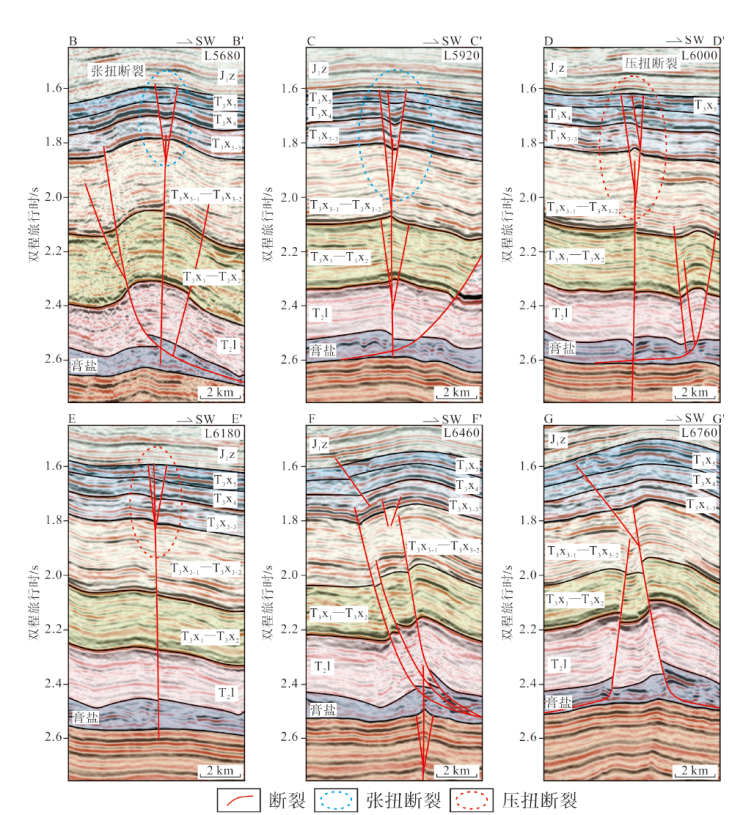
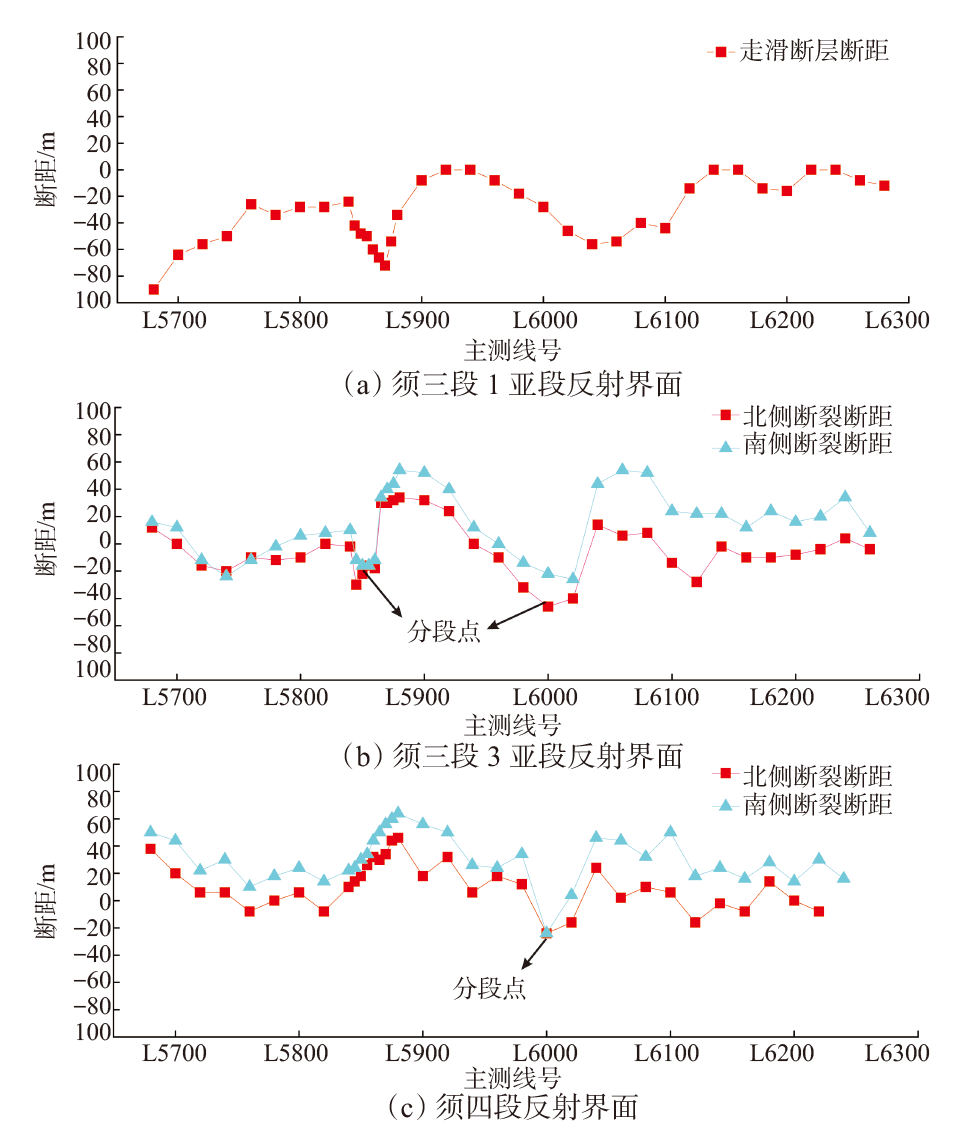
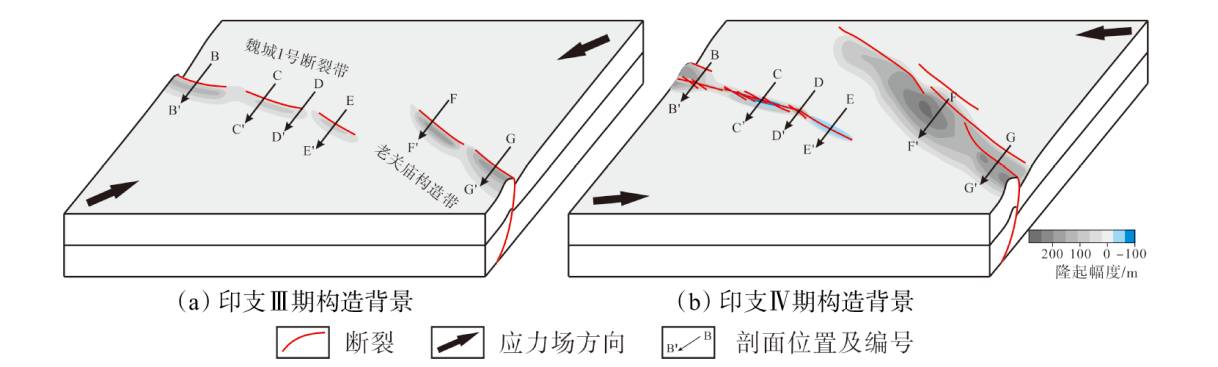
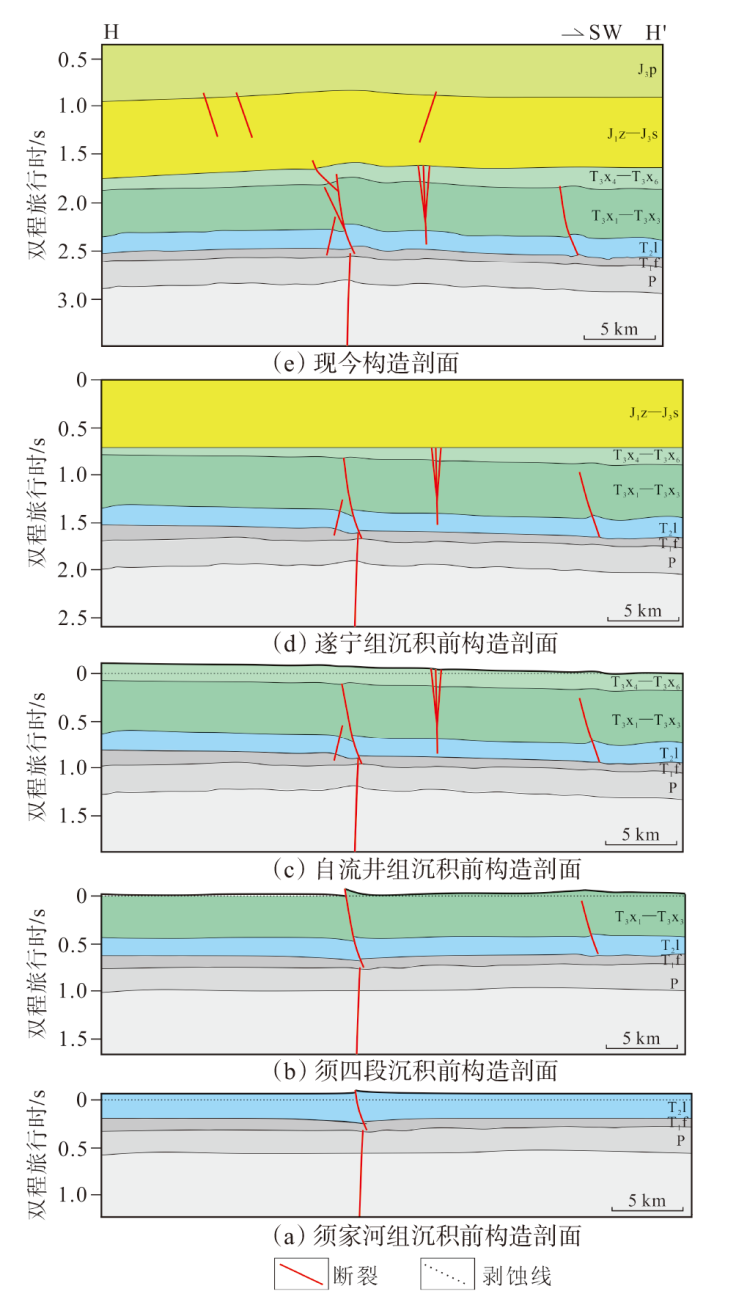
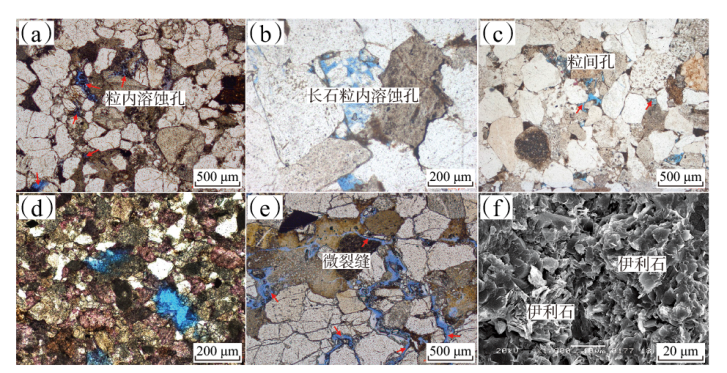
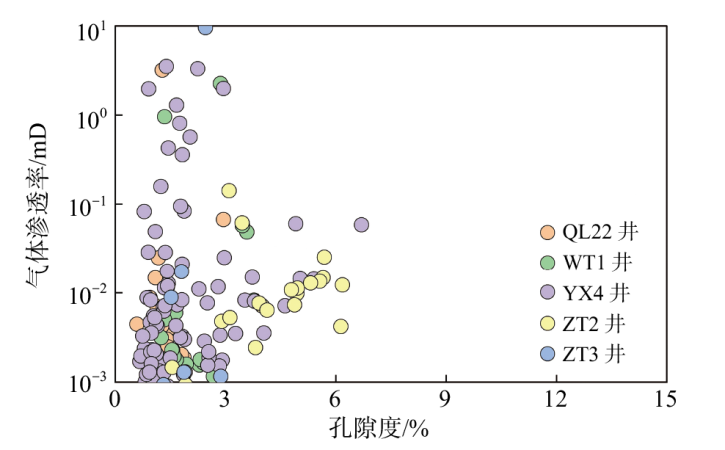
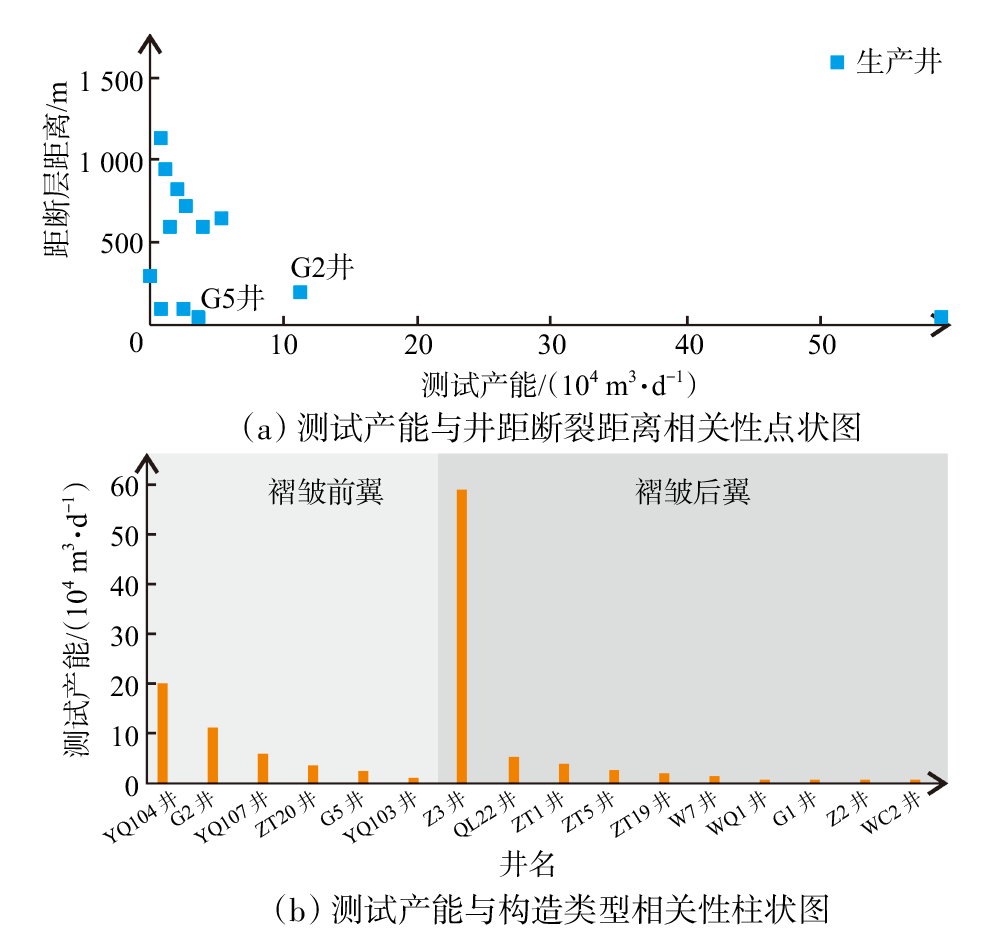
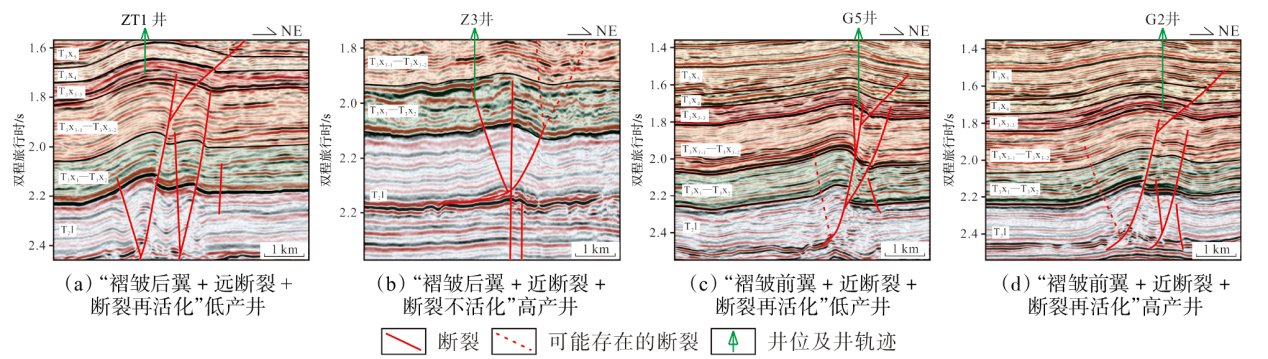
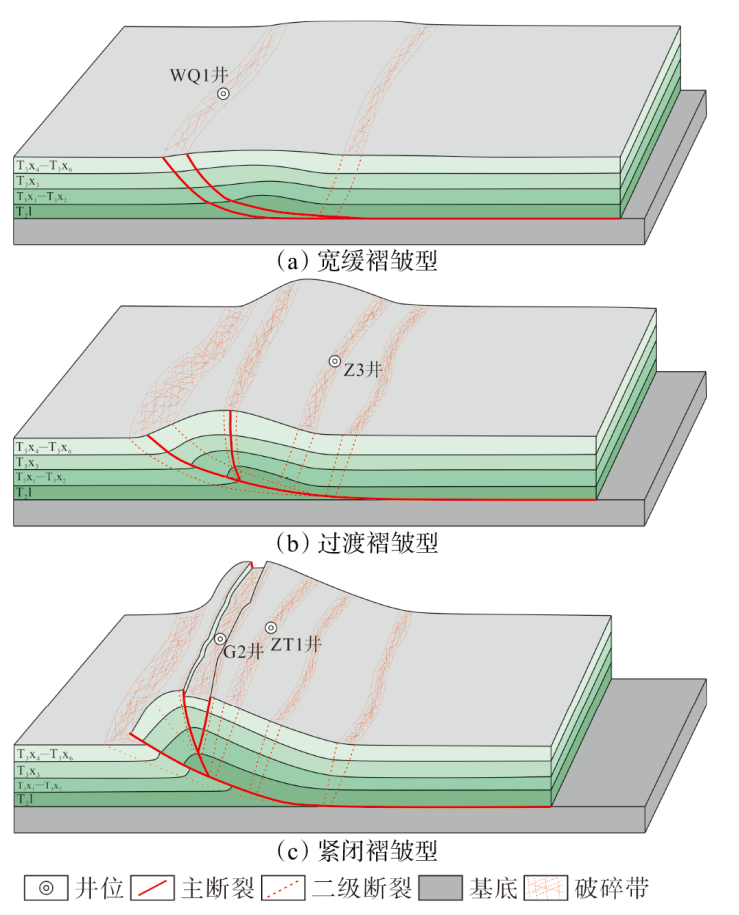
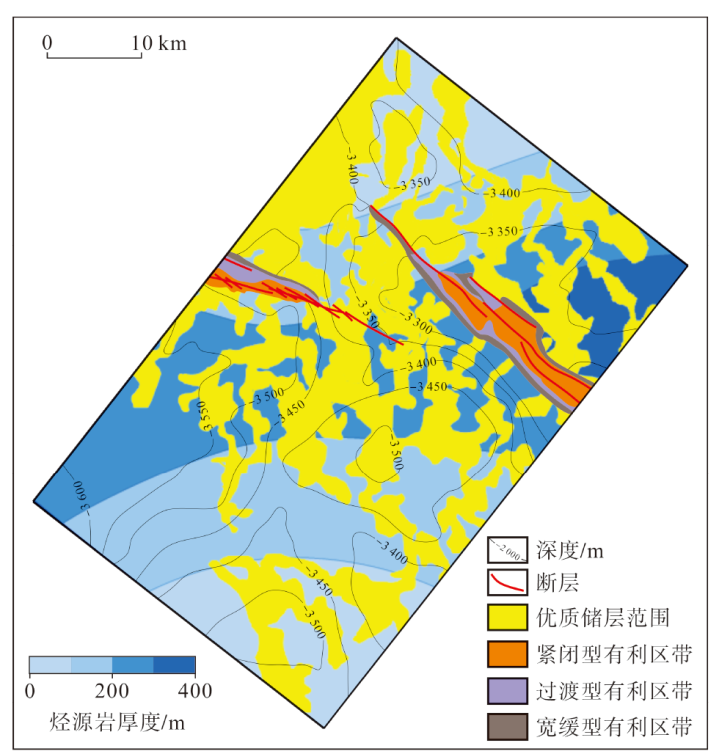
综合利用四川盆地梓潼地区三维地震、岩心、测井及动态生产资料,精细刻画了断裂空间结构与分段活动规律,恢复了断裂演化过程,剖析了断裂控储机制。研究结果表明:①梓潼地区东北部发育2组NW向主干断裂,深层连续延伸,浅层分段雁列展布,呈继承性发育,具多期活动特征;魏城1号断裂带须三段沉积时期,断裂活动强度西强东弱,先分段逆冲、后走滑连通,须四段沉积时活动减弱且断裂完全贯通;老关庙构造带以逆冲断层为主,见多米诺、对冲断裂组合。②研究区断裂演化主要经历印支Ⅱ幕少量先存走滑断裂复活、印支Ⅲ幕形成逆冲断裂、印支Ⅳ幕发育右旋左阶走滑、构造运动间歇期侏罗纪应力减弱平稳沉积及喜山期挤压形成小型断裂并定型整体构造5个阶段。③研究区主力储层须三段为低孔低渗的致密砂岩储层,发育溶孔与充填裂缝,裂缝提升储层渗流能力,断裂分段活动与褶皱构造差异控制不同类型的储层分布。④研究区须三段油气产能受断裂距离、褶皱部位、断裂活动期次协同控制,发育宽缓褶皱型、过渡褶皱型、紧闭褶皱型3类逆冲褶皱控储模式;褶皱前翼、次级断裂发育区为有利区,晚期断裂再活化易引发油气散失;魏城1号断裂带及周缘为须三段天然气勘探的最有利目标区。
中图分类号:
- TE121
| [1] | 孙龙德, 邹才能, 朱如凯, 等. 中国深层油气形成、分布与潜力分析[J]. 石油勘探与开发, 2013, 40(6):641-649. |
| SUN Longde, ZOU Caineng, ZHU Rukai, et al. Formation, distribution and potential of deep hydrocarbon resources in China[J]. Petroleum Exploration and Development, 2013, 40(6):641-649. | |
| [2] | 徐春春, 沈平, 杨跃明, 等. 四川盆地川中古隆起震旦系—下古生界天然气勘探新认识及勘探潜力[J]. 天然气工业, 2020, 40(7):1-9. |
| XU Chunchun, SHEN Ping, YANG Yueming, et al. New understandings and potential of Sinian-Lower Paleozoic natural gas exploration in the central Sichuan paleo-uplift of the Sichuan Basin[J]. Natural Gas Industry, 2020, 40(7):1-9. | |
| [3] | 何骁, 唐青松, 邬光辉, 等. 四川盆地安岳气田震旦系走滑断裂控储作用[J]. 石油勘探与开发, 2023, 50(6):1116-1127. |
| HE Xiao, TANG Qingsong, WU Guanghui, et al. Control of strike-slip faults on Sinian carbonate reservoirs in Anyue gas field,Sichuan Basin,SW China[J]. Petroleum Exploration and Development, 2023, 50(6):1116-1127. | |
| [4] | 杨雨, 文龙, 周刚, 等. 四川盆地油气勘探新领域、新类型及资源潜力[J]. 石油学报, 2023, 44(12):2045-2069. |
| YANG Yu, WEN Long, ZHOU Gang, et al. New fields,new types and resource potentials of hydrocarbon exploration in Sichuan Basin[J]. Acta Petrolei Sinica, 2023, 44(12):2045-2069. | |
| [5] | GUAN Shuwei, ZHANG Yiqiong, JIANG Hua, et al. Cratonic strike-slip fault systems in the central Sichuan Basin,China[J]. Earth-Science Reviews, 2024, 254:104800. |
| [6] | 张晓丽, 王小娟, 张航, 等. 川东北五宝场地区侏罗系沙溪庙组储层特征及主控因素[J]. 岩性油气藏, 2024, 36(5):87-98. |
| ZHANG Xiaoli, WANG Xiaojuan, ZHANG Hang, et al. Reservoir characteristics and main controlling factors of Jurassic Shaximiao Formation in Wubaochang area,northeastern Sichuan Basin[J]. Lithologic Reservoirs, 2024, 36(5):87-98. | |
| [7] | 赵正望, 邱玉超, 李楠, 等. 简阳地区须家河组四段致密气地质特征及富集高产主控因素[J]. 天然气勘探与开发, 2025, 48(3):27-36. |
| ZHAO Zhengwang, QIU Yuchao, LI Nan, et al. Geological characteristics and main controls on the enrichment and high yield of tight gas in Xujiahe 4 Member,Jianyang area,Sichuan Basin[J]. Natural Gas Exploration and Development, 2025, 48(3):27-36. | |
| [8] | 邬光辉, 邹禺, 徐伟, 等. 四川盆地川中古隆起北斜坡震旦系走滑断裂分布及其勘探意义[J]. 天然气工业, 2023, 43(7):35-43. |
| WU Guanghui, ZOU Yu, XU Wei, et al. Distribution and petroleum exploration significance of Sinian strike-slip faults in the northern slope of Central Sichuan paleouplift[J]. Natural Gas Industry, 2023, 43(7):35-43. | |
| [9] | 赵爽, 杨映涛, 宋晓波, 等. 川西坳陷中段多层系气藏地质特征及勘探启示[J]. 天然气勘探与开发, 2026, 49(4):1-17. |
| ZHAO Shuang, YANG Yingtao, SONG Xiaobo, et al. Geological characteristics and exploration implications of multi-layer gas reservoirs in the middle segment of the Western Sichuan Depression[J]. Natural Gas Exploration and Development, 2026, 49(4):1-17. | |
| [10] | 柴毓, 王贵文, 柴新. 四川盆地金秋区块三叠系须二段储层非均质性及成因[J]. 岩性油气藏, 2021, 33(4):29-40. |
| CHAI Yu, WANG Guiwen, CHAI Xin. Reservoir heterogeneity and genesis of the second member of Xujiahe Formation of Triassic in Jinqiu block,Sichuan Basin[J]. Lithologic Reservoirs, 2021, 33(4):29-40. | |
| [11] | LIU Shugen, YANG Yu, DENG Bin, et al. Tectonic evolution of the Sichuan Basin,Southwest China[J]. Earth-Science Reviews, 2021, 213:103470. |
| [12] | 何登发. 中国多旋回叠合沉积盆地的形成演化、地质结构与油气分布规律[J]. 地学前缘, 2022, 29(6):24-59. |
| HE Dengfa. Multi-cycle superimposed sedimentary basins in China:Formation,evolution,geologic framework and hydrocarbon occurrence[J]. Earth Science Frontiers, 2022, 29(6):24-59. | |
| [13] | 汪泽成, 李宗银, 李志荣, 等. 川中地区须家河组构造变形成因探讨及其勘探意义[J]. 天然气工业, 2012, 32(4):13-18. |
| WANG Zecheng, LI Zongyin, LI Zhirong, et al. Genesis of structural deformation of the Xujiahe Formation in the central Sichuan Basin and its significance to petroleum exploration[J]. Natural Gas Industry, 2012, 32(4):13-18. | |
| [14] | 何治亮, 金之钧, 李双建, 等. 特提斯演化控制下盆地原型、改造与油气差异富集:基于波斯湾盆地与四川盆地的比较分析[J]. 中国科学:地球科学, 2023, 53(12):2914-2936. |
| HE Zhiliang, JIN Zhijun, LI Shuangjian, et al. Prototypes,modifications,and hydrocarbon enrichment variations in basins influenced by Tethyan evolution:A comparative analysis of the Persian Gulf Basin and the Sichuan Basin[J]. Scientia Sinica(Terrae), 2023, 53(12):2914-2936. | |
| [15] | YAN Shan, LI Yang, LI Zhongquan, et al. Seismic reflection analysis of the Western Sichuan Basin:Implications for the decoupling relationship between deep and shallow structures[J]. Tectonophysics, 2025, 897:230626. |
| [16] | GU Zhidong, LONERGAN L, ZHAI Xiufen, et al. The formation of the Sichuan Basin,South China,during the Late Ediacaran to Early Cambrian[J]. Basin Research, 2021, 33(4):2328-2357. |
| [17] | KIM Young-Seog, SANDERSON D J. The relationship between displacement and length of faults:A review[J]. Earth-Science Reviews, 2005, 68(3/4):317-334. |
| [18] | LIU Yin, SUPPE J, CAO Yingchang, et al. Linkage and formation of strike-slip faults in deep basins and the implications for petroleum accumulation:A case study from the Shunbei area of the Tarim Basin,China[J]. AAPG Bulletin, 2023, 107(2):331-355. |
| [19] | ZENG Lianbo, SONG Yichen, LIU Guoping, et al. Natural fractures in ultra-deep reservoirs of China:A review[J]. Journal of Structural Geology, 2023, 175:104954. |
| [20] | 梁鑫鑫, 张银涛, 陈石, 等. 塔里木盆地富满油田走滑断裂多核破碎带地震响应特征[J]. 岩性油气藏, 2025, 37(2):127-138. |
| LIANG Xinxin, ZHANG Yintao, CHEN Shi, et al. Seismic response characteristics of strike-slip fault multi-core damage zones in Fuman Oilfield,Tarim Basin[J]. Lithologic Reservoirs, 2025, 37(2):127-138. | |
| [21] | SHAMSZADEH A, SARKARINEJAD K, FERRER O, et al. Interaction of inherited structures and contractional deformation in the South Dezful Embayment:Insights from the Gachsaran oilfield,SW Iran[J]. Marine and Petroleum Geology, 2022, 145:105871. |
| [22] | ZHANG Yunzhao, ZENG Lianbo, ZHANG Rongjun, et al. Control of differential tectonic evolution on tectonic fractures in different tectonic segments of tight gas sandstone reservoirs:Upper triassic Xujiahe Formation,Western Sichuan Foreland Basin[J]. Journal of Earth Science, 2025, 36(5):2161-2178. |
| [23] | JAMET M, BALLAS G, SOLIVA R, et al. Naturally fractured reservoir characterisation in heterogeneous sandstones:Insight for uranium in situ recovery (Imouraren,Niger)[J]. Solid Earth, 2024, 15(7):895-920. |
| [24] | LOPES J A G, MEDEIROS W E, OLIVEIRA J G, et al. Three-dimensional characterization of karstic dissolution zones,fracture networks,and lithostratigraphic interfaces using GPR cubes,core logs,and petrophysics:Implications for thief zones development in carbonate reservoirs[J]. Marine and Petroleum Geology, 2023, 150:106126. |
| [25] | PHILIT S, SOLIVA R, BALLAS G, et al. Fault surface deve-lopment and fault rock juxtaposition along deformation band clusters in porous sandstones series[J]. AAPG Bulletin, 2019, 103(11):2731-2756. |
| [26] | FREITAS R B R D M, NOGUEIRA F C C, VASCONCELOS D L, et al. 3D topological analysis in deformation bands:Insights for structural characterization and impact on permeability[J]. Journal of Structural Geology, 2023, 176:104959. |
| [27] | 缪志伟, 李世凯, 张文军, 等. “断缝体”致密砂岩复杂网状裂缝地震预测技术:以四川盆地北部三叠系须家河组为例[J]. 岩性油气藏, 2025, 37(6):140-150. |
| MIAO Zhiwei, LI Shikai, ZHANG Wenjun, et al. Seismic prediction technology for complex network fractures in fault-fracture reservoir of tight sandstones:A case study of Triassic Xujiahe Formation in northern Sichuan Basin[J]. Lithologic Reservoirs, 2025, 37(6):140-150. | |
| [28] | 闫雪莹, 桑琴, 蒋裕强, 等. 四川盆地公山庙西地区侏罗系大安寨段致密油储层特征及高产主控因素[J]. 岩性油气藏, 2024, 36(6):98-109. |
| YAN Xueying, SANG Qin, JIANG Yuqiang, et al. Main controlling factors for the high yield of tight oil in the Jurassic Da’anzhai Section in the western area of Gongshanmiao,Sichuan Basin[J]. Lithologic Reservoirs, 2024, 36(6):98-109. | |
| [29] | DENG Shang, ZHAO Rui, KONG Qiangfu, et al. Two distinct strike-slip fault networks in the Shunbei area and its surroundings,Tarim Basin:Hydrocarbon accumulation,distribution,and controlling factors[J]. AAPG Bulletin, 2022, 106(1):77-102. |
| [1] | 李素华, 肖斌. 川西南三叠系嘉陵江组四段白云岩薄互层储层地震识别及勘探有利区[J]. 岩性油气藏, 2026, 38(5): 83-93. |
| [2] | 王铮, 徐守成, 胡修权, 凌航, 涂文茂, 周月, 张小青, 孙文娜. 四川盆地元坝地区二叠系长兴组低幅生物礁沉积模式与精细刻画[J]. 岩性油气藏, 2026, 38(4): 12-22. |
| [3] | 李洪玺, 李柱正, 曹永洪, 赵磊, 付宇, 邢超超, 甯濛. 川西北汉南古陆周缘震旦系陡山沱组沉积特征及油气地质意义[J]. 岩性油气藏, 2026, 38(4): 148-156. |
| [4] | 徐忠凡, 丁熊, 尹宏, 田云英, 宋毅, 杨曦冉. 川西北双鱼石地区上三叠统须家河组储层特征及主控因素[J]. 岩性油气藏, 2026, 38(3): 107-119. |
| [5] | 苟哲培, 魏倩倩, 严雪齐, 隆辉, 卢嘉勋, 高儇博, 唐银海, 谭先锋. 四川盆地威远地区奥陶系天然气地球化学特征及富集规律[J]. 岩性油气藏, 2026, 38(3): 120-131. |
| [6] | 周凯, 齐仁理, 徐文礼, 尹青, 高璐, 李双双, 黄钦阳, 全豪. 四川盆地普光地区下三叠统嘉陵江组二段储层发育特征及主控因素[J]. 岩性油气藏, 2026, 38(3): 67-78. |
| [7] | 刘若彤, 张大智, 隋立伟, 肖利梅, 田亚, 孙山, 彭丹丹, 李建智. 川中合川地区志留系龙马溪组页岩岩相测井智能识别方法[J]. 岩性油气藏, 2026, 38(3): 94-106. |
| [8] | 赵野, 许鹏, 胡贺伟, 王航, 杨娇娇. 渤海湾盆地盆缘庙西南地区构造特征及控藏作用[J]. 岩性油气藏, 2026, 38(2): 145-152. |
| [9] | 常少英, 董科良, 曾溅辉, 杨冀宁, 王孟修, 刘玲利. 塔里木盆地富满油田走滑断裂演化特征及其对油气运聚的影响[J]. 岩性油气藏, 2026, 38(2): 44-55. |
| [10] | 顾雯, 陈辉, 朱亚东, 巫芙蓉, 赵洲, 王书言, 王尉. 四川盆地蜀南地区三叠系嘉二段成藏主控因素及勘探方向[J]. 岩性油气藏, 2026, 38(2): 56-64. |
| [11] | 李勇, 张亚, 周刚, 屈海洲, 龙虹宇, 李成龙, 张驰, 陈迪. 四川盆地蓬莱气田寒武系龙王庙组优质储层特征及主控因素[J]. 岩性油气藏, 2025, 37(6): 35-47. |
| [12] | 杨杨, 王海青, 石学文, 曾玉婷, 高翔, 李金勇, 张轩昂, 闫建平. 基于FMI图像微电导率曲线时频信息识别页岩层理构造的方法及应用——以四川盆地资中地区寒武系筇竹寺组一段为例[J]. 岩性油气藏, 2025, 37(6): 59-70. |
| [13] | 黄诚, 朱莲花, 卜旭强, 曾溅辉, 隆辉, 廖文毫, 刘亚洲, 乔俊程. 塔里木盆地顺北地区走滑断裂特征及控藏作用[J]. 岩性油气藏, 2025, 37(6): 107-118. |
| [14] | 缪志伟, 李世凯, 张文军, 肖伟, 刘明, 于童. “断缝体”致密砂岩复杂网状裂缝地震预测技术——以四川盆地北部三叠系须家河组为例[J]. 岩性油气藏, 2025, 37(6): 140-150. |
| [15] | 李春阳, 王勃力, 颜晓, 李可赛, 邓虎成, 苏锦义, 吴亚军, 叶泰然. 川东北元坝地区三叠系须家河组四段致密储层现今地应力测井评价[J]. 岩性油气藏, 2025, 37(6): 151-161. |
|
||
 甘公网安备 62010202002827号