岩性油气藏 ›› 2026, Vol. 38 ›› Issue (3): 173–181.doi: 10.12108/yxyqc.20260315
双重孔隙介质油藏CO2驱压力动态特征
曹修太1( ), 钟会影1,2(), 孙雨欣1, 周洪亮3, 付京4
- 1
东北石油大学 提高采收率教育部重点实验室 黑龙江 大庆 163318
2中国石油集团公司 油气藏改造重点实验室 黑龙江 大庆 163318
3大庆油田有限责任公司 榆树林公司地质工艺研究所 黑龙江 大庆 163000
4科罗拉多矿业大学 石油工程学院 科罗拉多 高登 80401
Pressure dynamic characteristics of CO2 flooding in dual porosity media reservoirs
CAO Xiutai1(), ZHONG Huiying1,2(), SUN Yuxin1, ZHOU Hongliang3, FU Jing4
- 1
Key Laboratory of Enhanced Recovery of Ministry of Education ,Northeast Petroleum University Daqing 163318, Heilongjiang, China
2Key Laboratory of Reservoir Stimulation ,China National Petroleum Corporation Daqing 163318, Heilongjiang, China
3Yushulin Company Geological Technology Research Institute ,Daqing Oilfield Co., Ltd. Daqing 163318, Heilongjiang, China
4Department of Petroleum Engineering ,Colorado School of Mines Golden 80401, Colorado, USA
摘要:
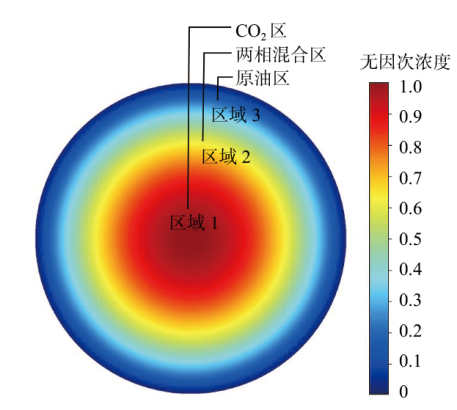
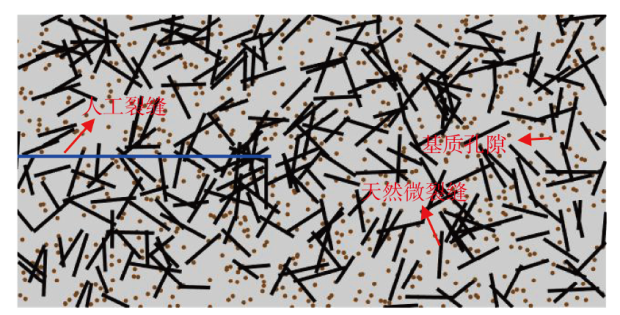
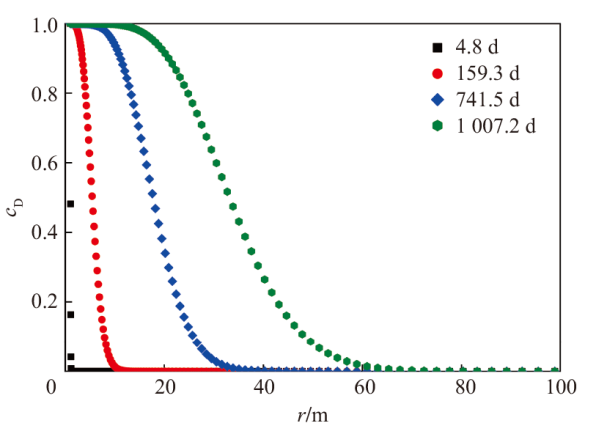
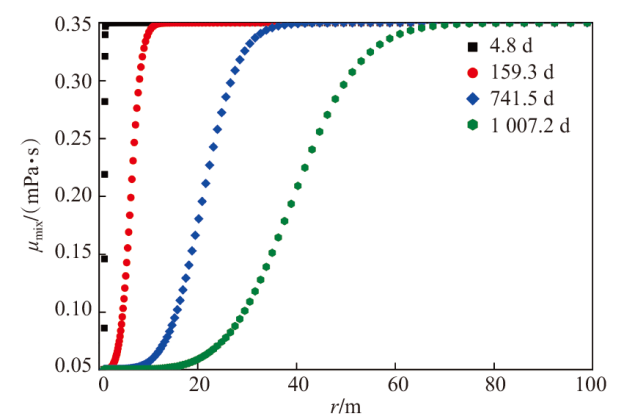
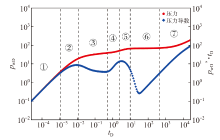
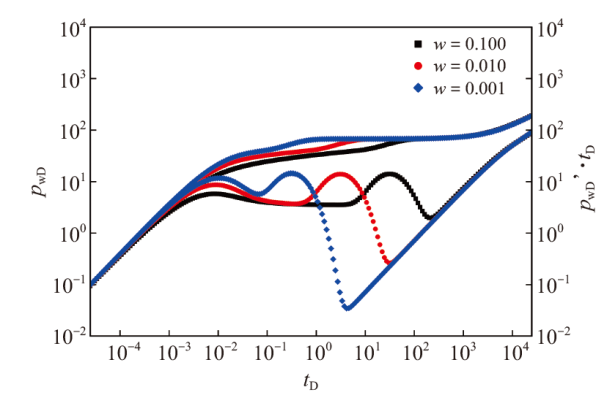
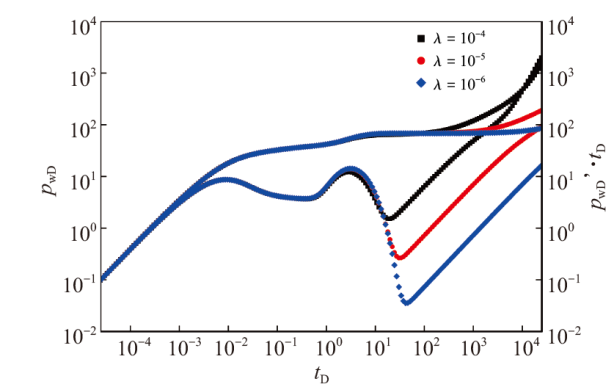
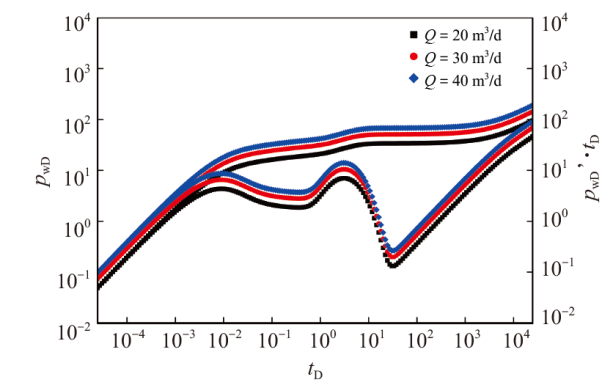
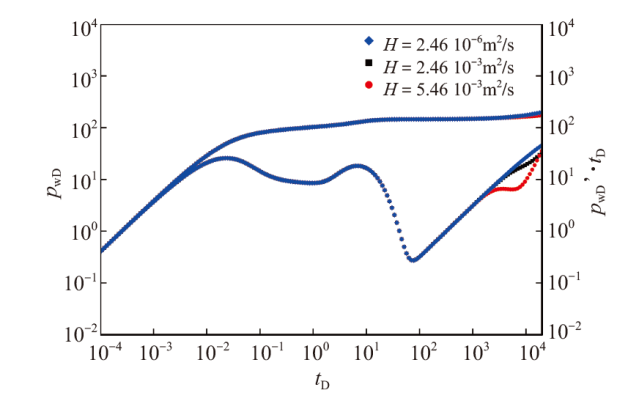
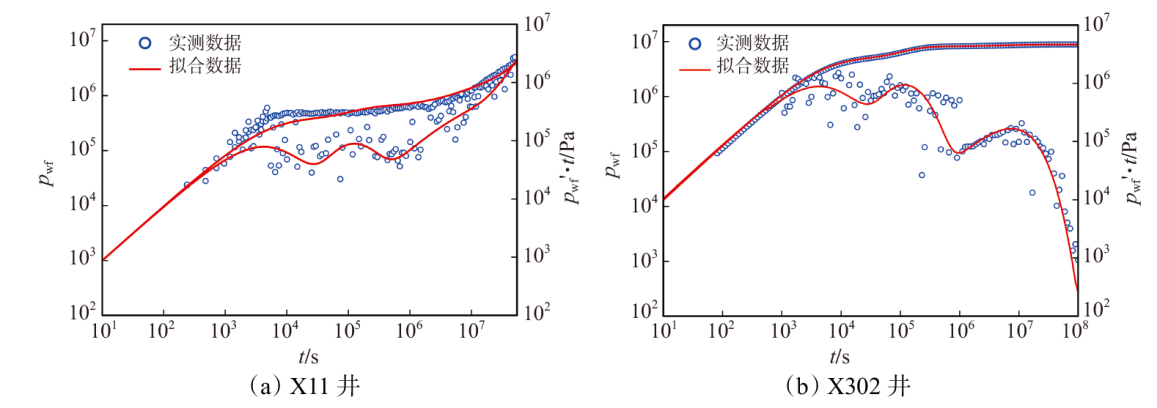
页岩油藏经过复杂压裂后易形成双重孔隙介质,由于基质-裂缝的渗流差异及CO2注入后“浓度-黏度”的平面非均质性,使得CO2驱的压力响应机制复杂,导致压力动态表征与参数反演精度不足。通过Fick定律研究了CO2分布特征,建立了同时考虑浓度-黏度-压力耦合、基质启动压力梯度的双重孔隙介质渗流模型,并对渗流方程进行了数值求解,绘制了双重孔隙介质油藏CO2驱压力动态曲线,分析了基质启动压力梯度、弹性储能比、窜流系数、注入速度、扩散系数对压力动态曲线的影响规律。研究结果表明:①基质启动压力梯度越大,试井曲线后期的压力及压力导数曲线“上翘”越显著。②弹性储能比越小,窜流阶段压力导数曲线的“凹子”越宽且越深。③随着窜流系数的减小,流体由基质流向裂缝的窜流速度越慢,“凹子”越靠右方,且“凹子”越深;窜流系数越大,压力曲线上翘越明显。④注入速度越大,全阶段压力和压力导数均呈现上升趋势,且窜流阶段“凹子”宽度越窄。⑤扩散系数主要影响后期的总系统径向流阶段,扩散系数越大,总系统径向流发生的时间越早,流动阻力越小,压力和压力导数曲线越靠下。⑥此模型在大庆油田压裂井CO2注入过程中实现了压力动态特征的定量表征。
中图分类号:
- TE353
| [1] | 郭平, 许清华, 孙振, 等. 天然气藏CO2驱及地质埋存技术研究进展[J]. 岩性油气藏, 2016, 28(3):6-11. |
| GUO Ping, XU Qinghua, SUN Zhen, et al. Research progress of CO2 flooding and geological storage in gas reservoirs[J]. Lithologic Reservoirs, 2016, 28(3):6-11. | |
| [2] | 宋新民, 王峰, 马德胜, 等. 中国石油二氧化碳捕集、驱油与埋存技术进展及展望[J]. 石油勘探与开发, 2023, 50(1):206-218. |
| SONG Xinmin, WANG Feng, MA Desheng, et al. Progress and prospect of carbon dioxide capture,utilization and storage in CNPC oilfields[J]. Petroleum Exploration and Development, 2023, 50(1):206-218. | |
| [3] | ZHANG Yiqi, YANG Shenglai, BI Lufei, et al. A technical review of CO2 flooding sweep-characteristics research advance and sweep-extend technology[J]. Petroleum Science, 2024, 22(1),225-276. |
| [4] | 何希鹏, 张培先, 高玉巧, 等. 中国非常规油气资源效益开发面临的挑战与对策[J]. 中国石油勘探, 2025, 30(1):28-43. |
| HE Xipeng, ZHANG Peixian, GAO Yuqiao, et al. Challenges and countermeasures for beneficial development of unconventional oil and gas resources in China[J]. China Petroleum Exploration, 2025, 30(1):28-43. | |
| [5] | 贾承造. 论非常规油气对经典石油天然气地质学理论的突破及意义[J]. 石油勘探与开发, 2017, 44(1):1-11. |
| JIA Chengzao. Breakthrough and significance of unconventional oil and gas to classical petroleum geological theory[J]. Petroleum Exploration and Development, 2017, 44(1):1-11. | |
| [6] | 张衍君, 刘拯君, 徐豪, 等. 页岩油储层前置CO2压裂液体滞留效应研究进展[J]. 岩性油气藏, 2026, 38(1):180-190. |
| ZHANG Yanjun, LIU Zhengjun, XU Hao, et al. Research pro-gress on retention effects of pre-CO2 fracturing fluid of shale oil reservoirs[J]. Lithologic Reservoirs, 2026, 38(1):180-190. | |
| [7] | 徐田录, 吴承美, 张金凤, 等. 吉木萨尔凹陷二叠系芦草沟组页岩油储层天然裂缝特征与压裂模拟[J]. 岩性油气藏, 2024, 36(4):35-43. |
| XU Tianlu, WU Chengmei, ZHANG Jinfeng, et al. Natural fracture characteristics and fracture network simulation in shale reservoirs of Permian Lucaogou Formation in Jimsar Sag[J]. Lithologic Reservoirs, 2024, 36(4):35-43. | |
| [8] | TANG R W, AMBASTHA A K. Analysis of CO2 pressure transient data with two- and three-region analytical radial compo-site models[R]. Houston,SPE Annual Technical Conference and Exhibition, 1988. |
| [9] | 姜瑞忠, 张海涛, 张伟, 等. CO2驱三区复合油藏水平井压力动态分析[J]. 油气地质与采收率, 2018, 25(6):63-70. |
| JIANG Ruizhong, ZHANG Haitao, ZHANG Wei, et al. Dynamic pressure analysis of three-zone composite horizontal well in oil reservoirs for CO2 flooding[J]. Petroleum Geology and Reco-very Efficiency, 2018, 25(6):63-70. | |
| [10] | SU Kun, LIAO Xinwei, ZHAO Xiaoliang. Transient pressure analysis and interpretation for analytical composite model of CO2 flooding[J]. Journal of Petroleum Science and Enginee-ring, 2015, 125:128-135. |
| [11] | 吴明录, 李涛, 赵高龙, 等. 双重孔隙介质三区复合油藏水平井试井模型[J]. 油气井测试, 2022, 31(4):6-12. |
| WU Minglu, LI Tao, ZHAO Gaolong, et al. Well test model for horizontal well in dual-porosity three-zone composite reservoir[J]. Well Testing, 2022, 31(4):6-12. | |
| [12] | 吴明录, 赵高龙, 姚军, 等. 稠油热采三区复合油藏水平井试井解释模型及压力响应特征[J]. 大庆石油地质与开发, 2016, 35(6):117-122. |
| WU Minglu, ZHAO Gaolong, YAO Jun, et al. Well test interpreting model and pressure response characteristics of the horizontal well in thermally recovered three-block composite heavy oil reservoirs[J]. Petroleum Geology & Oilfield Development in Daqing, 2016, 35(6):117-122. | |
| [13] | 魏明强, 段永刚, 方全堂, 等. 页岩气藏多级压裂水平井压力动态分析[J]. 中南大学学报(自然科学版), 2016, 47(12):4141-4147. |
| WEI Mingqiang, DUAN Yonggang, FANG Quantang, et al. Pressure dynamic analysis of multistage fractured horizontal well in shale gas reservoirs[J]. Journal of Central South University (Science and Technology), 2016, 47(12):4141-4147. | |
| [14] | 卢婷, 王鸣川, 马文礼, 等. 考虑多重应力敏感效应的页岩气藏压裂水平井试井模型[J]. 新疆石油地质, 2021, 42(6):741-748. |
| LU Ting, WANG Mingchuan, MA Wenli, et al. Fractured horizontal well test model for shale gas reservoirs with considering multiple stress sensitive factors[J]. Xinjiang Petroleum Geo-logy, 2021, 42(6):741-748. | |
| [15] | 陈志明, YU Wei, 石璐铭, 等. 压裂水平井的多模式裂缝网络试井模型及参数评价:以吉木萨尔页岩油为例[J]. 石油学报, 2023, 44(10):1706-1726. |
| CHEN Zhiming, YU Wei, SHI Luming, et al. Well test model and parameter evaluation of multi-mode fracture network in fractured horizontal well:A case study of Jimsar shale oil[J]. Acta Petrolei Sinica, 2023, 44(10):1706-1726. | |
| [16] | 徐阳. 低渗油藏CO2近混相驱提高采收率机理研究[D]. 青岛: 中国石油大学(华东), 2011. |
| XU Yang. Mechanisms of near-miscible CO2 flooding for EOR in low permeability reservoirs[D]. Qingdao: China University of Petroleum (East China), 2011. | |
| [17] | ZHANG Na, YIN Mingfei, WEI Mingzhen, et al. Identification of CO2 sequestration opportunities:CO2 miscible flooding guidelines[J]. Fuel, 2019, 241:459-467. |
| [18] | GONG Rundong, LIU Junrong, LIU Shuyang, et al. Impact of interlayer mass transfer on CO2 flooding performance in heterogeneous tight reservoirs[J]. Physics of Fluids, 2025, 37(2):023134. |
| [19] | 侯艳红. 低渗透油藏CO2混相驱油机理研究[D]. 青岛: 中国石油大学(华东), 2010. |
| HOU Yanhong. Mechanism study of CO2 miscible displacement in low permeability reservoirs[D]. Qingdao: China University of Petroleum(East China), 2010. | |
| [20] | 苏玉亮, 吴晓东, 侯艳红, 等. 低渗透油藏CO2混相驱油机制及影响因素[J]. 中国石油大学学报(自然科学版), 2011, 35(3):99-102. |
| SU Yuliang, WU Xiaodong, HOU Yanhong, et al. Mechanism of CO2 miscible displacement in low permeability reservoir and influencing factor[J]. Journal of China University of Petroleum (Edition of Natural Science), 2011, 35(3):99-102. | |
| [21] | 崔传智, 李静, 吴忠维. 扩散吸附作用下CO2非混相驱微观渗流特征模拟[J]. 岩性油气藏, 2024, 36(6) :181-188. |
| CUI Chuanzhi, LI Jing, WU Zhongwei. Simulation of microscopic seepage characteristics of CO2 immiscible flooding under the effect of diffusion and adsorption[J]. Lithologic Reservoirs, 2024, 36(6):181-188. | |
| [22] | 李友全, 韩秀虹, 阎燕, 等. 低渗透油藏CO2吞吐压力响应曲线分析[J]. 岩性油气藏, 2017, 29(6):119-127. |
| LI Youquan, HAN Xiuhong, YAN Yan, et al. Pressure transient analysis curves on CO2 huff and puff in low permeability reservoir[J]. Lithologic Reservoirs, 2017, 29(6):119-127. | |
| [23] | 苏玉亮, 吴春新. 倾斜油藏二氧化碳驱油中的黏性指进分析[J]. 石油钻探技术, 2009, 37(5):93-96. |
| SU Yuliang, WU Chunxin. Analysis of viscous fingering of CO2 flooding in tilted reservoirs[J]. Petroleum Drilling Techniques, 2009, 37(5):93-96. | |
| [24] | 钟会影, 余承挚, 沈文霞, 等. 考虑启动压力梯度的致密油藏水平井裂缝干扰渗流特征[J]. 岩性油气藏, 2024, 36(3):172-179. |
| ZHONG Huiying, YU Chengzhi, SHEN Wenxia, et al. Characteristics of fracture interference between horizontal wells in tight reservoirs considering threshold pressure gradient[J]. Lithologic Reservoirs, 2024, 36(3):172-179. | |
| [25] | 何吉祥, 徐有杰, 高阳, 等. 裂缝性致密油藏多级压裂水平井试井模型[J]. 断块油气田, 2021, 28(2):241-246. |
| HE Jixiang, XU Youjie, GAO Yang, et al. Well test model of multi-stage fractured horizontal well in fractured tight reservoirs[J]. Fault-Block Oil & Gas Field, 2021, 28(2):241-246. |
| [1] | 李佳旻, 张艺钟, 张茂林, 秦博文, 杨宇新. 基于核岭回归多参数优化的CO2驱最小混相压力模型[J]. 岩性油气藏, 2025, 37(6): 172-179. |
| [2] | 徐有杰, 任宗孝, 向祖平, 樊晓辉, 于梦男. 非均质储层致密气藏压裂井复杂缝多井干扰数值试井模型[J]. 岩性油气藏, 2025, 37(3): 194-200. |
| [3] | 崔传智, 李静, 吴忠维. 扩散吸附作用下CO2非混相驱微观渗流特征模拟[J]. 岩性油气藏, 2024, 36(6): 181-188. |
| [4] | 钟会影, 余承挚, 沈文霞, 毕永斌, 伊然, 倪浩铭. 考虑启动压力梯度的致密油藏水平井裂缝干扰渗流特征[J]. 岩性油气藏, 2024, 36(3): 172-179. |
| [5] | 曾旭, 卞从胜, 沈瑞, 周可佳, 刘伟, 周素彦, 汪晓鸾. 渤海湾盆地歧口凹陷古近系沙三段页岩油储层非线性渗流特征[J]. 岩性油气藏, 2023, 35(3): 40-50. |
| [6] | 郭永伟, 闫方平, 王晶, 褚会丽, 杨建雷, 陈颖超, 张笑洋. 致密砂岩油藏CO2驱固相沉积规律及其储层伤害特征[J]. 岩性油气藏, 2021, 33(3): 153-161. |
| [7] | 孙会珠, 朱玉双, 魏勇, 高媛. CO2驱酸化溶蚀作用对原油采收率的影响机理[J]. 岩性油气藏, 2020, 32(4): 136-142. |
| [8] | 崔永正, 姜瑞忠, 郜益华, 乔欣, 王琼. 空间变导流能力压裂井CO2驱试井分析[J]. 岩性油气藏, 2020, 32(4): 172-180. |
| [9] | 唐梅荣, 张同伍, 白晓虎, 王泫懿, 李川. 孔喉结构对CO2驱储层伤害程度的影响[J]. 岩性油气藏, 2019, 31(3): 113-119. |
| [10] | 姜瑞忠, 沈泽阳, 崔永正, 张福蕾, 张春光, 原建伟. 双重介质低渗油藏斜井压力动态特征分析[J]. 岩性油气藏, 2018, 30(6): 131-137. |
| [11] | 尚庆华, 王玉霞, 黄春霞, 陈龙龙. 致密砂岩油藏超临界与非超临界CO2驱油特征[J]. 岩性油气藏, 2018, 30(3): 153-158. |
| [12] | 马力, 欧阳传湘, 谭钲扬, 王长权, 宋岩, 林飞. 低渗透油藏CO2驱中后期提效方法研究[J]. 岩性油气藏, 2018, 30(2): 139-145. |
| [13] | 杨红, 王宏, 南宇峰, 屈亚宁, 梁凯强, 江绍静. 油藏CO2驱油提高采收率适宜性评价[J]. 岩性油气藏, 2017, 29(3): 140-146. |
| [14] | 邓学峰. 致密低渗油藏压裂水平井合理生产压差优化设计[J]. 岩性油气藏, 2017, 29(1): 135-139. |
| [15] | 王新杰,唐海,佘龙,邹佳丽,周巨标,李祥珠. 低渗透油藏水平井裂缝参数优化研究[J]. 岩性油气藏, 2014, 26(5): 129-132. |
|
||
 甘公网安备 62010202002827号